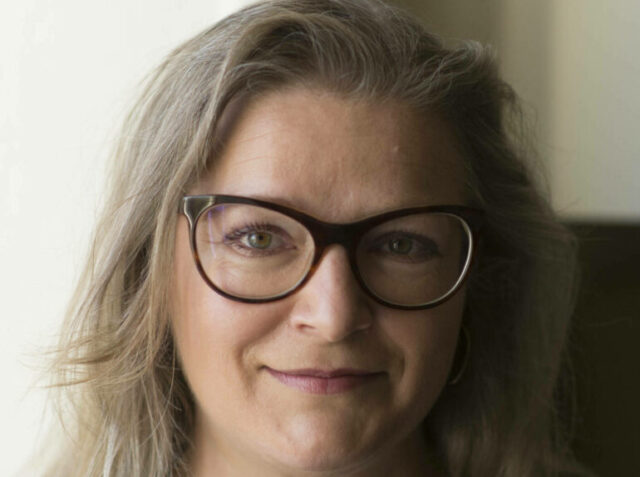
“Nordic documentaries have long punched above their weight and I am not the first to claim this,” Heidi Christensen, Executive Director of Nordisk Panorama, tells Business Doc Europe on the eve of Nordisk Panorama, running September 19-24 in Malmö (Sweden).
“Representing just five relatively small countries, Nordic films have consistently held a prominent place on the global stage. With widespread distribution, numerous award-winning films, and even Oscar nominations and wins, Nordic documentaries have proven their remarkable reach and impact.”
The annual celebration of Nordic doc kicks off September 19 with Zara Zerny’s Echo of You, one of 15 films selected for Best Nordic Documentary Competition, which offers a top prize of €11,000. Other competitive sections are The New Nordic Voice competition which heralds promising filmmakers from the region, and the Young Nordic Competition for docs aimed at younger audiences.
“The strength of the Nordic documentary industry is no accident. It’s the product of a stable support system, good film schools, and a culture of creative producers willing to take risks on emerging talent. This combination of factors has created fertile ground for innovation and excellence in documentary filmmaking across the region,” Christensen underlines.
“The Nordic countries share not only a history but a linguistic and cultural familiarity that bridges borders,” the Nordisk Panorama boss adds. “Many of us understand each other’s languages, and even when we don’t, our shared values – rooted in strong welfare systems and an emphasis on social equality – create a common ground for storytelling. These core values inform the themes and narratives that resonate in Nordic documentaries, which often explore universal social issues through a uniquely Nordic lens.”
“This shared foundation makes it easier for filmmakers, producers, and institutions to work together, fostering a creative environment where risks are encouraged, and new voices are nurtured. It’s no surprise that the region continues to produce documentaries that not only succeed at home but resonate deeply with global audiences.”
Nordisk Panorama Forum
Nordisk Panorama Forum promises to populate future international festival programmes with a slew of excellent new Nordic docs. This year, a total of 24 projects will be pitched publicly alongside 22 Observer+ projects that will be presented in individual meetings with decision-makers.
Given the plethora of European and international pitch events (not least the Copenhagen-based CPH:FORUM every March) how does Christensen describe the USPs of the Malmö professional pitch event.
“What sets Nordisk Panorama Forum apart is its ability to combine the ambition of a global marketplace with the accessibility and human touch of a more boutique event,” she answers. “This blend allows it to remain not just a platform for financing but a vital meeting point where creative visions and business strategies converge, paving the way for some of the most important films of our time. It’s a space where emerging talent can meet experienced industry players, where ideas turn into collaborations, and where projects are set on the path to success.”
Nordisk Panorama Forum is a “mid-sized pitching event, striking the perfect balance between accessibility and ambition. It’s large enough to attract key international decision-makers who recognise the potential of discovering the next global hit emerging from the Nordic region. Many outstanding films that have gone on to receive worldwide acclaim began their financial journeys right here at Nordisk Panorama Forum,” Christensen continues.
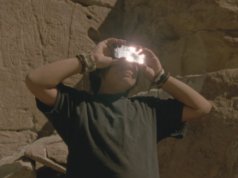
These include the likes of Natasa Urban’s The Eclipse, Maria Fredriksson The Gullspång Miracle and Calendar Girls by Maria Loohufvud and Love Martinsen.
“At the same time, its size ensures a uniquely manageable and intimate atmosphere, where filmmakers and producers can make meaningful connections without getting lost in the crowd. The event’s reputation for being one of the most well-organized pitching fora in the industry only adds to its appeal. Filmmakers know they are stepping into an environment that fosters focused, productive interactions, making the process both efficient and impactful.”
Elsewhere in Malmö, the Nordic industry and guests will “Confront the Echo Chambers” during its annual Town Hall debate. “The fortification of echo chambers, confirming our own biases and increasingly only giving us what we already want, is not only impeding the free flow of information and narratives challenging our preconceived notions, but maybe also limiting the documentary community’s own ability to envision possibilities beyond like-minded audiences,” reads the project notes.” Moderated by Nordisk Film & TV Fond’s Karolina Lidin, speakers will share their experiences in breaking down these “echo chambers” and how they appeal to audiences “beyond the usual suspects.”
Meanwhile the annual Nordic Documentary Producer Award will be given to one of Sara Stockmann (Denmark), Liisa Karpo (Finland), Sigurjón Sighvatsson (Iceland), Ingvil Giske (Norway) and Tobias Janson (Sweden).
Talks will be given by Emily Norling, director of Megaheartz; Göran Hugo Olsson on ‘Reframing Documentary,’ and Patricia Bbaale Bandak about her new film Death of a Saint.
One event in particular has Christensen fizzing with excitement in anticipation. “There are many unique aspects of our festival, but one stands out above the rest,” she says. “We host an actual elevator pitch. In our main festival hotel, with its stunning glass elevator spanning 18 stories, filmmakers get 30 seconds to pitch their film ideas on the ride up, and the decision-maker has 30 seconds on the way down to provide feedback.”
“What makes it even more exciting is that the whole event is streamed live to a room full of cheering, supportive onlookers, adding to the energy and thrill of the moment. It’s a fast-paced, high-pressure experience, but it’s a fun and memorable way to connect creativity with opportunity.”
For Christensen, documentary is the beating heart of culture, with an educative purpose that must be deployed to combat the potentially corrosive influence of social media.
“From a personal standpoint, there are times I wish we could force feed the audiences certain films, as they offer such invaluable insights into political conflicts, the human condition, love, loneliness, art – you name it,” she says. “These films provide windows into perspectives that might otherwise remain unseen. Amid growing concerns about a generation raised on TikTok and the diminishing influence of traditional media, the role of documentaries and the written press in a democratic society cannot be overstated. They are essential tools for fostering informed citizens and maintaining a healthy public discourse.”
And they therefore need to be protected and supported financially at highest levels. “Despite the immense investment of time, funding for individual films remains limited, even here in the relatively privileged North where support systems are in place,” continues. “For politicians who value democracy, it is vital to recognize that a free, robust media landscape is a cornerstone of a well-functioning society. This includes not just journalism, but documentary filmmaking, which plays a critical role in reflecting and preserving the stories, languages, and identities that define a culture.”
“Cutting funding for culture is a short-sighted move that undermines these values. We also need to ensure that films remain accessible to the public. Cutting television slots or reducing support for festivals only narrows the opportunities for audiences to engage with the stories that shape our collective understanding of the world,” Christensen signs off.