Ahead of the second edition of Dokumentale (Berlin, 12-22 June), Artistic Director Anna Ramskogler-Witt will host a debate titled ‘Truth Under Fire: Documentary Filmmaking Between Risk, Ethics, and Innovation’ at the Berlin-based re:publica 25 audiovisual festival. The three panellists attending on May 27 are directors Franz Böhm, Havana Marking and Friedrich Moser.
These are testing times for the doc sector and its practitioners. “In an age where truth and facts are increasingly under attack, investigative filmmakers face new challenges – but also new opportunities,” reads the preamble to the re:publica 25 panel. “How can documentary filmmakers and journalists protect their work when surveillance, censorship, and threats are on the rise? What ethical and technological tools can artificial intelligence offer to safeguard sources and protagonists? And how can emotional power and narrative impact be combined with journalistic integrity?”
Directors Franz Böhm, Havana Marking and Friedrich Moser are highly qualified to respond to these questions.
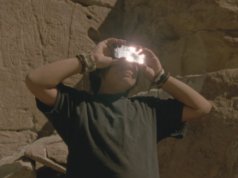
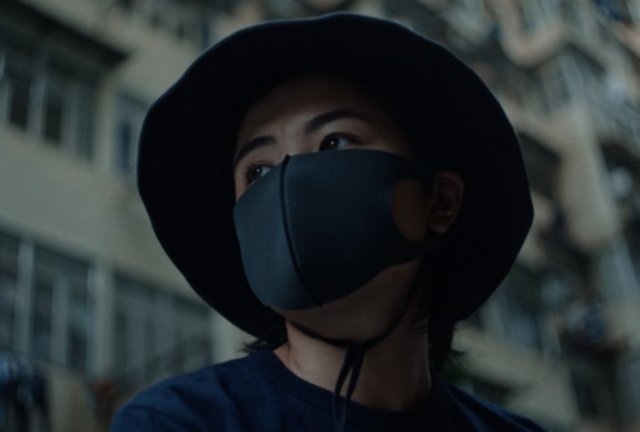
Böhm’s multi award-winning Dear Future Children follows activists on the protests in Hong Kong against the Beijing-influenced administration under Carrie Lam; the protests in Chile against social inequality in the country, and in Uganda at the local Fridays for Future protests and actions for climate justice.
Marking’s Undercover seeks to expose the far right in the UK and across Europe, and specifically its threat to democracy. In the film, HOPE not hate, the UK’s leading anti-extremist organisation, allowed Marking and her team to follow its team of investigators as they go undercover to expose the threat posed by the new extremists.
In Moser’s How to Build a Truth Engine, selected for SXSW 2024, researchers study disinformation and conspiracies, examining technology, journalism, folklore, and neuroscience to understand how manipulating information can alter minds and reality.
Ramskogler-Witt distils the essence of the May 27 event. Investigative, probing documentary filmmaking entails levels of complexity and risk that must be continually taken into account in order to safeguard the interests of all stakeholders within the process, she argues.
“We are trying to show different perspectives on the topic. What we see, in documentary filmmakers, is a huge responsibility in informing on, or combating, disinformation, in particular those with a strong journalism background. I also believe in the power of documentaries and how they can reach people and be opinion-forming.”
“But at the same time, at least in my view, we rarely talk in the broader sense about the risks that filmmakers are taking upon themselves while doing so. I think we need to talk more about the ethics of documentary-making in that context, because with the risks there comes responsibility towards oneself, towards the film team and towards the protagonist – and also the audience. This is a very ethical discussion, and then we are surrounded by new technologies that make our life both harder and easier at the same time.”
“So, for me, the question is how the heck do we navigate this whole complicated field? How do we tell the stories in a way that are comprehensible for our audience? How do we communicate these topics beyond the bubble? And at the same time, how do they take care while telling these important stories?”
These core questions will be further addressed during Dokumentale in June, but the May 27 debate will take place within the multi-disciplinary context of re:publica 25, where creatives across the full digital spectrum, including gaming, interactive and AI, gather to meet, exhibit and discuss.
“re:publica 25 is a festival where you have lots of influencers and people working on digital storytelling, lots of journalists and advocacy policy makers. Then there is us – introducing the subject of film and documentary,” says Ramskogler-Witt. “I think it’s very important to bridge communications, to look beyond the borders of our own industry and learn from people who do similar work to ours and start an exchange.”
Research shows that audiences retain a trust in documentaries over other information outlets. Of course, this can be open to manipulation. “I mean, people who want to erode our democracies also know by now how to use storytelling in a very clever way,” concedes Ramskogler-Witt. What’s more, one person’s ‘truth’ can be very much another person’s falsehood.
She nevertheless retains a strong belief and confidence within the integrity of documentary and the festival mechanism allowing for its display. “Through documentaries we can allow people to dive deeper into issues, into topics, to inform themselves beyond a short social media snippet. Documentary allows for more context. And the beauty of film and festivals within that context is that they invite exchange and conversation after the film, not just to watch it, but to go deeper beyond that through further analysis. Which aspects were new? Which were though-provoking? And which, maybe, are also challenge one’s own perspective?”
The re:publica 25 Truth Under Fire discussion will be held at 27.05.2025 at 11:15 am. The second Dokumentale will run 12-22 June in Berlin.