“It’s my childhood, my youth, my nostalgia,” replies the mother of filmmaker Olga Lucovnicova, when asked about being at the family home. She smiles and continues her preparations for a meal. It looks like sheer bliss, out in the Moldavian countryside, surrounded by nature, family and happy memories. But looks are deceiving in Lucovnicova’s brave and beautiful documentary My Uncle Tudor.
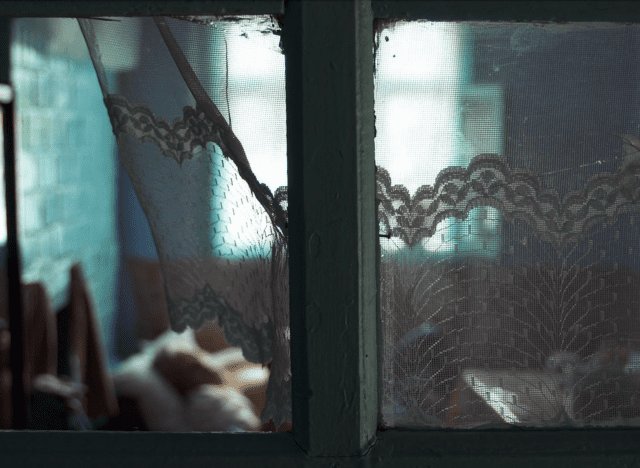
The camera searches for something inside the family house. It lingers at small windows covered by net curtains, which are gently moved by a draft to reveal an old man lying on a bed. It travels along cracks in a wall, which might be testimony to things that have happened. It investigates the patterns on the thick carpets inside the house, which may cover all kinds of sins.
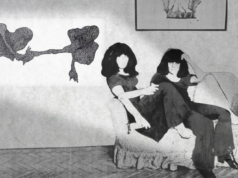
The probing camera prepares you, but by no means well enough for what’s about to happen in this short film, which at first glance seems to be a nostalgic trip into the past of a young woman. She asks her mother and her aunts about how they perceived her as a child. ‘What did you see?’ she wants to know. She shows the child she once was in an innocent looking video: a happy girl, with long brown hair and a white bow, singing a Moldavian song. The women in the house look at the black and white pictures of Olga, swooning over how cute she was, laughing at how naughty they remember her.
All the while, the filmmaker is setting you up for a confrontation with a past defined by Uncle Tudor, a jovial looking old man with a weak voice. The conversation starts off with a confession: her uncle is still haunted by the memory of how he, as a child. once slit sparrow chicks in half to watch their beating heart. “I don’t know why I did that”, he says remorsefully.
An incredibly strong and yet subtle way to introduce the main character of the story, and the point where Lucovnicova courageously dives into her past. She seems to have no qualms about unravelling what happened to her, of what happened between her and her uncle, or more precisely, what her uncle did to her. Her voice sounds calm as she squeezes out the details element by element, the almost unbearable conversation accompanied by contemporary footage of the family, her mother, aunts, uncle and herself, at the table sitting down for a cosy dinner. “I can’t forgive you,” she says. Her uncle mutters: “It’s not a sin when you’re playing and having fun.”
As the conversation continues, the camera keeps peeping through half open doors, registering the women going about their business as they did many years ago, when all this happened to this nine-year old girl. They look away, laugh the pain away, cover it with love and lies. And Uncle Tudor goes on, explaining why he did what he did – “I had nothing to do” – showing not even the smallest sliver of regret.
Lucovnicova offsets her thrilling and upsetting story with stunning cinematography, creating a sharp contrast with the aesthetics of her childhood home, which should have been a safe haven, and the horrors that took place there. She builds up to her uncle’s confessions decisively and relentlessly, using the peaceful and detailed images of the house and its inhabitants to underline the absurdity and monstrosity of his behaviour, and at the same time its normality. The statistics she shows at the end leave no room for misinterpretation: 1 in 5 children are the victim of sexual abuse before they turn 18, and 90 percent of those victims knows its perpetrator.
Exposure is the only way forward, and is a very brave decision to take. Lucovnicova has managed to break a cycle of silence – her greatest and much deserved reward is the freedom she has given herself. All other prizes this film deserves might help increase the impact of this sensitive and artfully crafted document.
Belgium, 20 mins
Written, directed, shot and edited by Olga Lucovnicova
Producer: Olga Lucovnicova
Produced by: Luca School of Arts, Brussels
World sales: Luca School of Arts, Brussels
Co-Production: Universidade Lusófona, Lissabon, University of Film and Arts, Budapest