A passionate tight-knit group of young Syrian women embark upon on a radical and perhaps controversial project: producing a play that details and exposes the culture of misogyny and sexual abuse that has been part of the everyday lives of women in their country for generations.
But a dark incident both exemplifies and momentarily derails the project, forcing both filmmakers and the group to examine themselves and the direction the project is taking.
The complex production process sees Syrian duo Talal Derki and Heba Khaled directing their film from remotely from their Berlin exile, co-ordinating with their co-director Ali Wajeeh on the ground to craft an absorbing, challenging and beautifully shot (by Raed Sandeed) film. The film could easily have become derailed but experienced producer Sigrid Dyekjær clearly helped to define the tone and direction of Under the Sky of Damascus.
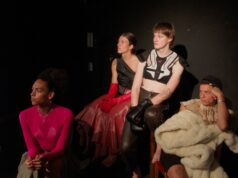
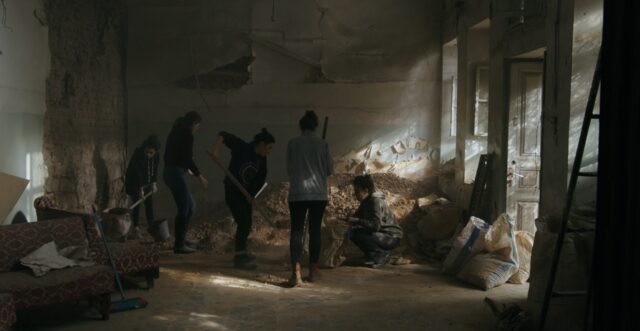
Farah, Eliana, Inana, Souhir and Grace gather together in a house in Damascus to discuss their project. They want to really blow the whistle on women’s oppression in Syria, but are under no illusion about how hard the project will be – whether in terms of getting women to talk to them, or to perform in the play, never mind the response from Syrian men of power who could make it even harder for them to get work in the future.
Opening scenes see them discussing the project with veteran actress Sabah Al Salem, recently released from prison, who reassures them of the integrity of their project. “How would these men hurt you? No they can’t…The men you’re speaking of don’t have the same level of authority,” she advises.
They conduct interviews at a clothing factory and hear awful stories of violence against women, and the group spend more and more time discussing their commitment to the project. But things are thrown into disarray when they receive a phone message from Eliana saying that she is going to have to quit the project. The remaining four are angry and bemused, but when they head to a joint meeting in Beirut the truth emerges.
It is revealed that a line producer was fired because, according to producers, “we discovered he sexually exploited women from the play.” The film’s unexpected – and very disturbing – twist naturally send things in an unexpected direction, and while it would be unfair to detail specifics, needless to say there are massive implications for their plans for the play, and for the relationships between the original five women.
But while this development highlights the issues involved, thankfully it does not distract from the important central theme. The women record testimonies from across the socio-economic spectrum, from actresses to factory workers to stay-at-home mothers. The stories they encounter are variations on the same harrowing theme: abuse, blackmail and even imprisonment at hands of husbands, brothers, fathers, employers and powerful officials. The deeply unpleasant sense of patriarchal power keeps these women trapped without access to justice, with the stories often recounted in the film’s voice-over commentary by co-director Heba Khaled.
Denmark-Germany-USA-Syria, 2023, 88mins
Dirs: Heba Khaled, Talal Derki, Ali Wajeeh
Production: Real Lava, Jouzour Film, Rustic Canyon, Sama Art
International sales: Submarine Entertainment
Producers: Sigrid Dyekjær, Talal Derki, Heba Khaled, Beth Earl
Screenplay: Heba Khaled
Cinematography: Raed Sandeed
Editor: Marion Tuor
Music: Ari Jan