How do European publicists handle their documentary films’ campaigns? How do they work across old and new media? How can they help to create buzz and outreach?
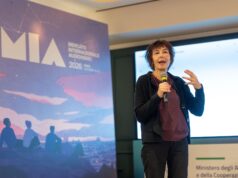
These were the core questions tackled May 22 at Cannes Docs. The “PR campaigns: Let’s make some NOISE!” event was hosted by Dutch publicist Mirjam Wiekenkamp, founder of Noise Film and TV. The firm specialises in the launch of both docs and fiction films at European festivals. Wiekenkamp works together with two staff. Industry players who usually reach out to PR firms such as Noise are directors, producers and sales agents.
First, the Noise boss highlighted how the role of the publicist is well recognised in fiction but not so widely in the field of documentary. “People either think it’s a big, scary thing that they might not need, or think it’s very expensive,” she pointed out.
Next, she provided a full overview of her activities and highlighted how strategy positioning is the key element for a successful campaign. First and foremost, the creative team needs to talk to the publicist to determine a given film’s positioning within the festival circuit and in relation to other titles, and how to make the most of the film’s premiere. Wiekenkamp pointed out how PR work is always fast-paced, and that a number of tasks and responsibilities must be handled, especially at very short notice before the premiere.
Some of the core tasks include developing press relations by building a solid network of journalists who can cover the film (via reviews, interviews, announcements and exclusives) and familiarising with each outlet’s editorial policies; developing outreach activities (especially in the case of “more audience-driven festivals”); and handling premiere protocol and logistics (crucial in the case of large gatherings such as IDFA, Cannes or the Berlinale, where many questions about matters like the red carpet, photo calls and Q&As may arise).
Other tasks comprise talent handling and event planning (for example, the organisation of a dinner or a party after the film’s premiere), social media management and media monitoring. Speaking about the latter, Wiekenkamp explained: “One person in the team ‘scans’ media, sees what’s been written about your film and presents a dedicated PDF with all the articles and some press quotes that sales agents can use to push the film even further.”
The timeline of the PR work consists of four different stages: the selection confirmation issued by the festival (“the ideal time to engage with your publicist”), the line-up announcement, the opening of ticket sales and the start of the festival.
After talking to the publicist and deciding to work together, it’s time to set up – or adjust – the film’s strategy and positioning, as well as disseminate the already available press materials. Wiekenkamp underscored how the small size of the team allows them to always watch the films beforehand and evaluate carefully whether they’re passionate enough about the project to start repping it.
During this first phase, it’s very important to identify the strongest features of your film (for example, its characters, its cinematic look or the presence of “a never told before story”), but also to discuss its weaknesses. “Talk openly, we’re there for you, and to help you,” she said.
Then the PR firm begins working on creating – or adjusting – the press materials. “Having a good synopsis is very important. […] Often the synopses we get are from funding applications, [written at] very early stage and express some kind of sentiment, whereas in the synopsis we want to know what it is about and what is the story in there.” She recommended to avoid superlatives, inflated adjectives and statements focusing on “the emotional impact you hope to achieve with your film.” She also suggested to always set time and place, focus on the storyline/events depicted and not on the overall themes, while underlining the style of the film.
In documentary, for instance, there are particular adjectives that are “abused” and should be handled with care. She referred to an article in Dutch newspaper NRC in 2013, in which journalist Coen van Zwol decoded film descriptions. In many cases, ‘poetic’ is perceived as ‘slow’, ‘thoughtful’ as ‘even slower,’ or ‘meditative’ as ‘unbearably slower.’ Other words that should be avoided are ‘intimate drama’ (‘you only had money for two actors’), ‘dynamic,’ ‘raw,’ ‘challenging,’ and ‘experimental,’ often translated as ‘incomprehensible.’
“And, make sure native speakers proofread your texts,” she added.
For film stills, the recommendation is to hire a photographer – even for a day – while on set or filming, though she acknowledged this is often not possible, especially when it comes to documentaries.
“Getting a good picture can make all the difference in the world,” she said while explaining how they picked the still of IDFA winner Apolonia, Apolonia. The first one proposed by the team was a cowboy shot depicting the protagonist just standing at a subway stop, but the other one was much more powerful, as we see the protagonist lying on the ground, photographed from a very high angle, with her visage much more visible. “We recommend getting 3-5 stills, that’s usually what festivals require, but if you have one good still, it’s still good and it can become recognisable. For social media campaigns, you can never have enough images.”
Other important press documents include logline, director’s statement (or alternatively, an interview where the filmmaker can also touch upon some emotional aspects and their intents), the producer’s statement (optional), some contextual information about the topic covered by the film, such as bios, filmographies, credits, tech specs and contact information. Other printed materials include posters and flyers. Business cards are also good to show at networking events, and these should include the screening’s dates and venues.
The electronic press kit (known as ‘EPK’) is not just a digital version of the aforementioned documents, but it also includes other AV materials such as clips, audio fragments, behind the scenes materials, teasers, trailers and extra video material which can be required by the festival or used by other media for their coverage. Clips may be useful for coverage by a TV channel, while teasers and trailers can be published by trade publications to create buzz around the title, for example.
The last part of Wiekenkamp’s talk touched upon online presence – including the handling of the project’s website, its IMDb page, its Wikipedia page and relevant social media. She also recommended the use of private screeners to allow wider coverage of the film and to choose other platforms if the team feels insecure about Vimeo. “Sometimes, we prepare all of this in one, two weeks. There’s a lot of this you can do yourself, so that the publicist can help you finely tune it,” she reminded her professional doc audience.