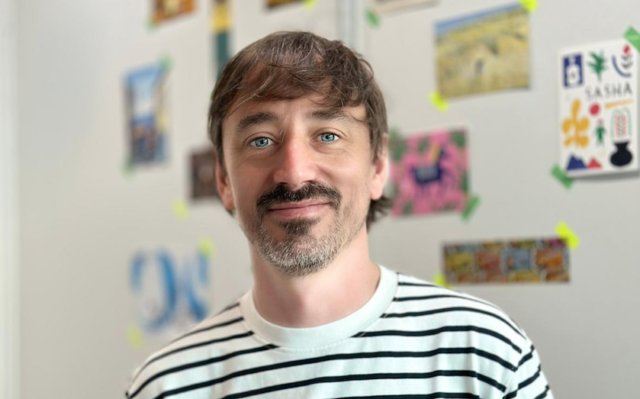
Director Pierre-Alexis Chevit outlines from the word go a core strength of the Cannes Docs market programme dedicated to all things documentary – its fundamental difference to everything else happening at the festival.
“We are surrounded [in Cannes] by people working mainly with fiction. But that’s precisely our raison d’être: to offer a physical space and dedicated program of activities for anyone working with feature-length creative docs, within the overwhelming Cannes ecosystem. We are a home for documentary film professionals in Cannes,” he says.
“But on a more symbolical yet fundamental, political level, Cannes Docs is also about advocating for documentary cinema – and everything it embraces and represents – at the very core of the world’s number one film market and festival.”
The 12th edition of Cannes Docs once again seeks to invite all the major players working in the documentary marketplace to experience and/or contribute to a series of customized events over the course of six days during the world’s most important festival.
The market offer includes one-on-one consultations with decision-makers, group presentations with industry professionals, social events, panels & talks, special screenings, workshops, happy hours, as well as curated showcases of docs-in-progress from all around the world, from territories as far afield as Scotland, Chile and Canada, and from institutions such as Docs By The Sea (Indonesia) and the Circle Women Doc Accelerator.
The climax of the market event is Doc Day when Industry prizes are handed out and when docmakers and execs can reflect, via a series of panels, keynotes and talks, on “how the documentary genre is continuously evolving as a marketplace, as an artistic form, and as a tool to raise awareness and drive global change.”
“At the end of the day, the goals of Cannes Docs are very similar to those of the industry components of [other] such major festivals,” says Chevit, citing the likes of CPH:DOX and IDFA. “Gathering, supporting, nurturing the doc community; offering precious connections and opportunities; disseminating documentary know-how and, more than anything, helping films to be made, careers to exist and hopefully, to last.”
Chevit talks up the benefits of partnering with Cannes Docs to make best use of the facilities (and space) on offer in the Riviera. “For sales agents that are one of the Cannes Docs exhibitors, there’s the visibility of course, and the coherence of being located at the docs venue rather than in some random alley of the Marché,” he says. “But also on a very practical level it’s just one of the most accessible options financially to have a private table to take business meetings. And as an official exhibitor you can book market screenings, access all kinds of Marché du Film events, etc.”
“For the Showcases of docs-in-progress it’s a different situation. These clearly offer great visibility and exposure to the participating projects, for the attention of key festivals and sales agents. The Cannes Docs “stamp” in itself of course can help the project reach completion. There are also a number of awards to be won.”
Doc Day on May 23 comprises a multi-faceted analysis of the contemporary documentary scene during which women doccers are placed very much centre stage. Director & DOP Kirsten Johnson, President of the 2023 Œil d’or Jury, and writer/director/producer Guetty Felin will converse on “the many ways filmmaking creates possibilities to search for the invisible, to bring life to the dead and to time travel in our own lives.” Yoni Golijov, producer of the 2022 Golden Lion-winning doc All the Beauty and Bloodshed, will dissect one of the film’s core scenes. Filmmaker Kaouther Ben Hania can be found in conversation with Rabih El-Khoury about her film Four Daughters (Cannes Competition), while director Justine Harbonnier and protagonist, songwriter and performer Caiti Lord, will discuss the making of ACID Cannes 2023 film Caiti Blues. A keynote by Ethiopian-American film producer, writer and director Mehret Mandefro will address the opportunities documentary industry to re-invent itself by moving “beyond empathy and equity,” within a realigned, less polarized, global documentary landscape.
“We try to offer something slightly different, exploring the genre in singular ways, when possible. Why not even in poetic ways, for a change,” Chevit explains of the decision-making processes behind the upcoming Doc Day. “I mean, politically, ethically, artistically, what do we want to tackle when programming such an exposed, privileged event? Well the answer to this is that we want to give voice to beautiful, inspiring people we think have important things to share. This resulted in a majority of women taking part as guest speakers this year…I heavily insist on the fact that it’s clearly not just me calling the shots here. It’s the result of a collective, shared programming, infused by amazing people like my Cannes Docs colleague Babette Dieu, as well as Marion Schmidt and Brigid O’Shea from DAE, and other generous, very supportive long-time allies.”
Across the wide documentary spectrum, and indeed among documentary audiences, we are told that we are living through a Golden Age of non-fiction. How does Chevit respond to this notion? And is Cannes likely to respond in the future with more docs in its programme?
“No, definitely not as ‘golden’ as we are told, even if, in these past 10-15 years, the enthusiasm for docs has been an uplifting thing. No, the economic reality of people all along the creative chain is not golden – including festival workers, as an essential a link in that chain,” Chevit laments.
“Times are still exciting and fortifying, though, thanks to the solidarity and resourcefulness of the community, to the multitude of well-intentioned, committed collectives and networks (not the old institutions) who are genuinely trying to support the genre, the makers, and the workers of the doc industry,” he goes on. “And times are encouraging in the way docs are somehow pushing the zeitgeist in the right direction, I believe, socio-politically speaking.”
“I do not know if the Festival de Cannes will program more docs in the future. There are two in Competition this year, which did not happen since 2004. Everyone’s free to interpret that as they will!” Chevit signs off.