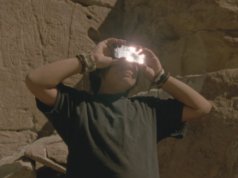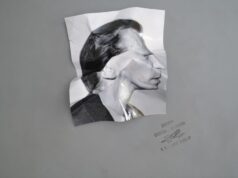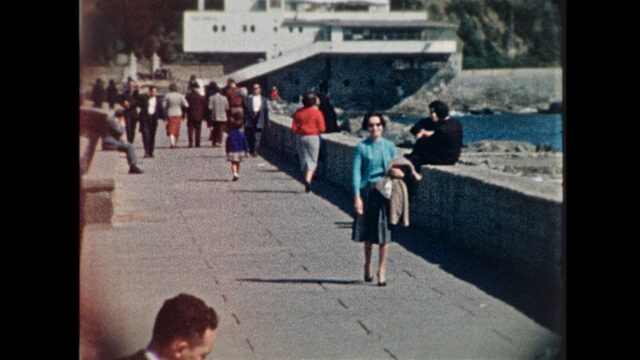
Among the highlights of Chile’s participation at IDFA 2025 is Blue Silence (Silencio Azul), by emerging filmmaker Matías Rojas Ruz, which will have its world premiere in the International Short Film Competition.
In Signed section is Letters to My Dead Parents (Cartas a mis padres muertos) by Ignacio Agüero and Invisible Life (Vida Invisible) by Bettina Perut and Iván Osnovikoff, while Dead Tongue (Lengua Muerta) by José Jiménez will play in Best of Fests.
“Chile arrives at IDFA with a vibrant and diverse presence that celebrates both new voices and master documentarians, reaffirming the creative strength and international recognition of our cinema,” says Flor Rubina, Deputy Director of Chiledoc. “We are pleased to accompany the Chilean delegation at IDFA, one of the world’s most prestigious and competitive nonfiction events, which opens doors and highlights the creative strength of Chilean documentary cinema.”
SHORT FILM COMPETITION
Rojas Ruz’s Competition short Blue Silence tells how, off the coast of Manquemapu (Chile) and buried beneath the waves lies the wreck of the Janequeo. The ship sank in 1965, claiming 51 lives. Though the sea swallowed the wreckage, on land the memory of the tragedy lives on—both among the people and in the landscape. “Blue Silence (Silencio Azul) does not attempt to reconstruct this story. With a haunting sound design and analogue footage whose colours have faded or have oversaturated, the film explores the memories of local residents—recollections worn away and eroded by time and saltwater,” writes national promotion agency Chiledoc.
Comments director Matías Rojas Ruz: “Receiving the news of the selection was truly beautiful, almost unbelievable. It felt like closing a chapter and, in a way, fulfilling a promise to my team to premiere Blue Silence someday. Being part of such a prestigious festival is already a great recognition, but it’s also an opportunity to connect with other filmmakers, learn from their experiences, and strengthen my own perspective as a filmmaker and documentarian. It’s a great moment for Blue Silence and for the other films I’m currently making.”
Rojas Ruz is currently developing his debut feature doc debut, titled Paisajes de Sitio, which unfolds in a diary-like style, through letters and everyday recordings of hia personal environment.
“The documentary tells my family story, marked by severe medical negligence that led to the deaths of both my great-grandmother and grandmother from the same illness. Their early passing deeply shaped my mother’s personality and character,” the director tells BDE of the future feature.
“Mental health and child sexual abuse are central themes in the film. It explores my personal life from childhood, revisiting my body and identity, and in some way seeking forgiveness and release from guilt.”
“This sensitive subject matter is approached with care, using Super 8mm and 16mm images to evoke nostalgia and to capture the changes we notice over time. It is a highly personal and intimate documentary, made with the support of friends and family who have accompanied me throughout the filming process,” Rojas Ruz continues. “The film aims to capture future memories,’ to recover landscapes of childhood—dreamed, imagined, and remembered—particularly those of Punta Arenas, Chile.”
Rojas Ruz is coming to the end of the shooting phase, which was funded by the Chilean Audiovisual Development Fund. “I am currently working on the developing and digitization process, since all material was shot on film,” he adds. “My intention is to begin editing and post-production in 2026, with the goal of premiering the film worldwide in 2027.”
SIGNED SECTION
The Signed section features the latest works by some of the most original filmmakers of our time and celebrates artists with a “unique artistic voice that goes beyond convention,” writes Chiledoc.
In Letters to My Dead Parents, Ignacio Agüero sets out to update his parents on both intimate family matters and sociopolitical events—beginning with his father’s death a few days after Allende’s election, up to the present day. “Fifty years both of the filmmaker’s and Chile’s life unfold through a blend of personal family archives and new material, forming an intimate socio-political tapestry that persists in Agüero’s investigative and exploratory style, which he himself calls ‘wandering cinema,’” writes Chiledoc.
Bettina Perut and Iván Osnovikoff’s Invisible Life opens the world of Professor Cristina Dorador and her vital mission. She leads an expedition into the depths of the Atacama Desert—the highest and driest in the world—searching for new medicines to fight the alarming rise of drug-resistant superbugs. These bacteria already kill 5 million people every year, a number expected to soar without the work of explorers like Cristina.
BEST OF FESTS
The Chilean doc Dead Tongue (Lengua Muerta), directed and produced by José Jiménez along with Sebastián Sánchez, is selected for Best of Fests. The short film portrays a man living in isolation on a southern Chilean beach, surrounded only by a pack of dogs. With broken words, he struggles to articulate an unspeakable secret connected to Chile’s Pinochet dictatorship.
IDFACADEMY PROGRAM
Additionally, two emerging Chilean filmmakers – Sidka Saavedra and José Jiménez – are selected for the IDFAcademy program.
Sidka Saavedra Vera attends with their documentary project in post-production, The Boy Girl and the Gothic Orca (El niño niña y la orka gótika), an intimate film intertwining Buenos Aires’ underground gothic drag scene—where grotesque and fetishistic performances celebrate monstrosity as liberation—with the director’s personal journey of gender transition, narrated in voice-over and captured through intimate moments, from personal reflections to hospital imagery. “The story doesn’t close—it transforms. A portrait of a body and community in transition, constantly evolving,” writes Chiledoc.
José Jiménez, the director of Dead Tongue presented in Best of Fests, will also participate in IDFAcademy with his feature-length project EXTERRA, co-directed with Celeste Rojas Mugica. The film begins with a group of archaeologists excavating the yard of Ingrid Olderock’s house—the most powerful woman in Pinochet’s secret police. The torturer’s archive surfaces, and the distant voice of a young narrator traces not only Olderock’s path but also those of the spaces where she trained other women who perpetrated horror. “A film built from real documents and imaginative explorations as forms of resistance,” Chikedoc underlines.
PROJECTS
In the Project Market, around a dozen documentaries in various stages of development and formats will be represented by their filmmakers.
From Chilean production company Ballover Films comes Children: The Memory That Remains (Hijos: la memoria que queda), a Chile–France co-production directed by Francisco López Balló and produced by Francisco López, Lize Bouzidi, and Jean Elios; and Territories (Territorios), also directed by López Balló and produced by Francia Aranda.
From La Ventana Cine: The Capture (of Paul Schaefer) by Rafa Valdeavellano and produced by Carola Fuentes; and I Don’t Want to Say Goodbye (No quiero decir adiós), directed by Carola Fuentes and produced by Rafa Valdeavellano.
From Galgo Storytelling: the VR project Knowing Your Nature, directed by Francisca Silva and produced by María José Díaz, along with the feature Chuchu, directed and produced by Díaz.
From Mimbre Films: No Money No Honey, directed by Nicole Costa and produced by Daniela Camino, as well as Of Water and Death (De agua y muerte), directed by Vicente Barros and produced by Rocío Romero.
From Cangrejo Films: Artefacts of War (Artefactos de Guerra), directed by Jorge Caballero and produced by Ana Giralt and Diego Pino; and Object (Objeto), a Chile–Germany co-production directed by Loreto Quijada and produced by Fernando Bascuñan, Sebastián Züger, and Loreto Quijada.
In addition, Ignacio Agüero is serving on the jury for Envision Competition.
“As a Chilean delegation, we stand out for our documentary production marked by consistency, thematic diversity, and a constant search for formal innovation,” Rubina signs off. “IDFA and its market provide the ideal environment to share this creative vitality and strengthen ties with professionals from around the world gathered in Amsterdam around documentary cinema.”