“Two out of three protagonists of Anatomy of a Portrait are on stage while the third, despite being the reason for their initial encounter, is a ghost,” begins the synopsis of Mattia Colombo and Francesco Clerici’s latest documentary opus, presented at this week’s ParisDOC Work-In-Progress forum.
The ‘ghost’ is Fernanda Wittgens, who in 1937 became the first ever woman director of one of Italy’s foremost museums, the Pinacoteca di Brera. During WWII she saved works of art from bombing raids, and helped persecuted people escape from Italy at great personal risk, eventually ending up in prison.
She was a fascinating woman who achieved much. The synopsis tells us how, at the end of the conflict, she was finally released, and fought for the reconstruction and reopening of the Pinacoteca. She saved The Last Supper by Leonardo da Vinci and was the first to implement this simple concept: art should be available to everyone.
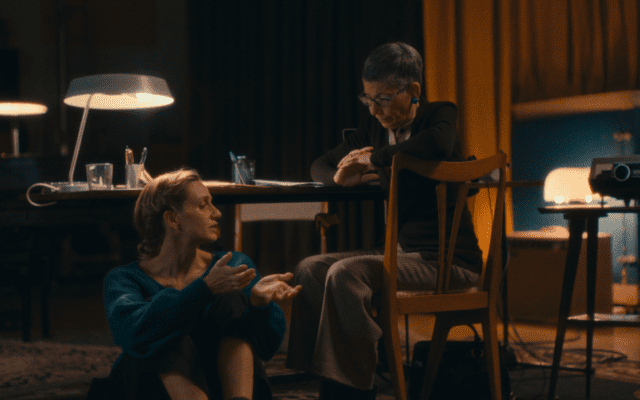
Producer Chindemi is enthusiastic about the cinematic approach used to bring her story to life. “I think that the way chosen by directors Mattia Colombo and Francesco Clerici is very engaging and fascinating: telling the story of Fernanda Wittgens through the dialogue of two women,” he tells BDE.
“The first is Giovanna Ginex, an art historian who has dedicated a lot of years to studying the human and professional figure of Wittgens, and the second is Sara Drago, an actress who has immersed herself in the multitude of letters that the director left us. The two women compare and study each other and, in speaking of Wittgens, they also talk about themselves, our society, us,” continues Chindemi.
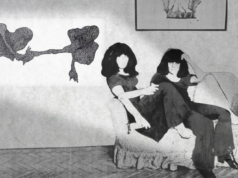
The use of the letters and resulting dialogue allows the filmmakers to stay true to the original source material, as the directors’ notes illuminate. “There are hardly any images that bear witness to Fernanda’s existence: a handful of pictures and a few frames in old footage.”
“But many are the letters she wrote that have come into our hands. Reconstructing a character of whom only words and very few images exist is a stimulating challenge. Absence allows a huge potential for off-screen narration, and it is an incredible engine: the cinematic device allows the creation of something new and unexpected, rather than a faithful reconstruction, which would be intrinsically arbitrary and falsifying,” the filmmakers note.
It’s a cinematic device that Chindemi strongly resonates with. “I believe that the film presents a high level of direction and photography and at the same time presents a unique language of storytelling,” he underlines.
We learn from Colombo and Clerici in their directors’ notes that their unique approach is also an homage to the craft of documentary filmmaking. The notes tell us that “above all, it is an opportunity to take the biopic genre to a new dimension, staging an act of love for the cinematic process itself. In a way, it is a ‘requiem for the biopic’: archival material and historical reconstruction, which at first seem essential, gradually dissolve in the present, crumbling in the confrontation with the contemporary and its demands.”
The participants in this work are given free reign, and in so doing, the story comes full circle. “We entrust [actress] Sara and [art historian] Giovanna with the fate of a cinematic experiment that unfolds in a recording studio. Under the pretext of recording the voice of Fernanda, notably absent, the two women get to confront each other, and become allies in a game of mirrors with Fernanda’s life. However, in the process of interpretation, a new portrait is created, that of a society still struggling with gender inequality, restrictions on freedom and conflicts. Art is, and will be, an act of resistance.”
The film is currently in post-production and editing stage, and at ParisDOC this week, producer Chindemi is looking to secure an international sales agent and broadcast/distribution to cover the final production budget.
“We are always careful and open to the involvement of anyone who can help the project to further strengthen, especially at an international level,” he proposes. The long cut of the doc, co-produced with Nicola Bernasconi (Rough Cat SRL), screened 26 March in front of a professional audience at Alliance Française de Paris.