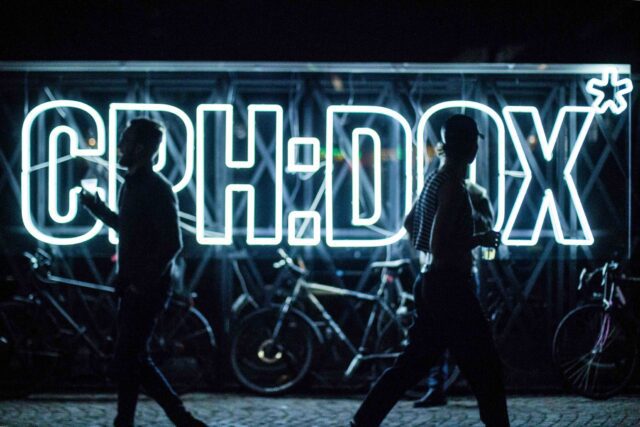
The talk Collective Action, Collective Power, presented in partnership with Documentary Campus and held as part of this year’s CPH:DOX Conference on 25 March, brought together a distinguished group of panellists to discuss the potential of collective organising in reshaping the documentary ecosystem.
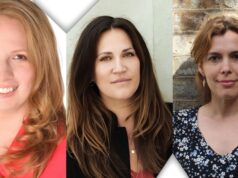
Moderated by Doc Society’s Co-Director Beadie Finzi, the panel featured Keri Putnam (founder of Putnam Pictures, former CEO of the Sundance Institute and exec at Miramax and HBO), Alexandre Marionneau (Head of International Co-Productions, ARTE France), and Erika Dilday (Executive Producer and Executive Director, POV/American Documentary).
After a round of introductions, Finzi invited the speakers to share examples of unexpected collaborations that delivered significant impact.
Dilday recalled a recent project aired on POV: a documentary film crafted by a community group, focusing on two individuals wrongfully incarcerated for over 40 years due to their involvement with a group once labelled as terrorist. “It wasn’t the most technically accurate film, but it was beautiful in its clarity and urgency,” she noted. The collaboration, which involved a civil society group and local broadcasters, offered those affected a powerful platform to tell their stories. “It’s something we hadn’t done before,” Dilday added, “but we intend to keep doing it.”
Putnam pointed to a large-scale U.S. initiative that began by linking women in film with international networks to gather and disseminate data. “We commissioned research, then translated it into a call to action for Hollywood leaders. We brought in change-makers from other sectors—like climate action—and recruited over a hundred executives to serve as ambassadors.” Although she acknowledged that progress has stalled in recent years, Putnam stressed the lasting impact of bringing unlikely allies together.
For Marionneau, collective action took shape following the full-scale invasion of Ukraine. “We gathered goodwill from ARTE offices in France and Germany, and reached out to other public broadcasters including ZDF and NDR,” he explained. “Together, we commissioned twelve films from Ukraine. The collection has since toured festivals and aired on television. It was a powerful example of resource-pooling and shared purpose.”
The conversation moved toward systemic challenges and next steps for the industry. Finzi posed a provocative question: in a sector already skilled at mobilising around co-production forums and hybrid funding, what hasn’t yet been tried?
Dilday warned of the growing contraction in the U.S. industry. “We’re losing spaces to fund and disseminate independent documentary content. I have 16 slots a year, and could fill them three or four times over. We need to create more opportunities for public, non-profit distribution.” She advocated for public access to guarantee visibility—and fair compensation—for filmmakers. “People don’t work for seven years on a film only for no one to see it. Everyone here wants to eat, but they’re equally worried about impact and outreach.”
Marionneau noted that ARTE has had to be increasingly creative amid tightening budgets. “Every single piece we produce in-house, co-produce or pre-buy is available online,” he said, citing 2.85 billion video views across ARTE platforms in 2024 alone. “Discoverability is strong—but visibility for these works, especially outside Europe, remains an open question.”
Putnam argued for the creation of a new, collaborative platform for independent media. “There’s an audience out there tired of being spoon-fed by algorithms. They want engaging, meaningful content—they just can’t find it,” she said. “Innovation is happening at smaller levels, with smaller players. The challenge is scaling it without compromising equity.”
The panel also engaged with the audience, who raised ideas such as expanding into short-form storytelling, providing YouTube distribution opportunities for filmmakers with disabilities, and supporting ventures like Little Dot Studios, which offers 50/50 revenue shares with creators. Dilday underscored the importance of such spaces: “What I love about documentary is that it’s not just journalism—it’s a work of art that stays relevant.”
She concluded with a personal reflection: “My father was active in the civil rights movement. He taught me to fight smart. We need to fight for independent content to have a place in public media.”
To close, Finzi invited attendees to write down one network they’re a part of and post it to a board—a visual reminder of the connections already in place. She wrapped the session by emphasising the need for building a system-shifting network where stakeholders not only survive but sustain one another.