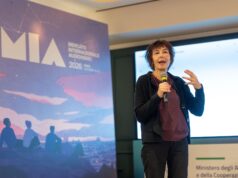
On March 25, Wolf Moon, a captivating project by Robin Petré, was unveiled at the CPH:DOX Forum. Moderated by Tabitha Jackson, the presentation offered an exciting glimpse into a film that promises to take audiences on an immersive journey deep into the landscapes of the night, exploring the evolving relationship between humans and animals in the age of the Anthropocene.
In a world where wildlife is increasingly adapting to nocturnal patterns to evade human presence, Wolf Moon delves into this growing divide between us and the natural world. As humans continue to dominate the daylight hours, the night has become the last sanctuary for many animal species, forcing a new kind of coexistence. At the same time, we find ourselves on the brink of the sixth mass extinction, with species vanishing at an alarming rate. Studies reveal that wild animals fear the sound of human voices even more than the roar of lions or the blast of gunshots, underscoring the immense impact humans have had on the natural world.
In Copenhagen, Petré described the project as “a sensorial, immersive, visceral journey that goes deeper and deeper into the night, into the dark – closer and closer to the animals.”
The film invites viewers to follow wild animals on a visceral journey deeper into the dark, where the last traces of their natural habitats still exist. Through this exploration, Wolf Moon reflects on our own longings—the yearning to reconnect with the natural world, which we seem increasingly distant from. The film takes a multi-character approach, following individuals as they navigate the night in search of something lost or out of reach.
In Japan, a group of night patrollers uses handheld GPS antennas to track bears, working tirelessly to keep these animals out of urban areas.
In Sweden, the search shifts to wolves and moose, as a team embarks on night safaris deep into forests and down rivers. Here, the animals’ interactions unfold in the near-absolute darkness, offering a window into a near future where the night might be the only habitat left for wild creatures.
Another poignant aspect of the film takes place on a theatre stage, where actors explore animal behaviour in an attempt to embody the characteristics of various species. This part of the film is inspired by Djuna Barnes’ novel Nightwood, which poetically blurs the lines between human and animal while contemplating the essence of the night itself.
What sets Wolf Moon apart is its ability to explore the blurred boundaries between human and animal, drawing parallels between actors rehearsing animal characteristics and the wild animals they observe. The film will contemplate the profound importance of animals for human thought and what it truly means to share our planet with non-human beings. The theatrical moments, infused with both stagecraft and wilderness, are crucial to the storytelling. Light from torches and spotlights creates small, artificial pockets of illumination, forming stage-like spaces within the wilderness. This interplay of light and darkness reflects humanity’s limited access to the night, emphasizing our alienation from the natural world.
Petré explored humanity’s co-existence with nature in her previous features, From the Wild Sea (2021) and Only on Earth (2025). In Wolf Moon, Petré brings her unique perspective to a story that is not only about wildlife but also about the way humans perceive and interact with it.
Producer Monica Hellström, brings her extensive experience to the project through her production company, Ström Pictures, which she founded in 2022. Hellström is a two-time Oscar nominee, known for producing Flee(2021) and A House Made of Splinters (2022), both of which were recognized by the Academy. Based in Copenhagen, the production outfit is dedicated to producing international documentaries and feature films that address human and global issues. The project has secured confirmed financial sources from the Danish Film Institute. Wolf Moon will be available in two versions: a 56-minute TV version and a 90-minute theatrical feature, making it accessible to a broad audience.
At the CPH:DOX Forum, the team behind Wolf Moon highlighted the film’s immersive quality, noting that it will take viewers deep into the heart of the night, searching for the wildlife we are losing and for a deeper understanding of our place within the natural world. The actors, who come face to face with real bears and wolves during their rehearsals, aim to embody the animals they study, offering a visceral and immersive approach to the film’s central theme: the blurring of boundaries between humans and animals.
Wolf Moon isn’t just a documentary about wildlife; it’s a poetic meditation on the fragile balance of life between species. As we watch the animals navigate the dark of the night, we will be reminded of our own disconnection from the world we once shared with them. Through immersive storytelling, evocative cinematography, and powerful thematic exploration, Wolf Moon promises to offer a poignant reflection on the world we are losing and the urgent need to reconnect with the natural world before it slips beyond our reach.