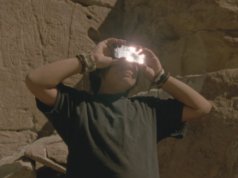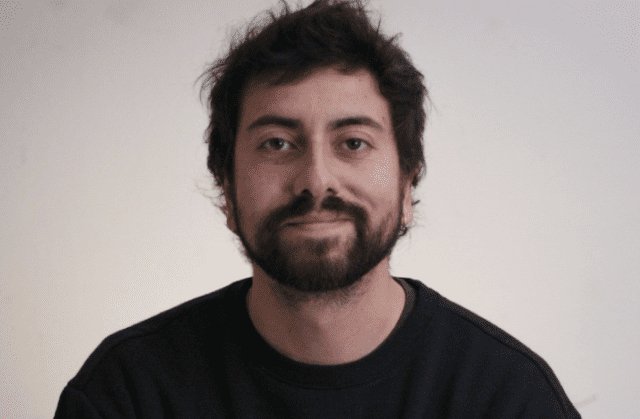
Traversing the majestic Andean Highlands, the Atacama Desert and the Coastal Cliffs, the documentary Unwelcomed unveils the harsh reality of the migration crisis in Latin America and northern Chile’s radicalisation. The pic, set to premiere in 2025 and directed by Sebastian Gonzalez Mendez and Amilcar Infante, was one of the WIP projects presented at CPH:DOX 2024.
Produced by Amilcar Films, Unwelcomed is the duo’s debut doc feature. “I’ve been a migrant myself. When I was 10, I moved with my mother to Venezuela. I lived there for about six years, and my mother was a migrant too. At my same age, she moved with her family from Venezuela to Chile,” explained Infante.
“Our movie follows the Venezuelan migrant crisis in Latin America and, specifically, in Chile [as well as] the conflict it has created in [the country’s] northern regions.”
Before showing the project’s teaser, Gonzalez Mendez zoomed in on a particular event that unfolded in September 2021. “[Back then] over 4,000 people marched against Venezuelan migrants in Iquique. They attacked them, burnt their tents and belongings. The police forces did nothing. They turned a blind eye. So we woke up in a country we couldn’t understand. We knew something different was going on, so we started our journey [with this film].”
“More than 7 million Venezuelans had left their country. Around 1 million arrived to Chile over the last few years. Migration is a complex issue. It has many layers, and there’s no easy answer or solution. And there’re [surely] problems related to criminality. We can’t ignore those. But, above all, we found how this context has been manipulated to serve political interests,” continued Infante.
“Through [traditional] media and social media, these people instilled a logic based on fear and hatred in society; a society that doesn’t have the tools to tackle all of this, that has been historically neglected by their governments. Since we left, the situation kept developing, with many more cases [like this], including killings. Somehow, violent behaviours towards migrants have been normalised.”
Gonzalez Mendez informed the audience about the status of the project: “Currently, we’ve got our first cut of the movie, [lasting] 90 minutes. We’re looking for partners, co-producers and sales agents. At the same time, we want to develop an impact campaign. This is really important for us. [We want to launch it] in the same areas where these problems have emerged, and give people more tools to understand the migrants’ conditions. We’re planning to finish the movie this year, and to premiere it next year.”
“We’re facing many social and political challenges. Hate speech and extreme rightists have been on the rise over the years in our region, Latin America. Nowadays, many migrants – especially those who are poorer and with dark skin -are being treated like criminals. How do we really want to deal with this problem? We think it’s an important question to ask ourselves, hopefully contributing to decriminalise migration. And not by antagonising more people but through empathy, putting ourselves in each other’s shoes. That’s the power that cinema has, and the spirit of our project,” underscored Infante.
Throughout the film, the directing duo follows part of the 4,000-5,000 km migrant path (a distance comparable to that between Northern Finland and Northern Africa), as they enter the border with Bolivia, reach the Highlands, walk through the dry Atacama Desert until they arrive in Iquique. The doc features the perspectives of the migrants, but also of those who welcome – or “unwelcome” – them.
“Chile is a complex place, and nature is a massive geographic barrier for migrants. The first group of migrants invited by our President came by plane, through a better prepared, organised process. The rest of them were living in their country with no food, so they had to cross each country on foot, while receiving an awful treatment along the way. Then they finally end up in Chile – after many died crossing the Highlands. They arrive to Iquique, the ‘promised land’ and then there’s a parade of people looking for them, with hatred.”
“That’s something no one can take. We realised that, and that’s the reason why we want to make this movie; to show the reality these people are going through,” they end.