“Perhaps it was a final journey. A desire to remember the bond and love between a father and a son, just as despair was beginning to take hold.”
Producer Carlo Alpeggiani (The Blink Fish Srl) talks to BDE about Giacomo Boeri’s Stories for Sandro, which sees the director document his father’s descent into Alzheimer’s and his own mission to not only treasure the moments of clarity, but to create a narrative about his father’s life, his intellect as a journalist, and his ability to find creative answers, even in such adverse circumstances.
Indeed, it is his father’s quirky approach to life that helps the director tell the story of Alzheimer’s from both sides.
“His memory may be fading, but not his boundless optimism, nor the imagination he has always demonstrated, coming up with unexpected solutions and facing life with the lightness and grace of a dragonfly… Even in the face of illness, Sandro has had—and still has—a unique approach, one that will allow us to tell the story of this relentless and terrifying disease in a fresh and surprising way,” the director’s notes explain.
Director as participant is never an easy path to take, as producer Alpeggiani outlines. “Giacomo found himself immersed in this story. After an initial wave of deep discouragement, his strength came in choosing to face the devastating news using the tools of his craft. With imagination and creativity, he set out to capture on film fragments of life that were slowly slipping away.”
It can be a fine line between being caught up in the emotion of a personal story whilst also maintaining the cool, analytical director’s eye required to create a documentary of universal appeal. It is a line which director Boeri navigates brilliantly, according to Alpeggiani.
“Giacomo had the strength to separate his role as an emotionally involved son from that of a director working on his first feature film; something that more than once caused moments of crisis and doubt, but which he managed to carry forward with strength and determination.”
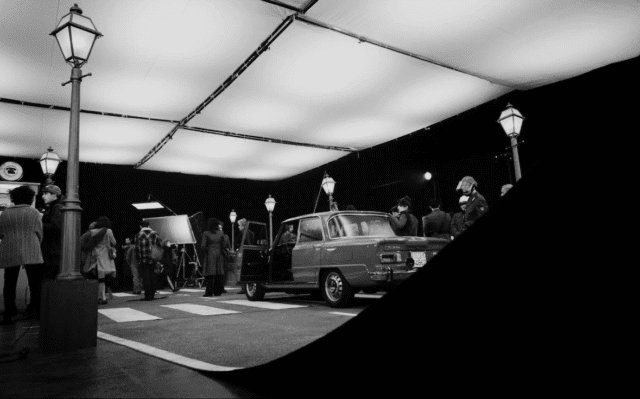
The footage from behind the camera gives us insights into the bond between father and son, but also into the personal cost of such an undertaking.
The project notes underline the point: “Up until that point, Giacomo had stayed behind the camera, but this is the moment when we see him by his father’s side during the filming, immersed in the dual role of both director and son. Moreover, the backstage footage will convey what it truly means to make a film—how much effort and hard work it has cost Giacomo to set in motion such a large, complex machine involving many people, a reality that is often hard to fully grasp for those outside the industry.”
There were practical obstacles, too. With the onset of the disease, and inevitable decline, the time they had to make the film was unpredictable and condensed. Perhaps this is where a director’s determination, vision and passion for a project is most essential in maintaining momentum and bringing the team with them. Alpeggiani tells us: “The production team took a leap of faith, continuing to film without having secured full financial backing for the project. Thanks to their perseverance and dedication, Giacomo was able to carry on with his work and complete the film within the necessary timeframe.”
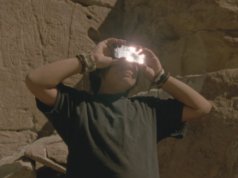
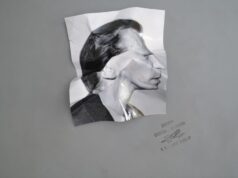
Cinematically, the film will draw on several techniques, “multiple interwoven languages,” as Alpeggiani puts it. “On one hand, there is the documentary footage, primarily shot handheld, offering a raw and intimate look at the real-life relationship between father and son. On the other, the language of memory emerges, with a more dream-like, cinematic aesthetic, marked by a richer and more varied colour palette.”
Lastly, there are the archival segments, presented in black and white or with soft, faded tones, evoking a sense of the past. “These were filmed with old 8mm cameras, further enhancing their nostalgic quality,” he adds.
The team are aiming for a theatrical release in Italy, where Alzheimer’s has long been viewed as a taboo subject around which there has been “a deafening silence from those in power in the face of a growing social emergency,” says Alpeggiani.
From an Impact perspective, Stories for Sandro is, “a project that seeks to offer a different perspective on Alzheimer’s: not a solution, but an alternative way to face it,” says Alpeggiani. It’s a new take on the people and family experiencing the disease, and aims to give a spark of inspiration, or simply a more optimistic perspective to those facing the disease, who could have a tool that casts a diagonal, alternative gaze on the inevitable.”
The film already has the patronage of the Alzheimer’s Federation Italy, an organisation which coordinates all Alzheimer’s associations across the country, which also brings with it press office support.
The team is looking to attract festival interest, distribution and a sales agent as well as build “a network of synergistic contacts” who believe in the project as much as they do, Alpeggiani stresses.
“One point on which everyone was aligned, they believe the time is ripe to share not only a story that raises awareness but one that can also inspire all those who, whether close or distant, are impacted by Alzheimer’s disease,” Alpeggiani ends.