The meandering reflectiveness of The Rhine Flows to the Mediterranean Sea very much suits the nature of this intimate low-budget documentary as filmmaker Offer Avnon offers up images and conversations with people in Germany, Poland and ultimately in Israel to discuss pain, memory and traumas that are still explicitly linked to the Holocaust.
Avnon, the son of a Polish survivor of the Shoah, admits that “for no plausible reason” did he move to Germany at the age of 30 to learn “the beautiful language of the former arch enemy,” adding that “never, not for a single day” was he able to forget the Holocaust during that time.
The start of his film sees him list – and show footage of – the various people that he will talk with over the course of 95 minutes (including his father, now living in Haifa, and his father’s Arab butcher), but their names are not repeated during the film, which at times makes it a challenge to keep up with the spiralling threads. But then, the free-flowing (and at time seemingly haphazard) structure of the film is very much Avnon’s style.
According to the filmmaker, this documentary aims to delve into the persistent traumas, mechanisms of repressing the pain, and attempts at reconciliation, and examine what kind of dialogue is possible between relatives of perpetrators and victims and how one’s identity or membership in a community mould one’s awareness and perception? It is ambitious, and does work at times with striking comments and recollections reinforcing that the Holocaust quite rightly still plays a massive part in the shared history of Poles, Germans and Israelis.
Sometimes the film struggles to find its tone as interviews veer between enthralling and simplistic. One old man recalls that “the Germans were awful…dreadful…not soldiers,” before adding that if younger Germans say “they weren’t even alive then” that this is “not an apology.” He swiftly then cuts to a German man born in 1967, who makes models of German wartime tanks and collects World War II memorabilia. It is an intriguing juxtaposition but also a rather heavy-handed one.
The film’s – and the filmmaker’s – journey sees him return to Haifa and reflect on time spent between the rivers Rhine and Neisse, but also looks at his home from a changed perspective, though in truth this feels tagged on rather than a key element of the story. His questions to his father about how Arabs had lost their homes could have been explored in greater depth, but ends up being an end coda of sorts rather than a fuller look at the Israeli-Palestinian conflict.
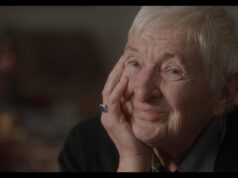
But there are also powerful moments as recollections go in unexpected directions, such as an elderly Polish woman who recalls as a child being asked to deliver letters from Jewish women in need of help. She says candidly that she read the letters but when she saw some of the women were asking for cosmetics to try and look good for the Germans she lost respect for all Jews.
The film is not about big stories, though, it is about small recollections; slight glances and nuanced testimonies. It offers a look at people who veer between positive and gentle and others who are still carrying anger or anti-Semitism. It offers fragments and clues rather than answers, which in the end perhaps reflects the underlying and continuing complexities of response to the Shoah.
Israel, 2021, 95mins
Dir/Prod/Editor/script Offer Avnon