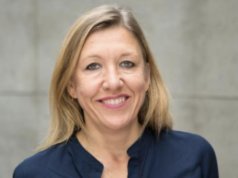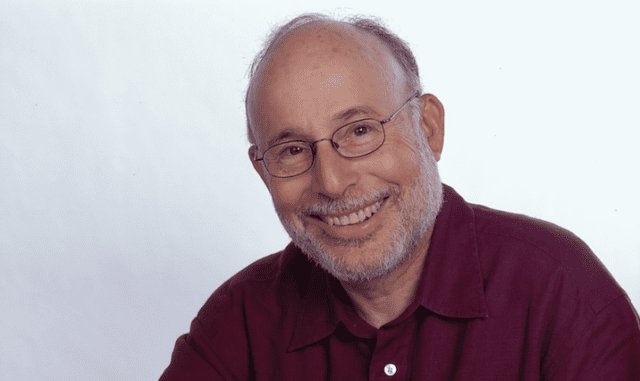
US journalist-turned-Academy Award-winning filmmaker Mark Jonathan Harris visited the Czech capital last week in two capacities: as a juror in the International Human Rights Film Festival and as a guest tutor at Ex Oriente and the East Doc Platform.
A working filmmaker and film teacher, he came to the event as a representative of the American Film Showcase, the US State Department’s premier film diplomacy program, and brought to East Doc his perspective as a documentary filmmaker with over four decades of teaching experience at the University of Southern California School of Cinematic Arts. “I have experience in helping filmmakers define and conceptualize their projects… I noticed that some of the filmmakers changed their pitch after talking to me a little bit. Some actually changed their sizzle reels and went back to the editing room. So, you offer a feedback always and if it resonates with the filmmakers, they take it. If it doesn’t resonate, they ignore it, as they should,” he tells Business Doc Europe.
But he also brings the perspective of an American audience, which European filmmakers are keen to tap. “I think many of the filmmakers that I spoke with would like to have their films shown in America. I think people would like to have their films shown in festivals like Sundance, or likely have their films considered for an Academy Award. This is still a Holy Grail for many filmmakers. Film is now global and the American audience is part of that global audience and people want to be able to reach it,” he says.
Every summer, the American Film Showcase organizes a workshop for emerging global documentary filmmakers, bringing to Los Angeles a dozen filmmakers from around the world to workshop and develop pitches for their films. As an example, Harris cites the Czech film The Other One by Marie-Magdalena Kochová that was developed at this particular workshop, but also at several events linked to the East Doc Platform. “I was really pleased to see how well the film had turned out. We helped her develop it and I looked at it several times in the rough-cut stage and I think that my advice helped her realize her vision and I was very pleased to see that,” shares Harris.
As for the East Doc Platform, he likens Ex Oriente to speed-dating, “You get to see their trailer or their sizzle reel, and read their proposals and you meet the director and producer for forty-five minutes. And you try to give them feedback on their project and see how you can be helpful in helping them to think about conceptualizing their project and how to communicate what they’re trying to do to funders and broadcasters and distributors,” he explains, adding he was impressed by the quality of the selected projects. “I think many of the projects were very strong and I think there were a lot of interesting and compelling films presented.”
For him, the East Doc Platform is a window into the world of Central and Eastern Europe and what is happening there, offering a firsthand view of the issues Central and Eastern European filmmakers are dealing with in their societies. “It’s a chance to have provocative and stimulating conversations with other filmmakers,” he remarks.
As a journalist, Harris was a contributing editor to New Westmagazine, and he also wrote articles, essays, and reviews published in a number of US newspapers and magazines such as TV Guide, American Heritage, the New York Times, the Los Angeles Times and the Washington Post. In a way, journalism taught him about documentary filmmaking early on. “As a journalist, I learned skills about interviewing people; how to get them to speak emotionally and honestly about themselves. So that is I think what I bring from journalism to filmmaking – my ability to draw people out to hear their stories. And that’s essential for documentary filmmakers. And also…two things are important as a documentary filmmaker. One is curiosity. And the other is empathy. And both allow you to get people to tell their stories and reveal themselves,” he notes.
In fact, after graduating from Harvard College, Harris started his professional career covering crime from five in the afternoon to two in the morning for the famed City News Bureau of Chicago, where novelist Kurt Vonnegut and Pulitzer Prize-winning reporter Sy Hersh also started their careers.
So, what does he think of the rise of True Crime series?
“True Crime is the documentary equivalent of the Marvel movies. And I think both eventually are going to peak. I think the Marvel movies and superhero movies have already peaked. And I think that in the not too distant future, the crime stories will also peak,” he reveals.
In his work as a filmmaker, Harris has always been drawn to urgent and pressing topics. His film Breaking Point: The War for Democracy in Ukraine, that he co-wrote and co-directed with Paul Wolansky and Oles Sanin, follows several characters who were radicalized, or whose lives were changed by the Maidan Revolution and who then went on to either fight the war or be involved in trying to reform the political system. The film continued with the annexation of Crimea and the beginning of the war in Donbass, which eventually turned into the full-scale invasion. “The film was very prescient. And if Putin had seen the film, he might have realized that it was not going to be easy to just walk into Ukraine and conquer it. He completely misjudged the resilience of the Ukrainian people and their sense of nationhood,” Harris explains.
The Academy Award-winning film Long Way Home delves into the three-year period between the liberation of the concentration camps and the founding of the State of Israel. “It’s really about refugees. And so is Into the Arms of Strangers, which is particularly relevant now because we have such an influx of refugees all over the world. But Into the Arms of Strangers, which also won an Academy Award, is about the British rescue of 10,000 children in the nine months prior to the beginning of World War II. Britain was the only country willing to take in children [and] unaccompanied minors up to the age of seventeen. And right now, we have a refugee crisis in the world. So, the film is very relevant, sadly,” he adds.
But what is a good documentary according to Harris?
“A good documentary is one that makes me look at the world freshly, that makes me see something when I leave the theatre or I see the world differently. The definition I like to use of documentary films is an old English doc definition that comes from [Scottish] John Grierson, the father of the British documentary film movement, who said the goal of documentaries is to introduce one segment of society to another. And I think, in a global world, it’s to introduce one part of the world to the other,” he shares.
Harris also cites Chris Marker, Edgar Morin and Jean Rouch as important influences who shaped the way he thinks about documentary. “Cinéma vérité, or direct cinema – the American approach to documentary filmmaking – which is what we call the fly on the wall, observational school of documentary film,” he reflects. “But at the same time, Rouch and Morin, where we’re looking at the way they use film, not just in an observational way, but as a provocative way of interrogating, questioning people – and that appealed to me more,” Harris concludes.