Crowned most promising European project at last year’s Ji.hlava Documentary Film Festival, Pepa Lubojacki’s debut project If Pigeons Turned to Gold zooms in on four family members, including Lubojacki’s own brother and cousins, unhoused for over a decade and struggling with addiction. The work-in-progress, produced by Wanda Kaprálová for CLAW AV with Guča Films, was further presented both in Prague and at CPH:DOX 2024.
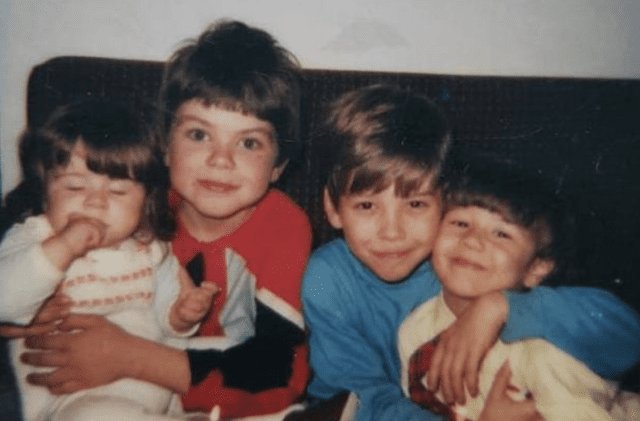
“I started thinking about making this film about five years ago, when I met my older cousin David at the hospital. His legs got amputated and he’s been living in the streets for over a decade. I wondered for a million times in my life why so many of my relatives struggled or are struggling with addiction,” told Lubojacki in Copenhagen. “Our film follows three years of my life, and that of my older brother and my closest cousins [David and Marco].”
The director showed the audience the project’s first clip, containing glimpses of the relationship between the young men, and opening with an audio recording of a phone call with Lubojacki’s mother.
“I couldn’t save my father, who also died because of his addiction. But I decided to try to save my brother. But what does it mean to save someone? Is it even possible without compromising one’s mental health and life?” Lubojacki asked the audience. For him the only way forward is to “respect” these people and the “tempo of their healing,” avoiding judgement as much as possible.
Witnessing their brother’s addiction has been the most difficult thing of his cousins’ lives, the director reveals. The man sleeps on the stairs, on the benches, on the buses, and in their mother’s flat and then on the streets again. He lives through circles of sobriety and relapses, while his health keeps deteriorating.
In the second clip, Lubojacki introduced David himself, the object of everybody’s concern.
“My cousin grew up with our grandparents, because his mother also struggled with addiction. My father’s sister abandoned him when he was a baby. When we were growing up I saw David as the most responsible and magnificent child who loved helping others […] He married young and lost his wife due to cancer. He’s been unhoused ever since.”
Nevertheless, David loves jokes and in this film he represents hope. In the last clip we get more acquainted with his younger brother Marco. He rides through Prague on a bike, scavenging insulated copper wire, which he then burns. He’s always on the move, never in one place. He is based in an abandoned garage on the outskirts of the Czech capital, and lives with a cat and a dog. There, he records daily DJ sets, dreaming of playing electronic music at big music parties.
“Marco grew up with his mother between the Czech Republic and Germany, where his mother works as a sex worker. Marco has been taking drugs for over 20 years, and he accepts there’s no other life waiting for him. He’s alright with that because after such a long time, he wouldn’t know how to live [differently] anyway,” Lubojacki says, adding how he attempts to finding the best in every possible situation.
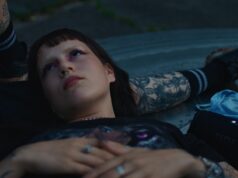
Lubojacki explains that camera shots focus on “more objective views, characters and environments,” whilst iPhone shots aim “to capture more intimate moments” and to see the world through their eyes.
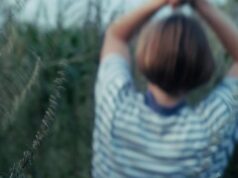
“The highly stylised scenes are my memories, a way [to go] back to childhood where it all started. They’re told in an essayistic style and split into different chapters.”
Producer Kaprálová describes If Pigeons Turned to Gold as “a powerful, deeply intimate film” showing “fragile family moments” and praised Pepa’s determination to share their story. “Nowadays in the world of increasing uncertainty, pain in families grows and is passed further on. […] The theme of addiction is often politically suppressed and downplayed by media even though it concerns many individuals and families. [Addiction] is shot in a sensitive way in our film. It’s shot through the lens of its roots, and its psychological consequences.”
Confirmed partners on the project include the Czech Film Fund and the Slovak Audiovisual Fund. Czech Television, the Prague Audiovisual Fund and FAMU are also co-producing. Delivery is slated for spring 2025. The team is now looking for broadcasters, festivals, distributors, sales agents and partners who could help finalising the project’s financing.