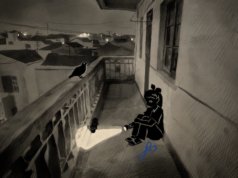
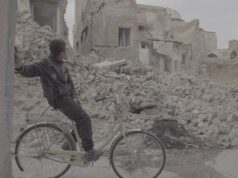
On 15 February, the EFM hosted a panel titled “Encouraging Growth: The Journeys of Highly Acclaimed Documentaries,” moderated by Deadline Documentary Editor Matt Carey. The event featured Mediawan’s Head of Documentary Sales, Arianna Castoldi, and Les Films du Losange’s Head of International Sales, Alice Lesort, who discussed the remarkable trajectories of Johan Grimonprez’s Soundtrack to a Coup d’État and Mati Diop’s Golden Bear winner Dahomey, two films that have resonated strongly with both audiences and critics worldwide.
Castoldi first encountered Soundtrack to a Coup d’État during its pitch at CPH:DOX. A few years later, she met the film’s producer, Rémi Grellety, at IDFA. “After nine months, he sent us the film, and my colleague and I were struck by how unusual, clever, and important it was. Boarding it was a no-brainer for us. We decided to accompany them on this adventure. From the first cut we saw, we knew he had done amazing work.”
“If I’m not mistaken, editing took a very long time – several years. They came to us with a great cut already, around two to two and a half hours long. It was very polished. […] They basically needed a sales agent who truly believed in the project,” she explained.
“Interestingly, both films are about colonialism,” Carey noted.
Lesort highlighted how her team was already fond of Diop’s work. Her first pitch sounded relevant and powerful, tackling post-colonialism and how societies and nations attempt to control other people’s cultures and histories. “From an international sales perspective, we knew that many countries could relate to this – both as colonisers and as the colonised. […] We know that documentaries can simultaneously carry strong messages while being works of art. We were sure both elements were present.”
Castoldi explained how the launch at Sundance was key to Soundtrack to a Coup d’État’s success, adding that the US festival remains one of the best places – along with Berlin and a few others – to premiere documentaries.
“Today, being selected at Sundance is incredibly important for documentaries. First of all, in terms of chronology—it’s the beginning of the year, and you have the entire year ahead. Plus, you can aim for the Oscars—we already had that in the back of our minds,” she said, laughing. “For our strategy, this worked well. First, we were co-representing the film with Submarine at Sundance, and then we took over the European and rest-of-the-world rights.”
Castoldi and Lesort agreed that the ‘territory-by-territory’ sales strategy remains the most common and viable, allowing for flexibility in dealing with the unique challenges posed by each country.
Carey asked Lesort whether the 68-minute runtime of Dahomey had made sales easier. She explained that while buyers are wary of long films, they also feared their film might be too short. “In certain countries, you can’t go under a specific runtime. So I’d say yes and no. We’re very happy [with what we achieved], but selling still remained challenging.”
Castoldi faced the opposite problem, as Grimonprez’s film runs 150 minutes. “We also sold it territory by territory, including to the US via Kanopy and Kino Lorber. It was tough just to convince people to watch it. When you see it, you either love it or hate it. Thankfully, the majority loved it,” she said, adding that the successful festival run and awards helped sales along the way. “Now it’s easier to sell to broadcasters as well—we have a 130-minute version for them.”
When asked about the importance of audience and critics’ awards, Castoldi admitted that while they are all beneficial, they help in different ways – some more than others – depending on the film.
Lesort added that festival audiences are very ‘localised’ – their response depends on the event’s size, whether attendees are regular cinemagoers, and various other factors.
Zooming in on the potential creative input of sales agents during the filmmaking process, Lesort acknowledged that “this is the most important part of my job.” “It’s tricky for me to separate cinephile feedback from sales feedback – they’re intertwined. That said, we discuss everything with filmmakers. We’re auteur-driven, and at the end of the day, filmmakers know what they want to do,” she explained.
Castoldi noted that they also provide feedback to filmmakers but are less involved creatively and at an earlier stage, as they are a younger company handling three to five titles per year for now. However, this might soon change. “We’re currently in discussions with a director who wants us to represent her film because she values our market insight,” she revealed.
Lesort also addressed one of the biggest challenges they faced—the perception that Dahomey was “a small film,” which she found “extremely insulting” and meaningless. This perception was reinforced by its 68-minute runtime, its low-budget nature, its setting in Africa, and the fact that it is a non-English-language documentary.
“Of course, winning the Golden Bear helped enormously, but at first, we faced this challenge. We had huge ambitions for this film, and it took a while to find the right partners.”
Castoldi also spoke about the film’s Belgian-Dutch distribution, released by Imagine around IDFA, which went “super well” and led to a broadcast deal with VRT. “The film even had to be reprogrammed because exhibitors weren’t expecting such large audiences,” she revealed.
“Other territories remain challenging, though—including all of Asia except Japan, which is traditionally more open to theatrical distribution of documentaries. And we’re still looking for distribution in Africa—for now, we’ve only arranged non-theatrical, non-commercial screenings.”
Finally, Lesort and Castoldi discussed the current state of the documentary market, describing it as highly polarised whereby . “Out of a line-up of 100 films, one will make people pay a lot for it,” Lesort observed. “The difference between now and ten years ago is that attention and money were more evenly spread.”
“Now, when buyers see great potential in a film, they engage in strong bidding wars, which can go very well. But many others remain increasingly cautious. […] We’re also more cautious than we used to be,” she continued.
On the other hand, Castoldi noted a shift in streaming platforms’ focus, stating that they are returning to traditional documentary formats—less interested in festival-oriented films and increasingly focused on true crime and celebrity documentaries. This trend, she pointed out, is inevitably reshaping the market.