At Berlin’s EFM, one of this year’s conversations about documentary form and legacy focused on Barbara Forever, Brydie O’Connor’s debut feature portrait of pioneering US experimental filmmaker Barbara Hammer. After bowing at Sundance last month, the film is celebrating its international premiere in the Forum Special sidebar of the Berlinale.
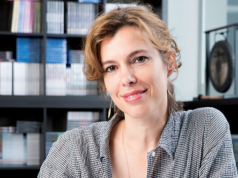
Deadline’s Matt Carey, who moderated the talk, first noted the urgency of deeply personal storytelling in documentary today, especially in projects that attempt to reflect the creative spirit of an artist rather than simply recount their life. O’Connor’s film, he observed, is “visually inventive” and carefully aligned with Hammer’s own filmmaking language — an approach that, he suggested, many documentary filmmakers struggle to achieve when tackling biographical subjects.
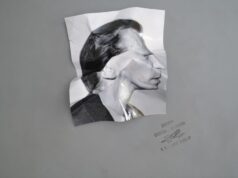
O’Connor confirmed that finding a structure that honoured Hammer’s experimental ethos was central from the outset. “From the beginning, our team thought about approaching the structure of the film through what we called ‘weird technology’,” she said. “We didn’t know exactly what that would look like at first — we really found the structure in the edit — but we knew Barbara’s films were unconventional in form, and that was a big inspiration.”
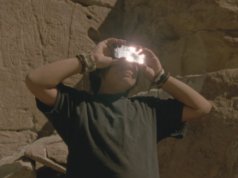
Beyond stylistic homage, the film’s narrative design also reflects Hammer’s life trajectory. O’Connor emphasised that Hammer’s life “wasn’t linear… she lived reactively and followed the life she wanted,” and the filmmakers wanted chronology to reflect her openness and curiosity. The film moves between archive footage, filmed scenes and present-day reflections, a structure that allows viewers to experience what O’Connor described as moments of “Barbara’s future”, offering intimacy with the filmmaker’s own understanding of her legacy.
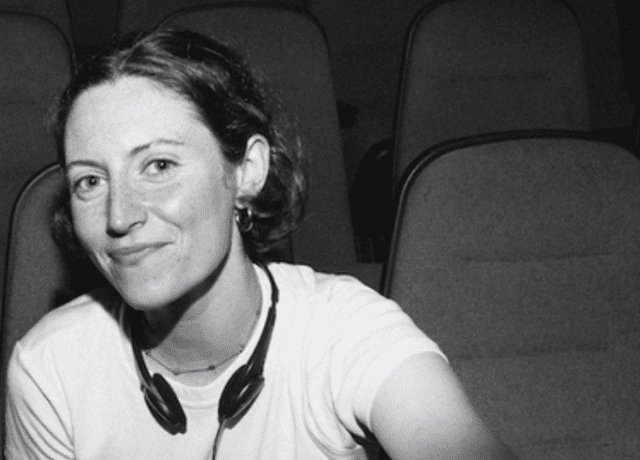
O’Connor’s dual role as director and archival producer also shaped the film’s methodology. Known in the industry for archival work on projects such as Reed Davenport’s Life After, she described archival producing as her professional foundation. “Archival producing has been my day job for years… I approach filmmaking through this lens of historical materials and history-making — who makes history and who gets left out,” she explained.
Working on shorts since 2019, she said, allowed her archival practice and creative directing to evolve together. On Barbara Forever, having another producer with archival expertise helped the small team manage and interpret vast amounts of material efficiently. “Having two archival producers helped us organise and digest the material… that experience was invaluable,” she noted.
The film includes excerpts from around two dozen Hammer works, introducing new audiences to a filmmaker whose output ranged widely across themes and forms. Asked where newcomers should start, O’Connor recommended Nitrate Kisses and Dyketactics, but also highlighted less widely screened titles such as Double Strength and Sync Touch. The latter, she said, deepened her understanding of Hammer’s fascination with tactility in cinema. She also pointed to A Horse Is Not a Metaphor as an emotional late-career film that gains resonance once viewers know Hammer’s life story.
O’Connor encouraged audiences to explore Hammer’s filmography broadly. “She was a lesbian filmmaker and an experimental filmmaker, but she explored many topics… there are so many entry points into her work,” she said.
The conversation also touched on Hammer’s relationship to the term “queer”, a label whose meaning has evolved across decades of film culture. O’Connor suggested Hammer’s thinking expanded notably in the early 1990s, when films such as Nitrate Kisses examined wider queer histories beyond her own experience. “Barbara was always ahead of her time… she was interested in evolving her understanding of the world and culture,” O’Connor said, noting her enthusiasm for New Queer Cinema and later generations of artists.
Carey also asked about O’Connor’s career trajectory following the film’s Sundance premiere, where she signed with Cinetic Media. The director said she is developing new projects while continuing to explore documentary storytelling. “I’m very excited to keep working… I’m developing a couple of projects and want to continue in documentary and beyond,” she said, emphasising the importance of collaborative creative environments.
Distribution strategy was another topic of discussion, particularly relevant in an EFM context where market visibility can shape a documentary’s afterlife. O’Connor said the team hopes to reach both broad and targeted audiences through theatrical screenings, museum and gallery circuits, and educational institutions. Accessibility, she added, is a central goal, recalling how difficult it had once been for her to access Hammer’s films. “They’re so important and deserve to be seen,” she said. “My biggest hope is that people discover Barbara through Barbara Forever and then explore her work on their own.”
Hammer’s widow Florrie Burke attended the Sundance premiere, and O’Connor described her as “thrilled that the documentary exists… thrilled to be part of it.” The helmer also reflected on the significance of Berlin and Sundance as festivals that had long supported Hammer’s work, making the film’s reception in those venues especially meaningful.
As Carey and O’Connor concluded, Barbara Forever stands as both tribute and introduction — a film that situates Barbara Hammer’s legacy within the broader evolution of queer and experimental cinema, while demonstrating how biography can become an act of creative continuation rather than mere documentation.