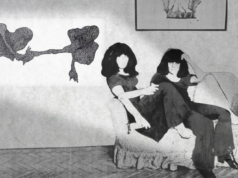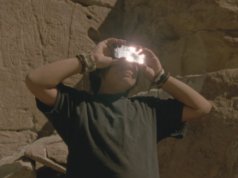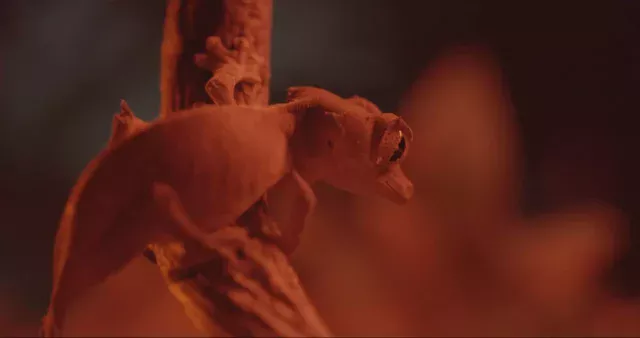
Sebastian, a scientist, and Valerio, a self-made enthusiast, cannot just stand by watching their favourite animals go extinct. So they end up taking them home, whether they be fish, geckos or salamanders. But while the creatures thrive in their new and safe haven, Sebastian and Valerio are driven to distraction. They would dearly love to be able to return the animals to their natural habitat as the business of simulating nature at home is both very expensive and highly time-consuming. But as zoos remain unable to take in the animals, Sebastian and Valerio are, for now, the species’ only hope.
“By observing these warriors and protectors of life, we get a glimpse of how this world also could be: a world where we value even the smallest of living things and where joy and friendship prevails,” read the film notes.
The doc is at production stage, with a proposed completion date of August 2026.
“[In A Box] highlights the sense of loss we will have, once some species have been lost forever, and the urgency we should have to act and fight against global warming,” producer Juha Löppönen of Mouka Filmi tells Business Doc Europe, adding how some of the animale populations featured in the film have already become extinct. “Most importantly, it gives the audience some hope that there are ways to help. Through its protagonists, the film offers relatable characters who have come up with undoubtedly unorthodox, but also practical, methods to try and help preserve certain branches of biodiversity.”
“The film’s number one strength internationally lies in its totally new point of view, and cinematic values,” he adds. “Of course the fact that the main characters speak German, Italian and English makes it easier to market and sell to international audiences.”
YLE has picked up the feature version to screen across their channels and platforms, Löppönen confirms, while ARTE G.E.I.E. has acquired rights for 52-minute version for both Germany and France. “Now, with a few pitching events in our sights, we are excited to convince more partners to join with our fresh material,” Löppönen underlines. In Helsinki and Malmö he is looking to entice sales, festivals, distribution, finance and co-pro interest.
The preliminary festival strategy is to secure an A-list festival in Fall 2026, “such as Venice or IDFA,” Löppönen notes. “I’m sure that the film will attract wide range of festivals from traditional events to more nature focused festivals as well.”
He is actively looking at options for the cinematic release of the film, with a keen focus on Central Europe as well the Nordic countries.
Löppönen further explains the different emphases within the feature and TV cuts of the film, and their respective strengths. “One is a more cinematic experience that serves audiences that are interested in observation and that will leave room for making your own conclusions, while the TV hour will be narrated and more explanatory – suitable for certain TV slots. I firmly believe that both of them will find and serve their audiences.”
The creative team of Liinu Grönlund and Okku Nuutilainen are well suited to deliver the ambitious project, the producer maintains, describing it as a “poetic documentary defined by artistic experimentalism, a humane touch and high quality.”
“Working as a writer-director duo, Liinu and Okku are able to challenge each other artistically and dramaturgically,” he says. “They have studied both filmmaking and visual arts, allowing them to combine strong storytelling and poetic visual style in their films. Both directors have focused on animals, nature and scientists in their earlier works. For example, Liinu’s film To the Unknown (2017) was made in collaboration with Finnish Association for Nature Conservation and also organisations and field stations in Madagascar.”
“In addition, Okku, who will edit the film, has a successful background as a film editor of both documentaries and fiction,” Löppönen adds. “The films she has edited have gathered wide recognition, with two Best Documentary wins at the National Film Awards (Lady Time & Hobbyhorse Revolution), and Family Time that premiered at Berlinale, to mention a few.”
In their own notes, the pair explain their cinematic approach to the subject. “The world in the film consists of two worlds existing side by side: the world inside the box (that of animals), and the world outside the box, [that] of humans,” they write. “The world inside the box is very different from the one outside. It is peaceful and simple, contrasting the human world full of gigantic problems. The world inside the box is inspired by science fiction films. It is built by humans, and surveillance and technology is ever present.”
“The boxes are like spaceships, taking a population to another place and time, far away from chaos and destruction. But the destination is not another planet, it’s a new future with a different mindset,” they sign off.