In her debut feature doc project, currently in development, Miina Alajärvi will be delivering Northern rap, Sámi-style. In the hybrid film, the story of the genre’s evolution from the early 90s to the present day is told through the impact it has had on kids (and musos) living in Finland’s north.
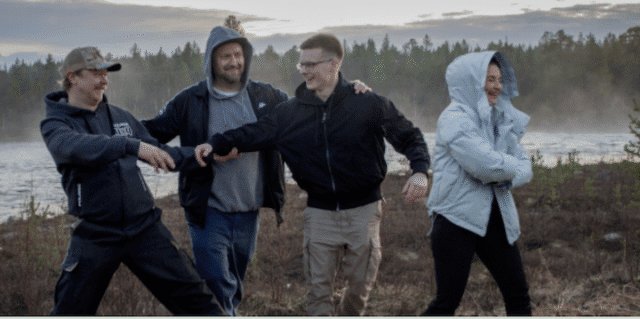
In the process, Alajärvi follows four northern rappers – Hannibal, Lapin Akka, Yungmiqu, and Talonpoika Lalli – who share their stories and music, all the time revealing their different perspectives on hip hop culture in the northernmost parts of Europe.
“This film is an important project in Finland and internationally, since it will shed light on the vibrant culture of the north that is not so well known even in South Finland,” producer Oona Saari (Illume) tells Business Doc Europe. “It will offer the audiences a window to rap culture thriving in the north. For Finns and Sámi it is important to hear our own languages cherished in rap music.”
“It will be a unique combination of storytelling by documentary and musical,” she underlines the film’s hybrid structure. “With this topic and characters, it really is the most natural form to choose.”
The subject is intriguing, spotlighting an urban culture that was born on the streets of the US, only to be embraced and adapted within “the unexpected setting of solemn northern villages,” Saari underlines in her notes for the film.
“The contrast is compelling. In the North, a rapper’s ‘hood’ can cover a surprisingly large area with very few people living in it. Yet the soul mate was found across the ocean,” she adds. Why exactly a culture that originated in African American neighbourhoods resonates so strongly in the north of Finland is a question the film will seek to answer.
“The visual and rhythmic storytelling is often lively with rich visual expression and abundant energy. In contrast the film also provides a lot of space for reflection in the silent vastness of North—the birthplace of many musical inspirations,” Saari further articulates to BDE.
“The film blends cinematic expressions ranging from documentary observation to musical sequences that elevate to levels of fantasy. A situation can suddenly change into a musical scene where the film’s characters become performers addressing the viewer and sound and image change as well.”
“Musical scenes are written and planned with our main characters,” she continues. “They may include rapping, dancing, battling and snowmobile tricks (on water), and in a different musical scene we may witness a rapper enjoying nature all by themselves. This form allows for narrative flexibility – symbolic, poetic, even surreal – beyond the limits of traditional realism. At times, the boundaries between documentary and musical blur into delicate moments where the fourth wall is broken, and documentary ‘truth’ transforms into performance.”
The project is in development, with a hoped-for delivery of December 2026, and at FFA producer Saari will be rapping with sales agents, distributors, festivals, financiers and co-producers alike. “We wish to have a good experience with good conversations and meetings with people who see the same potential with the film that we do,” she says.
“The film offers global audiences a window into marginalized cultures that thrive in the periphery of North Finland and Sápmi,” she underlines. “It reveals not only the empowering, unapologetic attitude of the genre but also gives insight into what the Northern version of hip hop bling-bling is all about.”