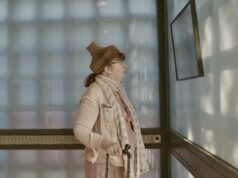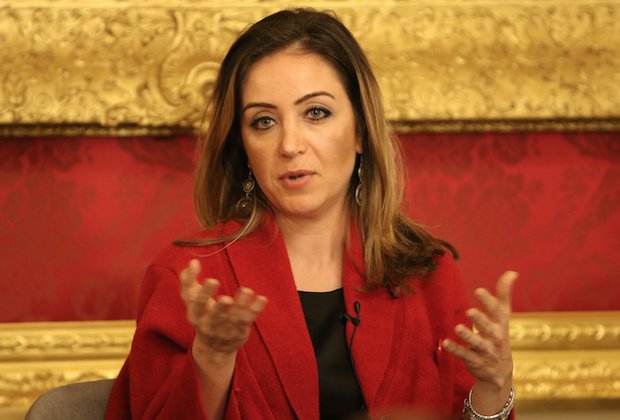
Haunted by memories of misogynistic oppression faced during the Syrian civil war, filmmaker Zaina Erhaim reconnects with four brave women she filmed during the height of the conflict. “I wasn’t planning to do a film. I was trying to document what the women were going through because I was expecting to die and I wanted something to stay, to tell the story afterwards,” Erhaim told the FIPADOC during her January 24 pitch.
Thankfully she did survive, along with three of the remarkable women, Zien, Manar and Ghalia, all of whom were eventually scattered across the globe, to the UK, US, Canada and Germany, and each with a story to tell of terrifying narrow escapes and struggles to establish themselves as educated women in their new countries.
Erhaim describes how growing up in Syria was always difficult for a woman who didn’t wear a headscarf, and she could never understand why she couldn’t do all the things her brother could. The war brought misogynistic attitudes into even further sharp focus.
“One night, I was hiding my basement during an intensive bombing. My friend brought two headscarves and told me that we needed to wear them so that if our building collapsed, the male paramedics would be able to rescue us. Since then, I’ve seen women not being rescued because they were not scarfed. The men would rather let the women die of their injuries than see them without headscarves,” revealed Erhaim.
The film reflects on the four women’s’ experience during the conflict, but it also determinedly looks at the present day, and into the future, where the four women still face battles with recognition for their talents, compounded by the fact that they are not only refugees, but females.
Zaina Erhaim herself ended up trying to make sense of her new reality in the UK. “The real focus is on the extra issues that women immigrants face. I have a Masters degree from London and I’ve been working as a journalist for 15 years, but no one could absorb that. I don’t wear a headscarf and I’m supposed to be dragging six kids and crying. Even in Britain, they couldn’t really understand that someone from the global south, from Syria, is capable of being a woman and a journalist. An immigrant man is unlikely to face the same issues, so it’s specifically the gender element of the refugee that I want to focus on.”
The other women faced equal struggles. Zien had been imprisoned in Syria and faced sexual harassment upon her release before relocating to rebel-controlled Aleppo, continuing to write protest material on the walls of the city. Forced to flee, she applied for asylum in Canada where she leads a relatively anonymous existence as a marketing manager.
Manar is a trained midwife who worked on the front lines with injured combatants and became a refugee in Germany. She was forced to sever all ties with her conservative family and is struggling to have a child of her own. And finally there is Ghalia, who was targeted for assassination because of her women’s centre in the Syrian town of Kafranbel. She recently won a Hilary Clinton award from Georgetown and is in a refugee camp in Germany.
The project description sets out how the film will begin in the present, and unfold through a combination of video diaries recorded by director Erhaim in which the women will discuss the complexities of their current realities, alongside the filmed archive from the Syrian conflict between 2013-2016. An additional layer will consist of a ‘master interview’ which brings together all the women into the same space, and which will serve as a demonstration of how difficult it is for each of the women to freely exist in this world of exile.
The film is produced by Brian Hill of Century Films, with co-producer Rohan Berry Crickmar of LS Films, both based in the UK.
Crickmar explains the project from his perspective. “So this has been a 10-year long journey. Myself and Brian saw a hell of a lot of really relevant material that the team put together over a lengthy period and we really felt that the story was something that was new and important – we certainly haven’t seen this type of voice at this moment. We already have some development funding, as well as international media and fund money. We’re currently moving from development into production – we need to capture some interview material in Canada, and to look at the master interview material that will be filmed within Germany. We’re looking for co-production partners, ideally from Germany and we’ll also be looking to speak to broadcasters.”
The projected budget is €350,000 with €232,000 still required. Confirmed funding comes from the Friedrich Ebert Stiftung Fund, Etijahat Development Funding, the International Media Support Fund and private funding from LS Production Support. Support is pending from other key core international documentary funds. The estimated delivery date is Jan/Feb 2025.