Evelien Spreitzer was born early. Better not give her a name yet, the doctors warned her parents, because she might not make it. She was actually pronounced dead more than once, says Spreitzer, and she still feels that way: as if she shouldn’t be here. As if there isn’t really a place in this world for her, and her body.
Spreitzer has disabling spasms. She needs a wheelchair to get around, and help to go to the bathroom. She has, she explains, only ever had a functional relationship with her body. Her whole life she’s been struggling to use it, to move it, to make it function as well as possible. Her body is regularly touched by caregivers – but always functionally, pragmatically.
What she hasn’t done is learn to love her body. She hasn’t seen it as a source of sensual, intimate, sexual pleasure – for herself or for a partner. And although she’s anxious about it, at 53, she longs to learn how. Spreitzer’s personal quest is what Dutch director Elsbeth Fraanje has recorded in Sexual Healing, which has its International Premiere in the World Showcase program at Hot Docs.
But Fraanje does more than just record. Her documentary has layers of meaning. The one that will undoubtedly attract the most attention is Spreitzer’s search for sexual self-discovery: visiting a sex shop, contacting a sex carer. Parallel to this is Spreitzer’s difficulty accepting her own body as it is; she has a hard time just looking in a mirror. And then there’s another, more implicit level of not only wanting her body, her presence, to be accepted by the world – but also by herself, as being worthy of being in the world. “As long as I don’t love myself,” Spreitzer says, “I don’t know if it will ever happen.”
It is rather wonderful to see how intimacy with another body helps her get out of her head, and let go, at least for a while, of this maelstrom of doubt and self-judgement. To quite literally see her feel more comfortable in her own skin.
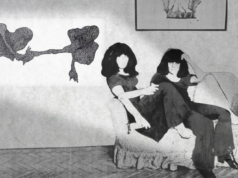
These layers have informed Fraanje’s stylistic choices. When appropriate, she approaches Spreitzer intimately, up close, as if caressing her skin with the camera (handled with care by Jefrim Rothuizen). At other times, Fraanje films from a distance, showing Spreitzer in the world. The film shows Spreitzer’s dependence, when she has to be hoisted into a bath, for example. And her determination to move forward, when she rides in her electric wheelchair, filmed by a mounted camera. Every time, the aesthetic choices seem viscerally linked to Spreitzer’s inner state, which enhances the emotional connection to her journey, especially for those of us – such as this reviewer – who are not themselves similarly disabled.
At all times, it feels as if it’s Spreitzer calling the shots. Even the cinematic style seems to be following Spreitzer’s emotions, rather than commenting on them – which is precisely the difference between presenting someone as subject or object, as an equal or an Other. That’s why it’s also crucial that we hear Spreitzer’s voice the most, directly or in voice-over. In her own funny, curious and vulnerable way, she is the one telling us who she is and what she feels, not the filmmaker or anyone else.
The documentary is also an ode to sexual aids. The sex shop Spreitzer visits with an enthusiastic caregiver – the first she has ever entered – is well-lit and welcoming, the salesperson is friendly and the toys she examines are smooth and colourful. “It’s almost endearing,” she laughs, as she holds a smaller-sized option in her hands as if it was a cute little animal, “You’d almost give it a name.” For those who still think of sex shops as grimy, sleazy places, this one will surely change their minds.
She has a less common, but even more important experience with a professional sex carer, whom she contacted through a specialised agency. Spreitzer, who doesn’t have a partner and because of her disability doesn’t believe she’ll find one soon, likes this man, with his open-minded attitude and “mischievous eyes”, as she describes them. It is to his credit, by the way, that he allows himself to be filmed during his first interview with Spreitzer. As did the person working for the agency and two other clients with similar disabilities, to whom Spreitzer asks probing questions about their experiences with the service.
But most of the credit, of course, goes to Spreitzer herself. Although it’s never explicitly discussed in the film, her decision to let herself be filmed during such intimate moments is clearly an integral part of her quest. For someone who at first didn’t even want to look at herself in the mirror, that must have been a major step. She couldn’t have known how it wou
ld turn out, but her decision paid off. Not only in self-discovery, but also in more general lessons with the potential to inspire many others, including this reviewer, who, in his own way, also isn’t always as in touch with his body as he would like. Plus, it has resulted in this documentary, which is simply a monument to Spreitzer. To her, to her body, to her spirit, and to her place in the world.
The Netherlands, 2022, 55 minutes
Director Elsbeth Fraanje
Production Tangerine Tree
International Sales Tangerine Tree
Producers Nienke Korthof, Willem Baptist
Script Elsbeth Fraanje
Cinematography Jefrim Rothuizen
Editing Ralf Verbeek
Sound design Vladimir Rakic
Sound Susanne Helmer
Music Tobias Borkert
With Evelien Spreitzer, Brigitte Thüss, Maureen Hellenbrand, Thomas Aeffner