France-based filmmaker Nolwenn Hervé arrives at IDFA Forum 2025 with The Cord, a rough-cut project produced by Estelle Robin You for Grande Ourse Films. The documentary, budgeted at €325,593, follows Carolina, a fearless activist operating in the crumbling health system of Maracaibo, Venezuela—an environment where, as the director notes, “life hangs by a thread,” and where women are forced to fight daily for their own survival and that of their babies.
Hervé explains that the genesis of the project dates back to 2016, when she first entered the maternity wards of Maracaibo. The country’s economy had suffered such a dramatic collapse that over half of Venezuela’s 80,000 medical doctors had already emigrated. What she saw in the hospital was shocking: pregnant women navigating extreme shortages, inadequate care, and life-threatening conditions.
She recalls meeting Dazy, a nurse who first opened the doors to these realities, and later encountering Carolina, described as “a fearless activist who has been fighting for justice since her teenage years.” It was Carolina who pushed her to move to Venezuela to start filming. “She encouraged me to move to Venezuela full-time and roll the camera – I did,” the director said.
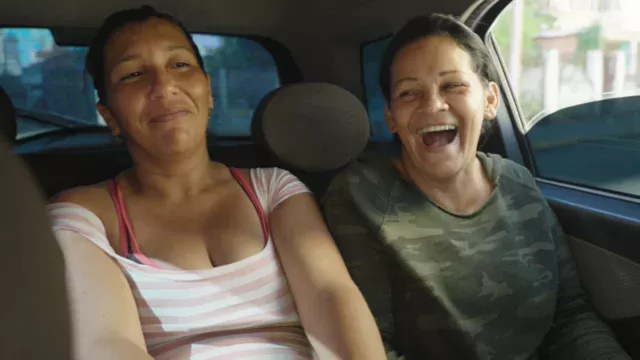
The tight confines of the car belonging to Carolina’s friend Yannis quickly became the centre of the film’s dramatic world. The team spent months in this small vehicle, rushing pregnant women from one hospital to another in a race against time. Hervé said the proximity generated a kind of built-in cinematic tension: “The small vehicle becomes the heart of the action, where the race against death unfolds as pure tension and drama.”
She adds that the emotional and physical closeness—“the tight space, shared sweat, tears, and laughter”—inspired her to borrow visual and dramatic codes from car movies. Women’s voices and bodies sit at the edge of the lens, creating an immediacy that mirrors the urgency of their journeys. “The tension is direct and palpable,” she emphasises. “Confined in this reduced space, physical and emotional proximity becomes unavoidable.”
The team hopes the film will resonate widely. They stress that while nationalist and patriarchal forces push societies toward division and destruction, The Cord champions stories of resilience, collective care and women protecting life under impossible conditions. They believe the film’s appeal lies in its capacity to alarm and inspire. It exposes the dangers posed by failing healthcare systems—an issue they say concerns Europe as much as Latin America—but also shines a light on solidarity and hope. They explain that since filming ended, Carolina has begun planning to build a clinic for women in her community, despite the crisis deepening around her. The team hopes the film will “inspire a strong support and call to action.”
Although the film is at the rough-cut stage, the producers argue that now is an ideal moment for partners to join. They say that additional financing would allow them to elevate the “artistic” finish through an enhanced post-production process, while also developing a strong marketing package in French, English and Spanish. They are preparing an impact and outreach campaign aimed at Latin America and Europe, and potentially North America. There is, they noted, still room for creative input before locking the picture.
Hervé brings a decade of experience living and working in Latin America, with a background in cinema history, directing, cinematography and journalism. Her long-term immersion has shaped a filmmaking approach rooted in trust and human connection. The team highlighted that her relationships in the region run deep: she became the godmother of Carolina’s daughter, and another new-born child was named after her. The Cord marks her first feature-length documentary and has already received support from France’s CNC for theatrical production.
Producer Estelle Robin You adds extensive international experience, with a track record including Architect on, The Last Shelter, A Thousand Fires, Girls for Tomorrow and Her Will Be Done, titles that have circulated in Cannes, Berlinale, Locarno, IDFA and CPH:DOX. She has consistently gravitated toward intimate, political stories, often focused on families navigating turmoil.
The film’s editor, Rafael Torres Calderón, a French-Mexican graduate of La Femi’s, contributes a sensibility that the team says complements both the director’s vision and Carolina’s personality. His work with filmmakers such as Lola Quiviran, Yann Gonzalez, Yolande Zukerman and Mati Diop has screened, and won awards, across Cannes, Berlinale, Locarno and numerous other international festivals. The team notes that his “sharp editing sense” and deep understanding of Latin American culture help bridge the worlds the film connects.
Producing the film in Venezuela required discretion, resilience and a broad coalition of allies. The shoot was carried out undercover, supported by NGO experts and consultants across Venezuela, Colombia and Brazil—partly because so many journalists and filmmakers have left the country, and documenting the crisis has become increasingly risky. Very few documentaries have emerged from Venezuela in recent years, making The Cord one of the rare international projects to offer such close access today.
Finally, the team underscores Carolina’s exceptional on-screen presence: a woman capable of tackling sexuality, health, faith and social injustice head-on, whether at church christenings or delivering IUDs in marginalised areas. They describe her voice as “rare, free, and empowered—bold, inspiring, and unapologetic.”