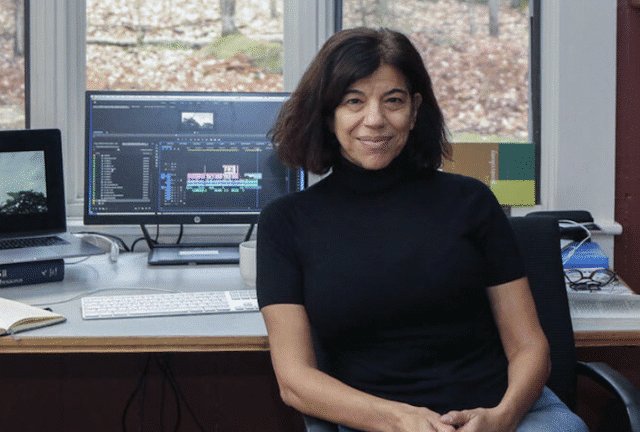
IDFA announced September 9 that acclaimed Portuguese documentary filmmaker Susana de Sousa Dias will be Guest of Honour at the upcoming edition, running November 13 to 23. The festival will organise a retrospective of her works, and de Sousa Dias will also offer a Top 10 selection of influential works by other filmmakers.
“Known for her singular approach to archival images and cinematic form, de Sousa Dias has built an internationally acclaimed body of work that interrogates dictatorship, colonial legacies, and the fragile terrain of memory,” the festival writes.
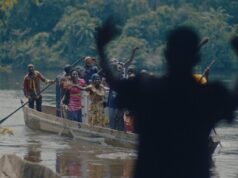
Her signature style emerged with Still Life (2005), an archival meditation on the Portuguese fascist regime Estado Novo, Europe’s longest running dictatorship. International recognition followed with 48 (2009), which juxtaposes the regime’s photographs of political prisoners with testimonies decades later, revealing the violence embedded in every image. Her latest works turn to the neo-colonial archives of Brazil, including the world premiere of Fordlândia Panacea (2025), an excavation of the former company-town founded by Henry Ford in the Amazon rainforest in 1928.
With the Retrospective, IDFA presents a comprehensive look at de Sousa Dias’s “uncompromising approach to creating dissident counter-archives and her distinctive visual style. By creating space for distance and reflection, her work prompts us to question how political histories are told through film and how we approach the narration of the past. Rather than using archival footage as mere illustration, she reframes these images of power to reveal erased histories of violence and resistance to authority.” The Retrospective titles are:
- 48 (2009)
- Criminal Case 141/53 (2000)
- Fordlândia Malaise (2019)
- Fordlândia Panacea (2025)
- Journey to the Sun (2021)
- Obscure Light (2017)
- Post Criminal Case (2025)
- Still Life (2005)
These same themes are extended to her Top 10 program, which presents an exploration into collective memory and filmmakers rewriting their political narratives. The selection includes Monangambééé (1968) by Sarah Maldoror, and Images of the World and the Inscription of War (1989) by Harun Farocki. A complete list of titles will follow.
An extended conversation with IDFA’s Guest of Honour Susana de Sousa Dias will be the centrepiece Talk of the festival’s 38th edition.
DEAD ANGLE: INSTITUTIONS
Dead Angle is described as IDFA’s multi-year focus program that looks at the systemic structures that shape our lives—using documentary cinema to reveal what remains outside our direct field of vision.
This year’s program focuses on institutions, inviting a close examination of how they operate, where they falter, and their role moving forward. “Documentary film offers a lens to trace their histories and contradictions—and to reflect on their role in shaping society and the civic structures we collectively sustain today,” the festival writes.
Among confirmed titles are the close studies of democracy and the democratic process. Frederick Wiseman’s State Legislature (2006) offers an observational portrait of the Idaho Legislature, capturing the slow, deliberate unfolding of lawmaking.
Several titles extend our perspective beyond the Western scope, examining the afterlives of colonial institutions and the ways they are being contested and reclaimed. In How to Build a Library (2025) by Maia Lekow and Christopher King, we follow the renovation of a former colonial library in Nairobi as it is transformed into a center for African literature. In Checks and Balances (2015) by Malek Bensmaïl, we witness the journalists with Algeria’s El Watan newspaper continued fight for press freedom. The full selection will be confirmed on October 14.
IDFA DOCLAB: OFF THE INTERNET
The 19th edition of IDFA’s new media program IDFA DocLab returns with an immersive and interactive documentary program presented at de Brakke Grond, ARTIS- Planetarium, and @droog. This year’s theme, Off the Internet, explores the paradox of our time: a world perpetually connected through technology, at risk of disconnection by the same tools. “The program grapples with the growing desire to disconnect, the impossibility of ever truly logging off, and the inherent privilege of stepping offline,” write organisers.
With ‘Off the Internet’, DocLab “turns to interactive and immersive art in search of new forms of presence and connection.” The first announced titles include several physical and collective immersive experiences, including the world premieres of Nothing to See Here by Celine Daemen, and Handle with Careby Ontroerend Goed (presented in collaboration with de Brakke Grond).
The final competition titles and full program of the 38th IDFA will be announced on Tuesday, October 14. The full program selection of IDFA DocLab will be also be announced in October.