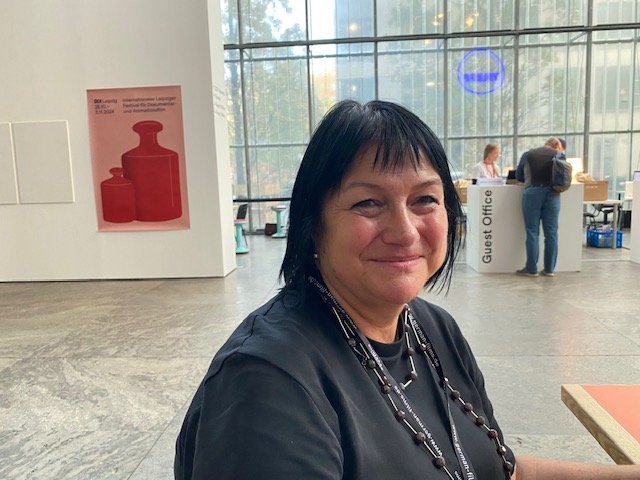
IDFA may not seem the most fertile soil for German documentaries, despite German Films MD Simone Baumann’s admiration for the Amsterdam festival, but it is nevertheless a key staging post for the country’s doccers looking to make connections with the sector’s key movers and shakers.
Baumann identifies “a different editorial line [in Amsterdam] which is focussing more on world cinema, on filmmakers from low-capacity countries,” which she acknowledges as a sound editorial decision on the part of IDFA. But she equally concedes that “we would not find our films and our filmmakers represented in a relevant way in this kind of line-up.”
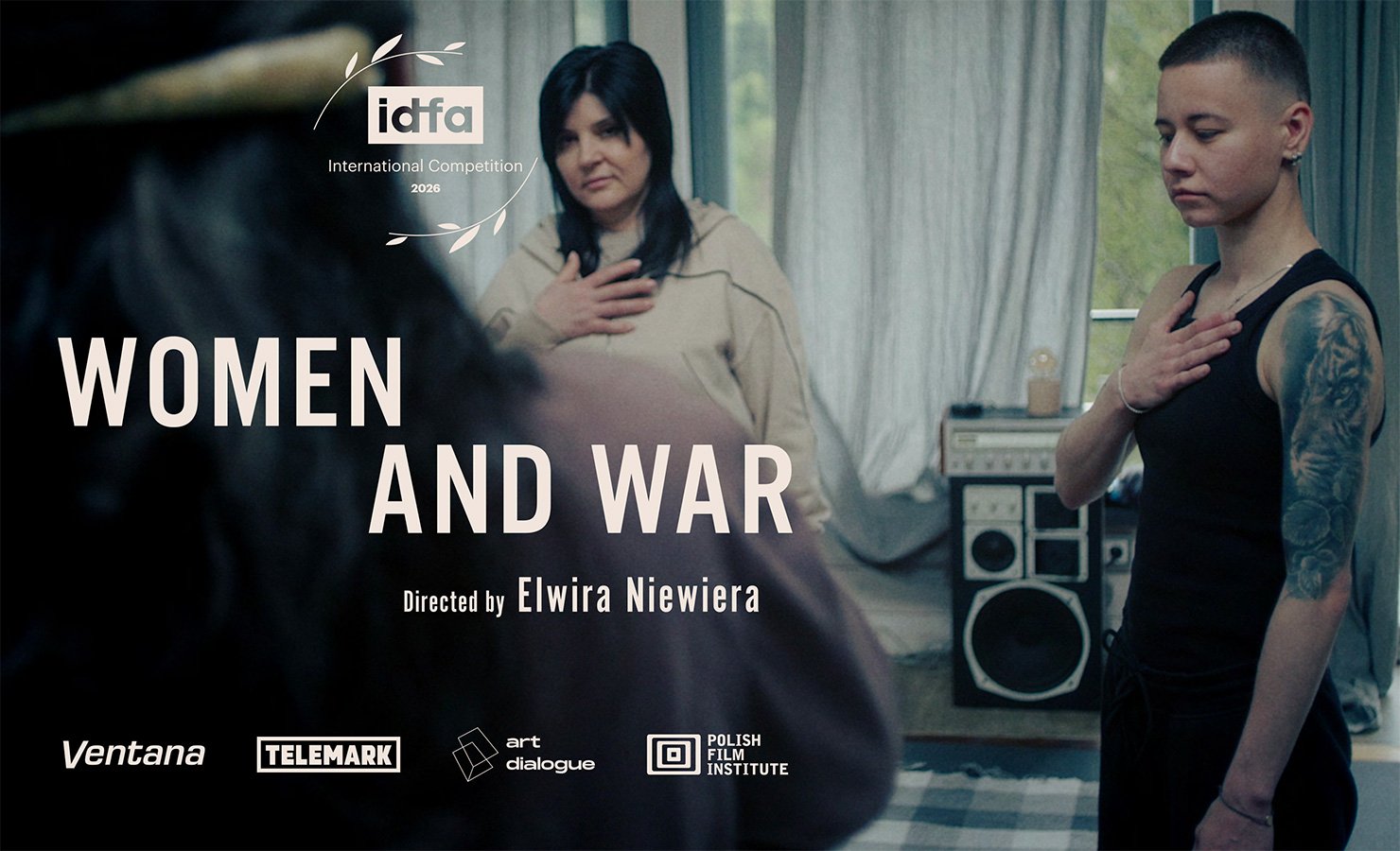
That said, two German majority productions play this year in IDFA International Feature competitions, namely Elwira Niewiera’s Ukraine-themed Women and War (produced by Hans Robert Eisenhauer for Ventana Film) and Ruslan Fedotov’s Down the River (produced by Margarita Amineva-Jester and Kristina Shtubert for Voices Films) about the River Dnieper that flows from Russia, through Belarus and into Ukraine.
“In the last years for us, especially CPH:DOX became much more important, also because there have been more possibilities of meeting partners from North America,” she tells BDE. “We are still a high-capacity country with a focus on European subjects and European films. Of course, our filmmakers are also going to other regions, and these films in particular you will find also at IDFA, or some special German subjects you will find at IDFA, but it’s not so many.”
Germany’s output of creative feature docs (films that are available for selection at core international doc fests, as well as A-fests with a serious documentary component) numbered approximately 50 in 2025, reducing to 40 or so in 2026. Baumann and her colleague Julia Teichmann, who heads up the documentary division, expect to oversee a similar number in 2027.
“Of course we don´t know the 2027 Berlinale selection yet, or CPH:DOX, but we are optimistic that we will have some titles,” Baumann says, citing other recent successes that should have strong legs in 2027. “I think films like Transition, which was premiered in Locarno and which won the German competition at DOK Leipzig will still travel, as will 1.5 % Pyropolitics and the New World, which premiered at DOK Leipzig and Viennale.”
She also notes her organisation’s (perhaps unsurprisingly) strong presence at DOK Leipzig and DOKFest Munich, but also stresses how Sheffield has become a happy hunting ground for German docs and doccers in recent years. As has DOC NYC, whose selection this year includes Leah Galant’s Landscapes of Memory, The Darkest Light by Simon Mendes and the much-heralded One In A Million by Itab Azzam and Jack MacInnes. Visions du Réel in neighbouring Switzerland is, historically, an important festival/market for the German doc sector.
German Films works to promote German documentaries across the world in cooperation with the German Documentary Association (AG DOK), organising pre-selection screenings, collective submissions to international documentary festivals, providing information for filmmakers and festivals, coordinating umbrella stands for documentary filmmakers, and organising co-production meetings.
It also exists to promote all German output, and not just films that have received federal or state funding, as long as it has German finance. “It can be the private money of the filmmaker or his grandmother. It doesn’t matter,” says Baumann.
Which leads the German Films boss onto the thorny subject of how docmakers are supposed to make a living while making theatrically-oriented feature-length docs. Germany may be a “high-capacity country with a focus on European subjects and European films,” but its output isn’t what it should be, she maintains.
“In general, it takes a very long to finance these kind of films, then to make and release them,” she says. “Filmmakers and producers have to pay their rent and go to the supermarket and pay their bills. Working on a feature-length festival type of film is more a kind of a bonus or a hobby. You cannot make a living out of it. It’s actually impossible. So you have to do something else to have the resources to do this kind of films.”
“Germany has still the second largest TV market after the US,” she adds. “So still the producers and also filmmakers can make a lot of straight commissions,” but these are invariably series, or small-screen docs, not expansive and artistic creative documentaries made with a cinema audience in mind.
“When I was still producing 20 years ago, it was possible to make a living with this kind of film – for the producers but also particularly for the filmmakers. Today it’s not possible anymore.” And the result? “We don’t have enough films. I have to say it openly,” Baumann underlines. She may be planning on promoting up 40 feature docs to the world’s premiere festivals and markets, but for an industry the size of Germany’s, it should be a lot more she maintains.
She also bemoans the lack of finance allocated to the promotion and marketing of documentary. “There is an audience for documentary that is so much bigger than the numbers we see. The problem is that documentary doesn’t have enough resources for PR and many people you are talking to don’t even know that these films are existing.”
Baumann remembers a recent Visegrad panel about developing young audiences. “There was a guy from Hungary, now a programmer at Verzio, the Hungarian documentary festival, who said when he was first at film school, he had never heard even about creative documentaries. He thought documentaries were kind of TV, educational stuff, and he had no clue, and then by chance he went to the festival…” At which point his eyes were opened to the potential of documentary, she adds.
She further underlines why long-form documentary is so special, and therefore worthy of enhanced support, whether to pay its practitioners better or to get punters through cinema doors. “Documentary is real people, real human stories, and they’re always surprising, so that’s why they are also difficult to make. Because you never know. You have a plan, you even have a script, you did your research, but then reality, real life, takes its own course. You never know what’s going to happen next. And then you make a great film out of it,” she ends.