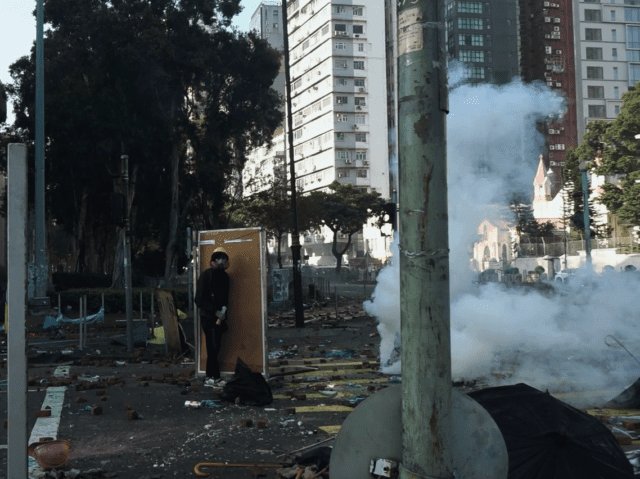
Inside the Red Brick Wall makes for fascinating and compelling cinema because it takes you into the heart of the Hong Kong Polytechnic University which was besieged by the island’s police in November 2019. This brave and cleverly edited document shows the brutality of power and the power of solidarity.
A group of Hong Kong documentary makers is listed as the directors of this film, which basically consists of footage shot from within the group of protesters. It starts when the Anti-ELAB Movement – protesting against the now aborted Anti-Extradition Law Amendment Bill Movement, believed to symbolise the growing power of China over Hong Kong – retreats to the University after clashes with the police.
The police surrounds the area, trapping the protesters and students inside the school. The film shows how the police tries to intimidate and provoke the protesters through a constant stream of insults (‘you have no brains’) and threats (‘you’re surrounded and there’s no way out’) and blaring pop songs with titles such as ‘Schoolboy’ and ‘Ambush from Ten Sides’.
But it’s clear the movement members are not ready to give up, even after a series of failed attempts to break out, which means combat numbers are diminished and many more are arrested.
The footage of the clashes and the action behind the firing lines are exciting to watch. You can feel the sheer determination of the freedom fighters, their courage and their sense of solidarity. It makes you wonder how these makers managed to continue filming amidst heavy battles. And somehow, throughout, the police seem to respect the camera, maybe concerned as to how the force are being presented.
As the documentary and the siege continues, the mood and dynamics on the university premises start to change. Discussions break out, about whether or not to try and make it through the enemy lines again. People are getting tired, supplies are running out and there’s no solution in sight.
Meanwhile the cameras capture life inside the school, people sleeping everywhere or trying to upload their footage onto social media. Gas masks, umbrellas and makeshift weapons litter the premises and the audio is filled with encouraging speeches, music, muffled gun shots and the occasional hissing of another tear gas bullet (routinely extinguished by the protesters).
While the protesters are weighing their options, a group of school principals appear on site, claiming they’ve come to collect peaceful students to get them out unharmed. All they have to do is show their ID to the police before they can get home safely.
It is thrilling to watch events unfold from thereon. The arrival of the group of civilised, middle-aged citizens threatens a schism among the protesters. There are those who want to believe them and ones who – understandably – distrust the outsiders. Is it an attempt to divide and conquer the demonstrators? Will they crack under the pressure? Tensions are flaring sky high, and there’s even a threat of violence against the principles.
But as the sense of hopelessness drives the besieged to a point of breakdown, where people are taking enormous risks to escape, much needed good news is on its way. Outside the university, citizens have started a huge peaceful protest in support of the movement, which give the protesters a huge boost. The rest is (recent) history – the siege eventually ends and the law amendment is abandoned.
Inside the Red Brick Wall is nothing short of an immersive political action thriller. The viewer genuinely lives through the experiences of the protesters – their anger, commitment, anxiety, creativity and humanity. It makes you feel like you’re part of this brave and energetic movement, modern day heroes, fighting repression with little more than their innate intelligence and an overpowering sense of (in)justice.
It reminds me of Burma VJ, which in 2008 was shot inside Burma and smuggled outside the country, granting the outside world unprecedented footage of the way peaceful protesters were violently handled by police and military, sparking a collective outrage.
Hong Kong isn’t Burma and technology and social media have developed rapidly, making it much easier to hold authorities to account for disproportionate actions. But images and documentaries like these continue to make an impact and continue to be of vital importance in protecting people all over the world from anti-democratic governments.
Country of production: Hong Kong
Director: Hong Kong Documentary Filmmakers
Running time: 88 mins