It is Venus, the Morning Star, that guides the fishermen of Madagascar out on the sea, but for their battle against a greedy multinational they rely on their inner moral compass. It is a powerful message often wrapped in beautiful imagery, making this sometimes very straightforward documentary very much worth watching.
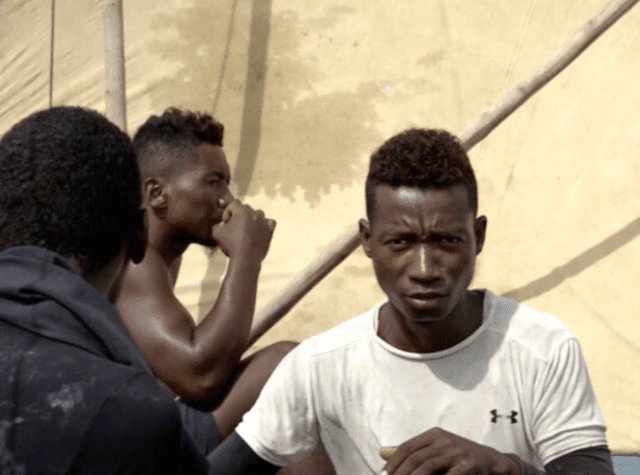
The fishermen of Madagascar live in a predicament: their traditional way of living has for a long time been threatened, as the government allows foreign ships to empty the territorial waters. Still they seem happy, in their wooden sheds for homes, scraping meals together, singing as they’re pushing their home made boats out into the sea, laughing and drinking after the work is done, celebrating their friendship with the people of the dry forest with food, music and dance.
Looking at it from a distance it seems they’re living the life so many westerners seek, and for which travel thousands of miles across the globe for: a simple existence in harmony with nature, finding happiness in small things, living in the moment, being content with what they have.
But of course, that’s just one side of the coin. They are now forced to fight powerful enemies – the Australian Base Toliara mining company, who negotiated a contract with a previous government which will allows them to develop 40 thousand hectares of land, as we’re told by the fishermen. The area is the land where the ancestors of the indigenous Malagasian people are buried, and to them it is holy ground. Also, five municipalities will be deeply affected. Eight thousand people will have to move, harbours will be closed for the fishermen, fertile soil will be lost and the environment will be severely polluted. It will basically be the end of life as they know it.
Although this development is the driver for the documentary, most of the footage revolves around the daily routine of the fishermen and their village. It is addictive viewing, following them out onto the sea, catching the fish, cleaning the sea urchins – or as they call them, zebu – which is their traditional food for celebration. They repair their boats and equipment with painstaking care and make use all the resources they can find. A jerry can makes excellent raw material for flippers to dive for octopus. Coins are used to make hinges and who would have thought condoms are the perfect water tight covers for torches.
Meanwhile they pragmatically deal with the uncomfortable reality of a corrupt local system. When they go out to get a new boat – chopped from a tree trunk by the people from the dry forest – they don’t use the main roads as the police will definitely be there to take their money: ‘The poor people steal from each other,’ says one character. And they know very well the realities of what is happening around them, as many are driven to such a state of poverty that they will welcome any jobs handed to them by companies such as Base Toliara.
The film also shows the release of some villagers following their arrest for their actions against the multinational. They are welcomed as heroes. Their faces don’t show fear or pride, just sheer determination and conviction about the rightfulness of their actions.
The documentary is a testimony to the courage of the Malagasians, who are willing to take on the big companies, not out of fear of losing what they have, but out of love and respect for their ancestors, their descendants and the land and sea that provides for them.
The film might not be the most impressive piece of cinema, although the footage on and under the water is stunning, but the spirit and beauty of the people compensate for that, such as fisherman Edmond, who names his new boat ‘Aza kivy’, which means ‘keep courage’. It is a great achievement by director Nantenaina Lova, who made this film as a one-man crew, and also edited it. As a Malagasian himself he hits just the right tone: no sentimentality or voyeurism, but an honest perspective from within the community.
It is a story that needs to be told, over and over again, all across the world. Everywhere local communities and nature are being destroyed by ruthless and shameless greed. It is a story of hope, as the locals have managed to stop the company from proceeding, at least for now. And it carries with it a great wisdom, possessed and developed by people who have learned to appreciate and celebrate what has been granted to them.
Madagascar, 77 min
Director: Nantenaina Lova
Production: Eva Lova-Bely for Edemika Films
Cinematography: Nantenaina Lova
Editing: Nantenaina Lova
Sound: Nantenaina Lova