Human rights activist Adal Neguse sets off on a powerful and emotional journey to find out more about what happened to his younger brother who was amongst the hundreds of victims who died in 2013 when an overcrowded boat carrying refugees from Eritrea sank off the coast of Italy. With filmmaker Anna Blom, he goes in search of the few survivors – as well as those who tried to help – in the hope they could have perhaps have met his brother during that fatal voyage.
Blom’s film may well be conventional in structure, but the power of the emotional stories and encounters, combined with his own memories, sense of guilt and desire to find links to the terrifying incident help deliver a potent film.
The film opens gently and quite beautifully with haunting undersea footage of the statue of Virgin Mary and child, placed in the waters at Conigli island, looking up amidst rocks to the surface above. It cuts quickly to television footage from the sinking itself, with a voiceover from Adal.
“It was the 3rd of October 2013, at about 4am. I woke up with this uneasy feeling,” he says. The television commentary says how 500 migrants were feared to have drowned off the coast of Lampedusa, with the Italian coast guard reporting that a fire had broken out on the boat they assumed to have come from Libya.
Adal adds: “I knew that my brother was on his way over from Libya. I’d spoken with him two days previously and he told me they were ready to board…I thought, shit, he could be on that boat. You think about all of the possibilities and blame yourself.”
He leaves his new home in Sweden for the Italian island. “I always think about what happened during the accident and what my brother was thinking about…I decided to look up the ones who were in the same boat with him…the one who survived the accident.”
He meets with Kokob, who was barely 11 when he was on the boat. Together they sift through debris of previous boats used on crossings – they mull over whether one bottle with dirty liquid is full of water or juice, though it turns out to be urine. Kobob describes what happens when the ship capsized.
He also speaks to sailor Vito Fiorino who was one of the first on the scene. He says he kept calling the Coast Guard, but they stopped answering…When they finally arrived he asked if they would take on board those who had survived but was told rules prohibited transfer between boats. Vito set about trying to save as many as possible.
Eventually he meets a man who sat next brother on the boat but didn’t want to participate in the film. “He told me that my brother slept the whole trip. He was very hungry and tired. They woke him just before arriving to Lampedusa…but because water was starting to leak into the boat he went down to the engine room and started to empty the water with a bucket…just as the accident occurred. He was a very humble and kind person who always wanted to help,” adds Adal.
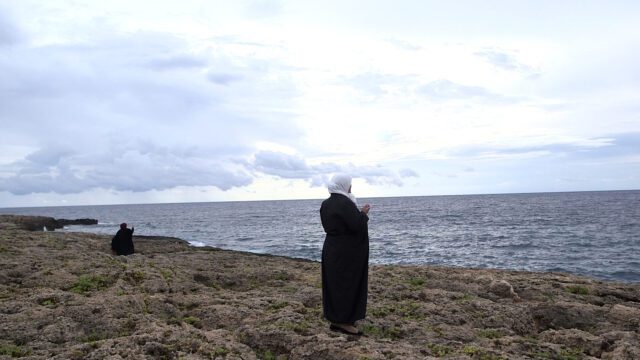
The film closes with a collective remembrance ceremony at the place of the disaster where – rather ironically – the Coast Guard carries officials, family members and survivors so they can drop flowers into the sea and take time to remember those who died. Through his endeavours to meet with others who experienced the incident Adal builds a picture of the last days of his brother’s life. Whether the process ultimately helps him is never discussed, but that’s not the point as the film works to shine a moving spotlight on the sad stories behind the dark statistics.
Finland, 2022, 68mins
Dir: Anna Blom
Production: Impressio Films OY
Producer: Tommi Seitajoki
Scr: Anna Blom, Tommi Seitajoki
Cinematography: Ditte Uljas
Editors: Tommi Seitajoki, Dominika Daubenbüchel
Music: Girmay Tesfamariam