The Witches of the Orient, directed by Julien Faraut and world-premiering in IFFR Big Screen Competition, may take a little time to get used to, with its mix of styles that include archive, animé, observational cinema and a voice-over that binds everything together. But in the end, it makes for compelling cinema, telling a fairy-tale story that celebrates ‘oriental’ strength, style and resilience.
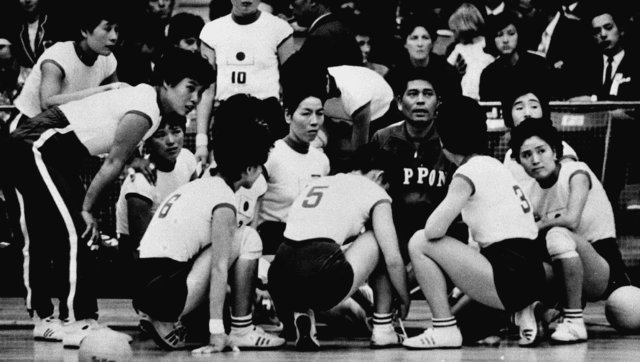
The documentary about Japan’s legendary national women’s volleyball team of the sixties starts off rather sedately, as we hear the voices of elderly women tell of how it all started (minus the excessive boasting or glorification of combat that we have become used to in western documentaries about sport).
A mellifluous narration alternates between the history of witches and that of a volleyball team that grew out of a factory, as in Japan it was believed that playing sports would enhance productivity and the team spirit of the workers. Soon we get fragments of harsh training sessions, as well as colourful animé images set against a soundtrack of trashy Japanese pop music. By way of counterpoint, we also meet a grandmother – one of the still incredibly fit former team members – playing a memory game with her grandchildren in present time.
And then we slide into the story, getting to know the different characters, introduced with bespoke sound effects and hilarious anecdotes about unflattering nicknames (such as ‘the horse’). We go along with the intoxicating animé and learn about the unconventional training methods of the team coach as the team plays its way towards international recognition.
And then, halfway through the documentary, the doc turns into a thriller, as there’s a goal in sight: the Tokyo Olympic Games and a final against the hitherto unbeatable Russians.
At which point the use of animé starts to make sense, as it turns out to be animation created in the 1960s, a consequence of the Japanese obsession with their dream team and its mythical trainer. Spun out fragments of the training sessions, which could be described as almost sadistic, prepare you for the climax, a delightful account of the spectacular final against the Russians.
By then you’ve come to embrace all of the wild editing, the crazy sound effects, the almost unbelievable humility of the players, the wonderful footage of great outfits and the most of artificial of hair do’s. And you’re unapologetically rooting for these subdued, industrious but tireless Japanese players.
The Witches of the Orient also delivers a fascinating image of a post-WW2 world, in which Japan was trying to overcome its image of a vanquished nation, previously presided over by cruel rulers. The country could not have wished for a better, nor a more sympathy-inducing, way to bounce back.
And we should thank the makers for taking us on this entertaining, educative and epic journey.
The Witches of the Orient is produced by William Jehannin on behalf of UFO Production, in association with INSEP (French National Institute for Sport, Expertise and Performance), and is sold by Lightdox.