

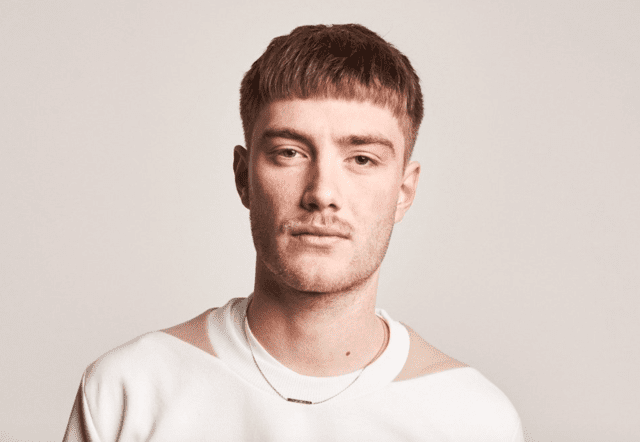
Vincent Boy Kars arrives at CineMart with Future Me, the third part of his millennial trilogy that attempts to understand the collective psyche of his generation. In his new project he presents and examines his developing self as he progresses further into a very personal, very Karsian, future.
In his first feature Independent Boy, a hybrid of doc and experimental, Vincent Boy Kars made it his mission to take all the decisions for his indecisive friend Metin, and record the results. In Drama Girl, he gave his friend Leyla the lead role in a film of her life (as established actors played out the other roles). The film explored how the emotional events of her past influenced the development of her identity, and whether the experience could allow her to reframe these past events in a newer and perhaps more positive light.
In his latest project Future Me, which he will be discussing with potential partners during CineMart, he takes centre stage. Or rather his future self does, as interpreted by an actor who will play the ageing Kars. Also in the mix is a psychologist who will devise a set of future life circumstances to which the actor must react. How will Vincent live his hypothetical future and what does that say about who he is?
In his notes for the film, Kars admits to both a creative and a psychological dilemma, and what he must do to face this. “Control is a centralised aspect in all my films – whether it’s about having control or keeping it, or about losing it or letting go of it. What lies beneath my desperate need for control? I’ve been in denial for a long time, but the only sincere way to end this trilogy is to expose myself for once. I find this absolutely terrifying and uncomfortable. But if there is a film in which I will expose myself, it must be this one.”
He elaborates on this in interview, at the same time articulating a very particular and idiosyncratic modus operandi in which the destination is never the point of the exercise, rather the journey to it. “I think in concepts, not in narratives or stories. For me, every project, every film starts with a simple construct, and from there on I am developing the film… I am not that much interested in storytelling. I am more interested in the conceptual side of filmmaking. For me that is a natural thing. It’s a niche.”
He continues: “I don’t know why I make it so difficult for myself. It’s a hard job. I have been working on the project now for one year. It’s a very lonely process in which I am overthinking constantly to get the filmic construction right…I want to make this film to see what happens. That is my drive. I am interested in creating an environment in which anything or a lot can happen.”
Kars points out an obsession of his generation that makes such introspection both fascinating and possible (and highly entertaining, one should add). “The millennials are the first generation that grew up with the ubiquitous presence of cameras in everyday life, with the possibility (and expectation) of sharing all these recordings with others through ‘social’ media. The connections that are created among us largely rely on the exchange of data. Our self-made content serves as the backdrop for our existence. Embarrassment no longer seems to exist. Pregnancies, broken relationships, deaths, births, selfies with meals: everything is shared on YouTube and Instagram.”
He also stresses why film is his preferred medium for artistic expression. I suggest that he could write a book. No, as he is dyslexic. An art installation could be a possibility, he muses, but cinema is king in one particular respect. “It is the only place where you sit down, put your phone away for two hours and concentrate on another world. I like my audience to be in that exclusive environment. I feel at home there, where the audience is completely focussed. I like my work to have a lot of layers so it is really about the interpretation of the viewer. So it is important that that particular viewer is therefore very concentrated on the film.”
Kars further elaborates on his fascination (and that of the world at large) with the millennial generation and its appropriation of all forms of highly accessible media to record its day to day life, existential crises and ongoing development. The ego documentary, he argues, has “been turned into a genre of its own.”
“Nowadays, living life simply means ‘being on camera’. I believe that all this has changed the ways in which my generation watches films. We no longer see the film as something separate from life, an outside force that reflects on it, but as an integral part of life itself. My mode of making films fits seamlessly into this notion. I experience everything together with my characters, capture it on film and then share it with the rest of the world.
“You could compare this to a couple that goes on a trip to, let’s say, Australia, capturing all their adventures in photos and videos to share it with the rest of the world on YouTube or Instagram… My films also reflect the stages of life that I go through as I grow older. Personal life has become public – both for videographers as for the audience.”
This is a longer version of an article in See NL, published by Eye and the Netherlands Film Fund.





