Netherlands-based JaJa Films has joined forces with MyMama Entertainment (Brazil) and Downey Ink (Ireland) to produce the feature documentary Don’t Stop Dreaming about the Rio de Janeiro Ballet phenomenon Projeto ViDançar.
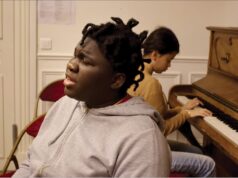
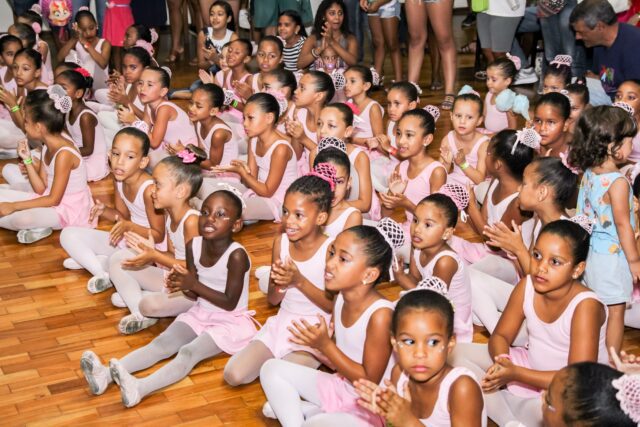
Currently being financed and structured as a Brazilian/Netherlands co-production, and set to start shooting in November, the film is described as an eye-opening and inspiring feature documentary film about young dancers from the favelas in Rio de Janeiro who follow their dream to become a professional ballet dancer. The story features ballet dancers from the Projeto ViDançar initiative that offers underprivileged children, living in the notoriously violent Complexo do Alemão favela in Rio de Janeiro, the opportunity to express themselves through ballet. The film offers insight into the lives of the dancers, who grew up in the favelas where they face violence and uncertainty daily and teaches the importance of keeping your dreams alive.
“Back in 2013, Stephen Daldry and I both found ourselves shooting movies in Rio,” says Mike Downey, producer and outgoing chair of the European Film Academy (scroll down for interview). “One day we were given the chance to screen Billy Elliot at the extraordinary CineCarioca Nova Brasília, situated in the Complexo do Alemão in the context of Ilda Santiago’s Festival do Rio. It was there that we met the inspirational and visionary head of the nascent dance school Ellen Serra, with her amazing young students who showed up in tutus and tights. I think there and then the seeds of this documentary were sown.”
Comments Brazilian producer Mayra Faour Auad of MyMama: “Dance has always been part of my life. Trained in classical ballet, I learned early on that the body can be a place of discipline, expression and transformation. Founded in 2010 in the Complexo do Alemão, Projeto ViDançar began with just 14 students and today reaches more than 500 children, young people and women through dance and educational activities. For many in Brazil, institutions like the Bolshoi Ballet School once felt inaccessible, and Projeto ViDançar shows how access to art can open real opportunities and professional pathways for talents emerging from this context.”
The film will be co-directed by Dutch director Jamillah van der Hulst and Brazilian Maria Clara, both of whom are highly awarded and passionate about telling eye-opening stories that inspire – focusing on people striving to improve, telling powerful stories that give voice to often-overlooked individuals. Production will be handled by MyMama’s double International Emmy winner Mayra Faour Auad, and Ilda Santiago (best known for her work at the Festival do Rio), as well as Downey and Conrad Alleblas who doubles as cinematographer. The film will be edited by Rodrigo Séllos. Executive Producer is multi-Academy Award Nominee Stephen Daldry.
EUROPEAN FILM ACADEMY
Downey further reflected to Business Doc Europe on his 25-year tenure at the European Film Academy, the last five years of which he served as Chair. The questions we posed were particularly doc-oriented.
BDE: Under your stewardship at EFA, where did documentary stand in the general pecking order, both as a sector and as a means of storytelling? I can imagine high, but as documentaries are altogether different beasts, was/is the Academy’s approach to their consideration and promotion fundamentally different from fictional films?
MD: In the 25 years or so since I joined the board of the European Film Academy, we have seen the presence and power of documentary film take much more of a centre stage position. This has been the result of a general policy that I believe has raised the level of perception and importance of the genre across the board – not just as a matter of fair-weather positioning but as a matter of regulation. The rights of documentary films and filmmakers with regard to the Academy and the Awards are now well enshrined in our legislation. European cinema has a rich history of addressing complex societal issues with depth and artistic honesty.
From themes of war, migration, and environmental concerns to the fight for human rights and cultural diversity, European filmmakers have consistently used their craft to provoke thought and inspire action. This is the powerful aspect of documentary film making that falls entirely into step with what was my mission for EFA. It is why documentaries always have played an important role in the LUX prize – there is an equal playing field there as there is with the EFA’s. Civic engagement through art, through cinema, whichever colour of the political spectrum one is, can be a powerful tool of democracy.
BDE: In more general terms, did you detect a specific tipping point when docs took on greater significance (even though it’s annoying to see just one documentary this year in Berlin Competition)? And do docs play a more important role now, in a world of Trump, Ukraine and Gaza, than they have ever done in the past?
MD: I guess the turning point was in the final decade of the last century, the mainstream docbuster era when Ken Burns’ The Civil War revolutionized historical documentaries on television. Then, in the 2000s, when documentaries became commercially viable in cinemas, the time of Fahrenheit 9/11 in 2004, March of the Penguins in 2005 – the rise of Michael Moore and the advent of digital, low-cost cameras brought documentaries back to the big screen and into mainstream popular culture.
I think that the post-truth period has, by definition, brought a greater role for the documentary in the post-Covid world of Trump, Ukraine, and Gaza. My aim since becoming a board member and sitting for the last 12 years either as chair or deputy at EFA, has been to make the organization far more than the organiser of an awards ceremony: rather a place for inspiration to activism in cinema. So that also has meant efforts to bring documentaries front and centre. Film is essential to a healthy and democratic society — that is why it is feared by autocrats.
Filmmaking is a form that allows us to walk in another’s shoes, to build a sense of shared humanity, that gives voice to the marginalized and the scorned, that strives to hold those in power to account. If cinema is our most powerful art form, I would argue that documentary films are both its beating heart and its conscience. They hold a mirror to our society, and they hold our conscience to account. It is more important than ever that we come together to speak up for and support and utilise this art form and these artists — here and around the world — who bring us these essential stories.
This is our trump card, so to speak, as a vehicle for disseminating truths about democracy and the world we live it. There is a strong sense of solidarity among us, in the European Film Academy and in the European film industry – a sense of social and political responsibility that we all share and practice what better way to use it than in the service of a democratic ideal.
BDE: Which European documentaries and docmakers stand out over your time at the Academy? Whether as works of powerful polemic, intellectual rigour or wondrous art? On the flip side, what could/should the European doc industry be doing better, when you assess the sector from your unique vantage point?
MD: Ah. The poisoned chalice. Thanks, Nick. Now that I have stepped down from the chair, I think I can step up to the plate here. Wondrous art? Well, you need go no further than Agnès Varda and her Faces Places, a spectacular odd-couple odyssey in which the 90-year-old director goes on the road with street artist JR to create remarkable, moving portraits of the people they meet. It admirably follows Picasso’s maxim that art is the “lie that makes us realize truth” and is surely the way to wash away from the soul the dust of everyday life.
Intellectual rigour? I return repeatedly to Alexander Nanau’s Collective. The shocking exposé of needless deaths in Romania. It’s a searing documentary in which a heroic reporter investigates why many victims of a nightclub fire died because of health-care fraud. The way it demonstrates abject cynicism and indifference to suffering is truly, truly horrible.
Powerful polemic? So many to choose from but let’s look at Fire at Sea. A profoundly emotional story set against the backdrop of the European migrant crisis, the 2016 documentary follows the story of a 12-year-old boy embarking on a treacherous journey across the Mediterranean Sea to escape conflict in his home country. Shot from the Sicilian island of Lampedusa, it is a deeply personal document of a crisis that shook and continues to shake our continent. Others to note: Wim Wenders’ Pina, Mariupolis 2, Flee, The Act of Killing, and Darwin’s Nightmare…I could go on…
As far as doing better – well that’s at the national and pan-European level making sure that the European documentary industry should focus on fostering equitable partnerships with streaming platforms to retain IP control, strengthening co-production, and fostering younger audiences through improved accessibility and tailored storytelling. This has to be the basis of the future – building the audiences of the future, and ownership to provide sustainability for international companies. Equally while supporting co-productions, funding bodies need to be more open to creative, risky projects (with accountability), ensuring funding supports both progressive political ideas, important cultural values (and sustainable business models). We need to be able to find who is the next Werner Herzog.
BDE: Can you underline the effectiveness over the past years of ICFR (International Coalition for Filmmakers at Risk) both as a campaigning vehicle and as body seeking to hold governments/regimes to account?
MD: When Ukrainian filmmaker Oleg Sentsov stepped off the plane as a free man in Kyiv in September 2019, the director had been incarcerated, for more than five years, in Moscow’s notorious Lefortovo jail and Siberia’s prison colony No 8 (aka Polar Bear), after having been (improperly) sentenced to 20 years behind bars. For five years I had spearheaded the EFA campaign for his freedom. To say we were learning on the job is an understatement. The European Film Academy is a members’ organisation for professionals in the film industry, and we started this new area of work spontaneously starting in May 2014. We were amateurs in the human rights arena, trying to help a filmmaker who was not only at risk, but who had been already falsely accused, beaten and was on the way to being convicted by a legal system that ultimately demonstrated some of the worst excesses of the Stalinist show trials.
This was not really our metier. It became my mission then after Oleg’s release to start an organisation that could immediately respond to such arrests and abuses of filmmakers. We were not alone in this need for exchange of expertise: So when Bero Beyer, erstwhile IFFR honcho, and Orwa Nyrabia the ex-IDFA boss (and former filmmaker at risk himself) came to myself and EFA to explore ideas to establish a fledgling organisation to deal with cases of filmmakers who fall foul of regimes, and whose lives and the lives of whose families are put seriously at risk, we immediately agreed on joining forces. EFA, IDFA and IFFR have a long history of campaigning for filmmakers at risk.
The ICFR has proven to be an effective, responsive organization in protecting independent filmmakers facing acute, life-threatening persecution. By leveraging the collective power of the international film community through advocacy, emergency funding, and relocation support, the ICFR has successfully intervened in numerous high-profile cases across Afghanistan, Ukraine, Iran, Egypt, and Turkey. I’m really proud of the fact that following Russia’s invasion of Ukraine, the ICFR raised over €500,000 and distributed over 600 emergency micro-grants (500–1500 euros each) for Ukrainian filmmakers to cover immediate needs like relocation, visas, and medical expenses. Focus should now be on speed of response – but that can only work well when there is an effective early warning system – and putting that kind of structure needs significant investment. The ICFR needs to remain pro-active and crusading – and respond with lightning speed to any arrest – always with the complicity of the victim and the Hippocratic oath of ‘do no harm’ in mind.
BDE. For you, personally, how prominent will docs be in your future production output?
MD: Since partnering with Jamillah van der Hulst and Conrad Alleblas of JaJa Films on a series of films mainly focussing on the plight of street children, I have caught the documentary bug, and I am here to stay. Especially on the street child front. Worldwide, more than 100 million children live or work on the streets, exposed daily to violence, abuse, neglect, and the absence of protection every child deserves. Often overlooked and unheard, these children are more than statistics – they are individuals with dreams, resilience, and voices that matter. This is just unthinkable. We need to make these voices heard.
Our Projeto ViDancar film is about giving voice to the voiceless, following up on the extraordinary work that Ellen Serra has done in the Complexo de Alemao is very important to me and my partner Marijana, having visited last year and seen how well they are doing. We want to go back now with a crew and give voice to Serra’s mission that the discipline inherent in ballet training could give kids living in poor and violent environments a way to imagine a future beyond unskilled labour and the influence of local drug dealers.
This is what it is all about. Among Alemão dwellers, 69% of teenagers report having experienced violence toward themselves or someone close to them, according to a 2020 study as Serra puts it so well herself: “These children go to sleep and wake up hearing gunshots. There is also hunger, which is another form of violence.” Because of her and her volunteers – ballet has become a secret weapon keeping Favela kids in school – now that is a legacy, in the spirit of Billy Elliot to commemorate.
Apart from that – I loved making The Ghost of Richard Harris with Adrian Sibley and David Collins and I don’t rule out working with Oliver Hirschbiegel and Albert Oehlen again – our first two docs were a blast of creativity and food for the soul. But as my old sparring partner Werner Herzog once said: “It’s all movies for me. And besides, when you say documentaries, in my case, in most of these cases, means “feature film in disguise.” And on that one, this time, we’ll agree to agree!