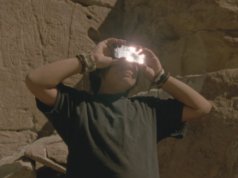
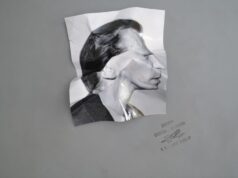
In the doc feature project Gods of Memory, pitched at Krakow FF, “the pioneers of Poland’s computing revolution set out to follow the trail of their inventions — hoping to preserve their memory before they lose their own,” reads the bittersweet logline.
The octo- and nonagenarian protagonists are a group of outstanding engineers from Elwro, which was once the largest computer factory in Poland, who developed an extremely durable ferrite memory system. “The paradox of this story is that the creators of this ‘eternal’ memory storage are now themselves facing memory loss as they age and gradually forget their own experiences,” director Kamil Król tells Business Doc Europe.
A key narrative driver of the story is how, with only 2048 alphanumeric characters at their disposal on the ferrite memory plate (the equivalent of an A4 page), the engineers set out again to create a universal message capturing human creativity, thought, and emotion at the twilight of their lives.
“The particular value of the project lies in the juxtaposition of two worlds: the durable, precise memory of technology and the fragile, fallible memory of humans,” Król further underlines. “The ferrite memory plate becomes not only a historical artefact but also an ironic counterpoint to human forgetting – machines ‘remember perfectly,’ while the protagonists increasingly lose their own memories. The film approaches this tension with lightness and subtle humour drawn from observation of everyday life, which helps make the difficult themes of ageing and memory loss more accessible while preserving their emotional depth and universal relevance.”
Król has been working on the project for seven years, which has allowed him to build a very special relationship with the protagonists, all the time delving deeper into their lives.
“As an experienced filmmaker, a graduate of the Cinematography Department at the Łódź Film School, and having directed my first film for HBO, I am able to combine the roles of director and cinematographer on set,” Król asserts. “This significantly shortens the distance between me and the protagonists and allows for greater access to them. As a result, the film becomes more intimate. This is extremely important to me, especially when working with elderly people. At a certain point, the seniors forget about my presence and the presence of the camera. They cannot really look at me, as I am hidden behind the camera lens. I like working in this way.”
Gods of Memory is produced by Król for Dobry Film, together with Marta Rybacka and Konrad Falęcki. Confirmed partners are the Polish Film Institute, Wroclaw Feature Film Studio, Lower Silesian Film Center, WFO Film Studio, Fixafilm, MX35, Ministry of Culture and National Heritage, Lower Silesian Regional Self‑Government and the Municipality of Wrocław. The team expects to deliver the 77-minute Gods of Memory by the end of 2027.
Król describes the look of the film. “Alongside contemporary observational footage, approximately 30% of the film will consist of archival materials that have never or only rarely been shown before. This combination gives me the opportunity to build a much deeper metaphor of memory,” he says.
“Another distinctive visual value is a specific approach to framing, which at times places our protagonists within flat, tightly composed images,” he adds. “In a sense, this artificiality – resulting from the very real physical limitations of our protagonists, who are around 80–90 years old – introduces an additional layer of subtle humour.”
Król teaches at film school and has already shown rough cuts of the material to a selection of students, eliciting a very positive response, with some of them eager to join the production and meet their whizz-kid forebears.
“On the one hand, we are uncovering a largely forgotten chapter of the history of the Polish computer industry, which during the Cold War played a significant role across a large part of the world – Elwro was considered one of the most advanced technological facilities in this part of Europe,” says Król. “On the other hand, the film will also speak strongly to a more humanistic audience.”
“The film also shows how new technologies affect our protagonists and how they navigate them, although this remains a background layer of the story,” he continues. “For these reasons, the film has strong potential to open a broader discussion about the impact of technology on our lives: who controls it, whether this control is still possible, and whether, in creating new inventions, we are in fact contributing to our own disappearance.”
“While old technology is a crucial element of the film, it is ultimately a pretext for telling a universal story and asking deeper questions: who are we when we lose memory, and what will remain of us?” Król logs off.