The Polish Millennium Docs Against Gravity festival has unveiled the 12 films that will compete for €2000 Chopin’s Nose Award, funded by The National Fryderyk Chopin Institute. The feature documentaries focus on luminaries working within the arts – from film, music, and theatre to literature and the avant-garde.
The 23rd MDAG will take place from May 8-17, 2026 in cinemas across seven cities (Warsaw, Wrocław, Gdynia, Poznań, Katowice, Łódź, and Bydgoszcz), and online from May 19 to June 1 at mdag.pl.
MUSICAL SOUNDS (following annotations provided by MDAG)
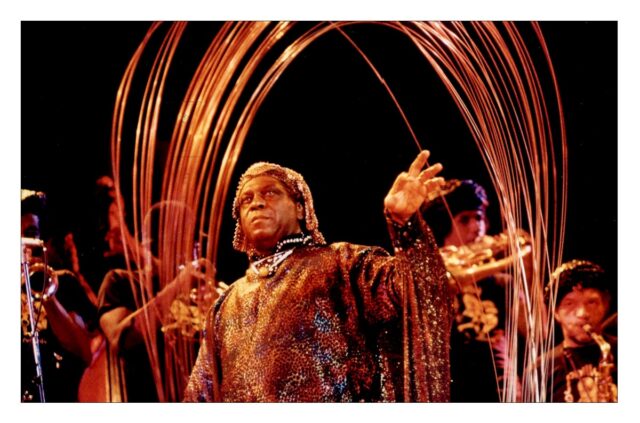
The competition line-up opens with films related to music. Sun Ra: Do The Impossible by Christine Turner tells the story of a jazz king who blended swing, bebop and free jazz, pushing the boundaries of sound. In his youth, he experienced a revelation, claiming he had been transported to Saturn and called to devote himself to music. He created Afrofuturism, transforming ancient Egyptian and interstellar metaphors into a unique musical and spiritual vision.
La Scala: The Force of Destiny by Anissa Bonnefont takes us to the legendary opera house in Milan. It is a place where passion, talent, and uncompromising pursuit of perfection determine everything. More than just a monumental building, it is a living organism. The film immerses viewers backstage, following artists, conductors, craftsmen, and staff as they prepare the premiere of Verdi’s The Force of Destiny.
What is funk? The film We Want the Funk directed by Stanley Nelson and Nicole London explores this question. The genre became the soundtrack of the late 1960s, when African Americans increasingly expressed their identity with confidence and clarity. This energetic film features dazzling performances by artists such as James Brown, Sly & the Family Stone, Parliament Funkadelic, Labelle and Fela Kuti, along with later creators. Interviews with contemporary musicians and funk ambassadors are woven into this musical story.
Closing this section is Broken English by Jane Pollard and Iain Forsyth. The Ministry of Forgetting, led by Tilda Swinton, conducts its first case: Marianne Faithfull. The artist was not only a muse to the Rolling Stones – she was the face and voice of the ’68 generation. Vilified by the media and undervalued by the music industry, she survived a heart attack and drug addiction. Despite hardships, she released 35 albums, constantly reinventing herself. The film’s form, like her life, stands out from the ordinary.
CAMERA, ACTION!
The competition films about cinema and theatre luminaries begin with a story about Oscar Isaac preparing for the role of Hamlet at The Public Theater in New York. The process is documented by his wife, Elvira Lind. In the background unfolds the birth of their first child and the death of Isaac’s mother. King Hamlet explores the boundary between life and art, showing how an acting role interacts with personal experience and everyday life.
The dilemmas of a brilliant director are portrayed in Roberto Rossellini – Living Without a Script by Ilaria de Laurentiis, Raffaele Brunetti, Andrea Paolo Massara. It is 1956. Roberto Rossellini – the most important figure in Italian cinema and the father of neorealism – is in crisis. His recent films with Ingrid Bergman have failed, their marriage is falling apart, and the press is giving him no peace. Then comes an invitation from the Prime Minister of India, asking him to document the country’s development. This leads to his artistic rebirth.
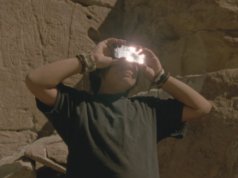
Meanwhile, in Nigeria, a group of teenagers forms a film collective called The Critics. Their village becomes a film set, green screens are sewn by hand, and neighbourhood children become actors. Filmmaking becomes their refuge, and its magic a space for growing up. Crocodile by The Critics and Pietra Brettkelly tells their story with humour and sensitivity.
Shoshannah Stern’s Marlee Matlin: Not Alone Anymore takes us into the world of cinema’s most prestigious awards. In 1987, Marlee Matlin became the first deaf actress to win an Oscar® at age 21. For many Americans, she became a symbolic representative of her community. Telling her story in sign language, she confronts pressure, stereotypes, and the loneliness of being a pioneer. The film reflects on visibility, identity, and the power of representation.
ICONS OF THE AVANT-GARDE
Outstanding artists who changed how future generations perceive reality. Two films in the competition are devoted to their contributions to art history. The first focuses on Barbara Hammer, who became a symbol of resistance for the communities around her: feminist and queer movements in 1970s San Francisco, the male-dominated New York art world of the 1980s, and the New Queer Cinema movement of the 1990s. She contributed to greater LGBTQIA+ representation in early 21st-century art and culture. Barbara Forever by Brydie O’Connor explores her films, archives, and cultural impact.
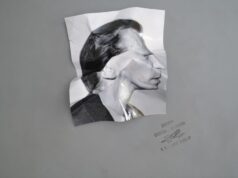
The second film takes us to 1939. Six-year-old Jasia lives in Warsaw, surrounded by books belonging to her aunt Franciszka and uncle Stefan Themerson. She dreams of a future in Paris. Her childhood is shattered by events that disrupt the world’s order. My Themersons (Moi Themersonowie), directed by Marcin Borchardt, portrays war as an experience of fragmentation – a breakdown of language, meaning, and reality. From the perspective of a child and two artists, it presents innocence, love, and creativity as forms of resistance and a space for preserving humanity.
SIGNED…
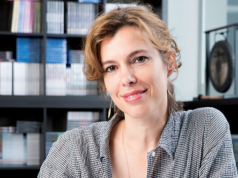
This year’s MDAG program also includes stories about major literary figures competing for The Chopin’s Nose Award. Siri Hustvedt – Dance Around the Self by Sabine Lidl is a documentary portrait of one of the most important contemporary authors, tracing her journey from Minnesota to New York. The film examines her style, reflections on language, identity, and feminism, as well as her deep bond with her husband, Paul Auster.
Knife: The Attempted Murder of Salman Rushdie, directed by Alex Gibney, tells the story of how Salman Rushdie, after the brutal 2022 attack, fought to regain his health and creative voice. The film documents his process of physical and spiritual recovery. How can creative power become an act of resistance? Through reflections from his memoir “Knife: Meditations After an Attempted Murder,” he confronts questions of violence, forgiveness, and freedom of speech. The culmination is his return to the site of the attack – a symbol of courage and resilience.