Independent documentary producers must rethink how they finance, market and distribute their work as traditional buyers commission fewer films, executives from Dogwoof, Scenery and US public television station THIRTEEN argued October 22 at MIA 2026.
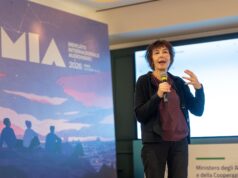
The discussion, titled “Market Insights | Industry Leaders: Strategies for Independent Success”, took place in Rome’s Grand Palace Hotel on 22 October. Moderated by Baltic Balkan Productions’ Ieva Ūbele, it brought together Dogwoof CEO Anna Godas, Scenery partner and co-owner Lea Fels, and THIRTEEN executive producer Stephanie Carter, who examined three different routes to sustaining ambitious non-fiction.
The first challenge, they agreed, is knowing whether a story matters beyond its creator. Scenery’s Fels said personal conviction was indispensable, but had to be matched by market awareness. “I have to have a genuine interest in the story that I’m going to share,” she explained, adding that a project also needs “some sort of commercial appeal to audiences, to sellers”.
For Dogwoof’s Godas, the decision to represent a film hinges on its storytelling, sales prospects and the reliability of its team. “Will anyone care, other than the filmmaker?” she asked. She painted a stark picture of the international market, suggesting that global platforms and US buyers are currently unlikely to take on documentaries outside established areas such as true crime or celebrity biographies. Selling territory by territory remains possible, but each acquisition must justify the time spent on festival strategy, marketing, contracts and royalty reporting.
THIRTEEN’s Carter offered a different perspective. As executive producer of the forensic-history series Secrets of the Dead, she is less concerned with international sales than whether a subject feels both fresh and accessible to American viewers. “If someone comes through with a story I’ve never heard before, that gets my attention immediately,” she said. Familiarity with the subject, delivery schedules and financing nevertheless remain decisive.
Next, Fels described how Scenery’s joint-venture relationship with Banijay has helped it weather market volatility. When the production firm came under the group’s umbrella, its management insisted on contractual safeguards preventing the parent company from dictating its editorial choices. Financial backing has occasionally allowed Scenery to invest in research or filming before conventional funding is secured.
That security became particularly valuable after the post-pandemic commissioning boom collapsed. Fels recalled a prolonged period when the company struggled to sell projects, but could continue supporting its staff rather than dismantle the business.
She also outlined SV DOCS, Scenery’s initiative with V-Ventures, which is allocating €1 million over five years to develop documentaries rooted in investigative journalism. The challenge, she noted, is connecting journalists with filmmakers and global audiences without underestimating the time required to develop complex investigations.
Godas recounted a very different expansion. Dogwoof began as a small UK theatrical distributor, found unexpected success with a documentary release (Black Gold, 2006) and gradually added international sales, development and production. She argued that entrepreneurs should not become fixated on one predetermined route: “Be open to opportunities that don’t look exactly like what you want.”
That flexibility extends to recruitment. Although hiring is risky, Godas warned against the “false economy” of doing everything alone, potentially limiting the company’s output and future revenues. She was equally candid about unsuccessful ventures, including an attempt to build a market for Polish films in Britain.
For Carter, the financial pressures are particularly acute following the withdrawal of US federal funding for public broadcasting in 2025. She explained that THIRTEEN, a major supplier of programmes to PBS, operates within a network supported by local stations, donations, foundations and other partners.
Secrets of the Dead lost its previous PBS financing as the network redirected resources towards priority areas that included news and current affairs. Its producers spent the following year assembling a replacement model, involving investment from Carter’s station, participation from the programme’s distributor and a reduced contribution from PBS. Strong online performance made that investment more defensible, she said, as digital platforms create additional opportunities for revenue.
Meanwhile, the shift away from conventional commissioning was particularly evident in Dogwoof’s distribution plans. Godas said her company is building its own online community, experimenting with documentaries divided into short vertical episodes and preparing the YouTube series A Coffee With for November. It also intends to release a documentary each month through its own channels.
“The truth is that they buy less and less,” she said of broadcasters and streamers. “It’s not a sustainable idea or business to rely on that revenue only.” Direct distribution could allow audiences to discover films without waiting for a traditional buyer’s approval, although the financial model remains unproven.
Fels, who previously worked at Vice Media, argued that producers should start with the audience rather than the format. “It was never the form, it was always the audience,” she recalled of the company’s digital-first approach. Researching where viewers can be reached, and proposing a marketing strategy early, is now part of the producer’s responsibility.
The same thinking applies to international co-productions. Carter stressed the importance of creating different versions for different territories, recognising that American viewers may need a different narrative emphasis from French or British audiences. Fels added that producers should work backwards from their intended premiere, buyers and release strategy when assembling finance. Several smaller investors can preserve creative autonomy, while selling too many territories too early may undermine a project’s later commercial value.
Later, the panellists considered how to pursue urgent political stories without abandoning commercial realism. Fels cited Gates of Europe, Scenery’s four-part investigation of European border agency Frontex, filmed over three years and also prepared in 90- and 52-minute versions. Despite extensive access and multiple distribution formats, she acknowledged the difficulty of attracting a broad audience to such a demanding subject.
Godas offered a contrasting example with Dogwoof’s UK theatrical release of NAZA, the Guardian-produced documentary investigating the killing of Palestinian civilians in Gaza. Although its rights structure offered little scope for Dogwoof beyond cinemas, she said it had generated roughly £250,000 over its opening weekend, demonstrating the possibility of strong returns from challenging material.
Moreover, Carter described balancing proven ratings draws, such as Ancient Egypt, with lesser-known historical subjects and stories about women and marginalised communities. That combination, she argued, serves audiences better than simply repeating established successes.
The underlying message was not that documentary producers should choose commerce over conviction. Rather, the panellists made the case for treating audience research, flexible financing and distribution planning as essential tools for protecting the stories they most want to tell.