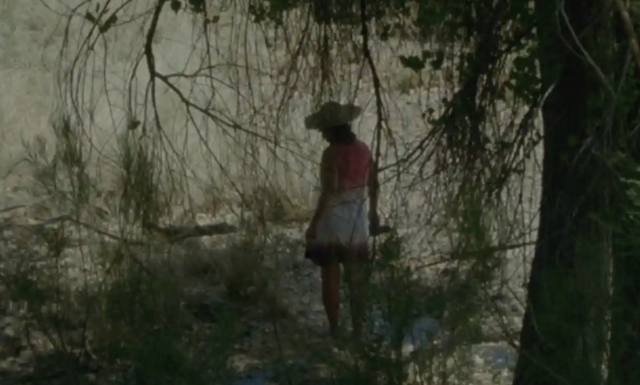
Joshua Bonnetta and J.P. Sniadecki’s El Mar, La Mar
Norwegian producer Racha Helen Larsen and director/cinematographer Egil Håskjold Larsen talk to Business Doc Europe about their new festival Mirage that launches 24 September, running through 26 September. “We wanted to create a space for those films falling between TV and cinema distribution…we wanted to challenge some of the traditional conceptions of what ‘documentary’ film is.”
The name Mirage was adopted to denote an essence, and to liberate the event from standard references such as location, also from the concept of documentary or even film. That said, yes, the festival is based in Norway with its epicentre in Oslo, and the primary discourse is documentary.
It is a “festival for ‘the art of the real,’” clarifies co-founder Racha. “The Mirage film is artistic and visual, it tells you a story with images, not words, it makes you travel and meet people, places and cultures, and makes you see these from new and unpredictable perspectives. Everything from classic observational documentaries to new hybrid forms that push the boundaries of the ‘documentary’ term.”
“Films and art will always reflect the society we’re living in,” she adds. “Our mission is to say, look, documentary is a creative art.”
This mantra is reflected in a highly cinematic and genuinely thought-provoking programme that includes such gems as Hubert Sauper’s Epicentro, Maora Passoni’s Ecstasy, Carlo Casas’ Cemetery, Gianfranco Rosi’s Notturno, Michele Pennetta’s Il Mio Corpo, Joshua Bonnetta and J.P. Sniadecki’s El Mar, La Mar and and Questlove’s Summer of Soul. Racha and Egil are working closely with doc industry expert Martijn te Pas in launching Mirage.
The festival is riding the wave of enormous documentary success and appreciation in Norway, the pair point out, with Benjamin Ree’s The Painter and the Thief having picked up the key Amandas (Norway’s BAFTA equivalents) of best film, best photography, sound, editing and audience award, while the same film joined the Norwegian Gunda (Victor Kossakovsky) on the short-list for 2021 Best Feature Documentary Academy Award.
“From the beginning we wanted it to be an international festival that could bring all the fantastic films we got to see when travelling around festivals to audiences back here in Norway,” they say, pointing out that they have no desire to cater to a select audience. Their target constituency is everybody.
“We want documentary not to be for the few. So we are trying to make different concepts to drag in people that wouldn’t naturally see documentary on the big screen. For instance, we are having a Slow Cinema Sunday, where you can sit in a hammock or a bean bag and just watch films…slow films, to let audiences experience documentary in different settings, and not to preach to the same type of group all the time.”
“We also want the festival to help Oslo become a sought after destination for auteurs and the most uncompromising international filmmakers,” they add.
A core aspect of the new festival is to create a “dialogue” with other artistic forms and disciplines, to devise a “play” between them, so as not to view documentary in isolation, rather “to interact with other artistic media and outlets, allowing them to mirror each other.”
“We show the art of the real. So we will include documentary, photography, literature, and other art forms that treat reality, quote unquote, in different ways,” says co-director Egil.
In terms of future trajectory, the pair hope to devise an industry arm within the festival that will complement existing Nordic and international funding initiatives by seeking early investment for projects from parallel industries.
“We want to be around to bring in more industry partners to support the type of films we show, for teaching forums or a market for those special films that have a hard time getting funding,” says Racha, adding of the pair’s ‘no compromise’ approach, “We don’t want to grow to be a huge festival, just an intimate festival that really cherishes and helps each of these beautiful creative and artistic documentaries.”