Fifteen Dutch documentary projects, twelve of which are at advanced stage, will be presented during the second edition of NLWave (September 30 to October 2), an initiative of the Netherlands Film Fund and presented in co-operation with SEE NL. The 2026 showcase comprises a who’s who of top Dutch creative and business talent, and presents a wealth of fascinating stories that span the globe.
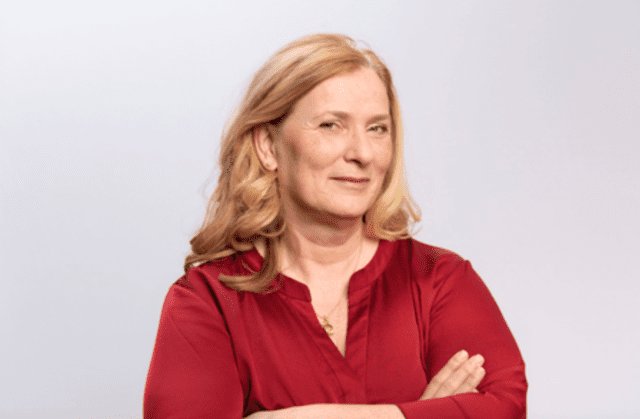
“That’s how we build the line-up of NLWave,” Simone van den Broek, Head of Documentary and Fiction at the Netherlands Film Fund, tells Business Doc Europe. “We really look for projects that have the most international potential.”
“It’s not like every project has to be an international co-production, but we try to stimulate people to work more internationally in co-productions,” van den Broek adds of the Fund’s approach “We believe that projects become stronger with co-production because you have not just your own national view, but you also get the eyes and perspectives from outside on your film. And co-production offers more autonomy to filmmakers and producers, and makes them financially stronger.”
In 2022, the Fund introduced its “high ambition” CineDoc scheme for larger-budget documentaries, to better facilitate their progress towards international success. Van den Broek flags up three Dutch documentaries at NLWave that are developed under this umbrella set-up.
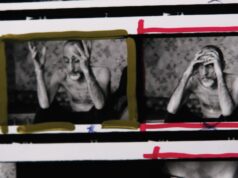
Radical Dutch director Renzo Martens’ The Dawn of the Post Plantation, produced by Scenery, profiles three members of the Congolese Plantation Workers Art League (CATPC) who set out on an extraordinary mission to reclaim what was taken from their people: their land, their history and their future.
Meanwhile, In Tom Fassaert and Thabi Mooi’s In Your Shadow, produced by Een van de jongens, when Thabi takes her estranged father on a journey to reconstruct his hidden past as an ANC freedom fighter, she discovers that there is more to his lifelong silence than just his trauma. Fassaert’s Between Brothers was selected for NLWave 2025 before its selection at IFFR earlier this year.
In a different vein, Willemiek Kluijfhout’s The Woman Who Made Van Gogh Famous profiles Jo van Gogh-Bonger who, as a recent widow with a young child, ensured not only the legacy of her late brother-in-law Vincent, but her own place in the male-dominated art world. The film is produced by 100% Film.
“It’s a fully female filmmaker crew,” comments van den Broek of a story that is bound to generate enormous interest beyond Dutch borders. “And as 100% is the producer, it’s also a female-led production. Jo van Gogh-Bonger seemed like a non-existing woman in the background, but she was bold, and without her the world would never have heard of Vincent van Gogh.”
“On a larger scale the film is also about so many women in art history, and how they have been both silenced and misrepresented.”
The Film Fund Documentary Head identifies another trend within the NLWave 26 selection, that of diaspora filmmakers, such as Afghan Aboozar Amini, from Afghanistan, and Palestinian Sakir Khader, who are telling searingly personal stories about their homeland, but from their new Dutch base.
Kabul, Year Zero, a new pitch at NLWave 2026, is the third part of Aboozar Amini’s Kabul trilogy, and follows hot on the heels his award-winning Kabul Between Prayers, which world-premiered at Venice 2025. In Sakir Khader’s Idlib, when Sarout dies, it is not only the death of a famous revolutionary, it is also the moment that his nephew Mohamed is thrust into adulthood.
One doesn’t usually expect to see love stories told in feature documentary form, but two further projects at NLWave do exactly that, van den Broek points out to Business Doc Europe. Both are produced by Ilja Roomans of Docmakers, and are directed by veritable doyennes of Dutch feature doc production.
In We Had A Plan by Suzanne Raes (Where Dragons Live, 2024, and Close to Vermeer, 2023), after 10 years of working illegally as cleaners in the Netherlands, Paul and Daniel are forced to return to the Philippines, only to realise that their future together can only lie in Amsterdam. Yet achieving that dream will require them to endure an uncertain separation.
Meanwhile in The Return by Aliona van der Horst (Boris Ryzhy, 2008, and Turn Your Body to the Sun, 2021), an exiled Ukrainian couple’s 45-year marriage comes under pressure when war turns their words into a battleground, forcing them to choose between loyalty, identity and each other.
Each year, the Netherlands Film Fund backs approximately 20 feature docs in development and ten in production. The minimum contribution per doc project is €275,000, and €450,000 for Cinedoc projects.
For international documentary productions in which the Netherlands has a minority stake, up to €90,000 is on offer per project. “We have increased to this amount [from €50k] to really strengthen the position of these documentaries,” says van den Broek. A reciprocal minority treaty with the Flanders Film Fund sees investment per project of €50,000 within three films per year, while the Netherlands Film Fund + IDFA Bertha Fund Co-production Scheme, designed to empower the creative documentary sector in Africa, Asia, Eastern Europe, Latin America, the Caribbean and Oceania., sees two projects per year see €50,000 co-pro investment.
Furthermore, the Netherlands Film Production Incentive can provide a cash rebate of up to 35% on qualifying production costs for long documentaries intended for cinema release (minimum production budget of €250,000 and €100,000 in qualifying Dutch spend).
The Netherlands has, for many years, maintained a very strong documentary tradition, all the time underlining its reputation as a vital cog within the international funding infrastructure. The country’s status is further enhanced by its hosting IDFA, one of the core events in the global calendar, and now the NLWave event which will, every year, propel excellent new Dutch content towards international shores.
Over recent years, Van den Broek has, however, noticed a shift in emphasis in terms of the “context” in which documentaries are being made and funded.
“I think that we have been redefining our position internationally over the last 5 or 6 years which has, I think, been very interesting and relevant. The Netherlands is still a country with real funding possibilities, but there is also a responsibility to reflect on our position internationally,” she says, referring to the country’s colonial legacy.
She cites Eva van Pelt’s NLWave 2026 project Penjajah (Bad Guys), produced by BIND. The doc features Dutch actor Hans de Kraker, who is famous for playing the role of the cruel Dutch colonial villain (penjajah) on Indonesian film sets. But when Hans receives an old suitcase of family belongings he discovers that his real-life father committed actual atrocities while serving in the military in Indonesia. This forces him to confront the dark reality behind the “fictional” colonial villains he portrays.
“We have to think about how are we making films, the crew we work with, and how we are including all the perspectives that are relevant for the films that we make, van den Broek stresses. “I think in doing that, we become even more relevant internationally.”
NLWave 2025 was a “very positive” experience for the Dutch production and sale industries, and one which van den Broek is keen to replicate this year, she underlines.
“We are showing projects at a stage where there’s still some things to discuss about content or finance, and films that are ready for a premiere and sales” she says. “We have looked to make a diverse selection of excellent projects with audience reach, that we think that the public will like and which demonstrate artistic bravery.”
“NLWave worked very last year, and we’re very confident about our selection once again in 2026,” the Fund’s Documentary Head signs off.