“Paradise Morbid is a horror-hybrid documentary that focuses on what happens when you get lost in drug use,” director David-Jan Bronsgeest tells BDE of his NLWave feature doc presentation. The film centres on Frank van der Meer (63), once a king of Amsterdam’s Red Light district, “who has died many times, yet refuses to stay buried.”
“It’s a dark film rooted in Frank’s daily life on the streets of Amsterdam and his use of heroin and crack cocaine. Through his story, we explore addiction, vulnerability and the experience of being pushed to the margins of society,” Bronsgeest stresses of the film’s central character, who lived through the city’s underground nightlife, the heroin epidemic of the 1980s and 1990s, years of addiction, homelessness, violence and several near-death experiences. The film has grown out of a completed short of the same name.
Today, Frank calls himself a professional junkie, the synopsis explains. From his apartment he tests heroin for dealers and assesses a past life most people would rather look away from. “Behind the scars and extreme stories is a man who is funny, brutally honest and searching for peace with the choices that shaped him,” says Bronsgeest.
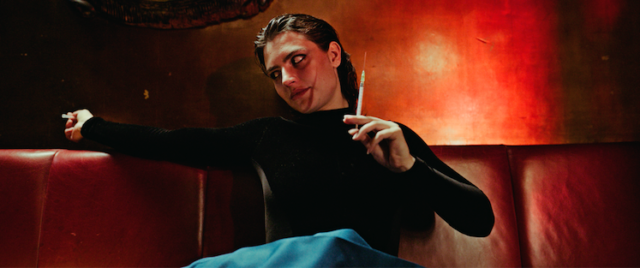
Blending documentary, fiction, animation and the aesthetics of horror, the film travels through Frank’s memories and reconstructs the defining moments of his past. “Younger versions of Frank appear as ghosts of memory, forcing him to confront the person he once was and the person he has become,” Bronsgeest adds.
What’s more, Paradise Morbid tells a story that the filmmakers believe is universal, and are confident they can find international partners who see its potential beyond Dutch borders.
“Frank’s experience raises questions about exclusion, inequality and how society sees people living with addiction,” says the Dutch director. “It’s also a film with a strong visual signature and the experience of a true horror film, with characters who are living this reality on the streets today. Therefore, we think it’s a unique mix: there is an urgency to why this movie is important and needs to be made right now, while at the same time offering an audience a rollercoaster of emotions and the opportunity to experience the raw side of addiction up close.”
“At a certain point, the viewer becomes part of a heroin trip that will ultimately lead to a horrific ending,” Bronsgeest continues. “Therefore, we think it’s a great opportunity to work together with the right sales agents and explore where this movie can land, since it has a universal theme that we believe many audiences can relate to.”
The film, whose expected delivery is October 2027, secured €549,101 towards an overall budget of €650,000 from the Netherlands Film Fund via the Caleidoscoop programme. Gusto is attached for Benelux distribution. In Utrecht, producer Tim Koomen (Bloodrave Films) will be seeking an international sales agent and distribution partners for the remaining territories, and is open to strategic co-production partnerships that could bring additional financing and international reach.
“We want to leave with a clearer international path and specific conversations we can continue,” Koonen tells BDE of his NLWave intentions. “That means identifying festival programmers who understand the form, finding sales and distribution partners with a considered view of its audience, and learning how the material lands outside the Netherlands.”
“The key question is where the film should first meet its audience,” he adds. “Its documentary foundation, formal experimentation and horror language create several possibilities, and each implies a different way of introducing it. We want partners who can help us make those choices deliberately.”
Director Bronsgeest further explains his visual approach, that involves the use of Cooke S8 lenses to create a vivid sense of depth and intimacy, “bringing us close to Frank’s facial expressions and physical experience.” The director and his cinematographer (Aziz Al-Dilaimi) have chosen “a deliberately composed cinematic image” rather than a predominantly handheld observational approach.
“This visual approach allows the documentary footage to flow into the fictional reconstructions of Frank’s story, including his memories of Amsterdam in the ’70s and ’80s. We want the different forms to feel part of one immersive cinematic experience,” says Bronsgeest, who further stresses the use of costume from the era, to give the film a distinctive visual identity.
“As the film progresses, the boundary between documentary and fiction becomes increasingly difficult to distinguish. We want viewers to remain connected to Frank’s real life while being drawn into the visions and subjective experiences we give form to on screen,” adds producer Koomen.
“Music is also central to the film’s cinematic world. We are working with Dutch artists who experienced the ’60s and ’70s first-hand and bring a personal understanding of that period,” producer Koonen stresses. “The sound will evolve as we move through time and as Frank’s experience of addiction changes.”
Bronsgeest returns to the sense of dread that he intends his film to evoke. “With Paradise Morbid, I want to use the language of horror to explore reality. The monster convention has always fascinated me because the best monsters are not creatures we fear, but characters we slowly learn to understand. Like Frankenstein, this film first confronts us with someone we might reject before revealing the humanity underneath,” he says.
“The film is also about time: the choices we cannot undo, the memories that haunt us and a changing Amsterdam that slowly pushes its outsiders out of sight,” he further emphasises. “By combining documentary, fiction and horror, I want to create a cinematic experience that does not look away from darkness, but embraces it. Because only by confronting the parts of ourselves we fear can we truly understand them.”