Miriam Guttmann‘s Sanda Dia is a film with injustice at its root. During an initiation ritual at an elite Belgian university 18-year old Sanda died. He was not like the other privileged kids in the fraternity. He was son of a Senegalese immigrant and a working-class Belgian mother. Nevertheless, he was determined to climb the ladder towards success. There was a trial after his death, but his fellow students were fined a mere €400 each and asked to do community service, to the shock and consternation of many observers.
The film explores how a tragic death sparked a national reckoning on race, class justice and accountability in Belgium – and beyond.
“The story of Sanda Dia confronts us with deeply uncomfortable truths about systemic privilege, power, social injustice and the devastating consequences of toxic traditions,” director Guttmann writes in her film notes. “Sanda’s senseless death didn’t happen in a vacuum – it is a reflection of deeper issues that exist within elite institutions where race, class and power dynamics can collide with devastating results,” she adds.
The film, produced by Monique Busman and Indy Kisoen of Tomtit Film, has already attracted a number of heavyweight backers. Belgian production company Clin d’oeil is co-production, while international sales are handled by Dogwoof.
“Our strength in delivering Sanda Dia lies in our layered approach, both creatively and strategically. The film combines a deeply researched, nuanced narrative with a clear vision, ensuring it is compelling, authentic, and socially impactful,” Monique Busman of Tomtit Film tells Business Doc Europe.
The Dutch distributor is Cinema Delicatessen while Dalton will release the film in Belgium. Financiers include the Netherlands Film Fund, Netherlands Production Incentive, NPO Fund (NL), CoBO (NL), Fonds21 (NL), Sub3 (NL), The Flanders Audiovisual Fund (BE), the Belgian Tax Shelter. Broadcasters on board are Human (NL), VRT CANVAS (BE) and RTBF (BE). The film will be ready for delivery in July 2026.
“Sanda Dia is a story that transcends borders. While rooted in the Netherlands, its themes – social inequality, the intersection of race and class, and the struggle to overcome systemic barriers – resonate globally,” Busman underlines. “This is not a sensationalized crime story, but a deeply human narrative seen through the eyes of Sanda’s family, friends, and the legal and experts involved in the case providing a unique, multifaceted perspective.”
“The film challenges audiences to confront uncomfortable truths about privilege, power, and social structures, making it both personal and universal,” she adds. “Investors have supported the project because of its original narrative approach, societal relevance, and clear international potential. Above all, Sanda Dia ensures that Sanda’s story lives on as a catalyst for dialogue, awareness, and change.”
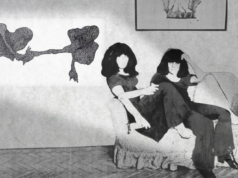
The film promises to be highly cinematic, combining an observational approach, stylized interviews, re-enactments and archive. There is also a strong animation component, as provided by Robert-Jonathan Koeyers, whose It’s Nice in Herewas selected for Semaine de la Critique at Cannes 2022, and who pitched his own new project Little Lost Things at NLWave25.
“Sanda Dia will follow a strategic festival and release plan designed to maximize visibility and impact. We aim to premiere at major international festivals such as IDFA, Berlinale, and Sundance, while also engaging European festivals focused on social issues,” Busman says of the film’s future trajectory. “Following the festival circuit, the film will have theatrical releases in the Netherlands and Belgium, followed by international streaming availability.”
Outreach will be very high on the agenda for a film of such, political and emotional resonance. “The Sanda Dia Impact Campaign, in partnership with Think – Film (UK), works to end toxic hazing practices in universities and colleges across Europe and beyond,” says Busman. “The campaign promotes laws and policies that limit, condemn, and criminalize harmful hazing, raises awareness of its degrading and dangerous nature, encourages research, mobilizes audiences via social media, and advocates for institutional enforcement.”