This year, Czech human rights fest One World will offer, in addition to 41 films across 4 competition sections, seven non-competitive categories, which films within the themed sections of Family Webs, Female Gaze, Male Beings, Ecosystems, Searching for Freedom, and Community Boundaries.
The festival will showcase a total of 84 documentaries, 11 narrative films, and 9 immersive films across Prague and a further 56 cities across the Czech Republic. The regional focus is on Slovakia in the Slovak Journey section. Fiction films with human rights themes also feature in the thematic sections.
In Prague, the festival will open March 12 with My Memory Is Full of Ghosts by Anas Zawahri. This poignant essay paints a haunting portrait of Homs, a once-prosperous Syrian city now devastated by war.
International Competition
The films in the International Competition category use expressive cinematic language to present powerful topical themes in a current human rights context, often from high-profile regions but sometimes from places that are overlooked:
- A Man Fell by Giovanni C. Lorusso. Locals remember when the Gaza Building in Beirut, Lebanon, was the Middle East’s best hospital. Today the dingy crumbling building is the last refuge for people who have nowhere else to go.
- All The Mountains Give by Arash Rakhsha. The Kurds are the largest ethnic group without a territory of their own. The discrimination they face in the Middle East pushes them into illegal activities. One of these is smuggling, or “kolbari”, often of common household items and medicines. Two friends, Hamid and Yasser, risk their lives on the border between Iraq and Iran to make a living.
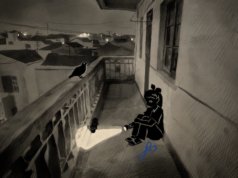
- D is for Distance by Chris Petit, Emma Matthews Fragments of footage (documentary, staged and historical) and artworks create a film mosaic revealing the liminal state between consciousness and unconsciousness. Madness, imagination, nightmares, confusing abysses that lead to reflections and ever more doors. Louis lives with epilepsy and his mother always stands steadfastly by his side.
- Home is the Ocean by Livia Vonaesch. What is at first glance a small sailboat houses a fairly large family of ecological researchers, who, 20 years ago decided to leave solid ground and live their lives on the waves of freedom.
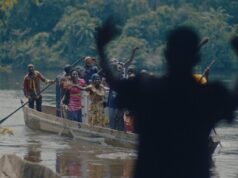
- Khartoum by Philip Cox, Anas Saeed, Rawia Alhag. After the 2019 fall of Omar al-Bashir’s dictatorship in Sudan, hopes of fundamental political change arise. But a military coup thwarts dreams of democracy, plunging the country into chaos and driving millions into exile.
- Mistress Dispeller by Elizabeth Woods. After years of marriage, Li discovers her husband is passionately writing to a younger woman and decides to act. She’s disappointed but wants to save the marriage. She goes to Wang Zhenxi, a mistress dispeller well-known for ending extramarital affairs. Wang’s intervention in the love triangle, spanning several months, is full of subtle manipulation and funny situations that are hard to imagine in our social milieu.
- Mr. Nobody Against Putin by David Borenstein, Pavel Talankin. Pavel “Pasha” Talankin is a popular enthusiastic Russian school teacher who likes small-town life, bad weather, and even dirty panel buildings. His life is disrupted by the war, as he, an employee of an educational institution, must become its instrument.
- Songs of Slow Burning Earth by Olha Zhurba. Russia invades Ukraine. People call emergency services in panic, not knowing what’s afoot. There are explosions. Kyiv is on fire and people flee to safety. Initial shock slowly becomes daily wartime reality. Boys play soldier among burnt tanks; adults search for loved ones in mass graves. Children run to bomb shelters as if they’ve always done so. A bakery churns out bread to the rhythm of explosions.
- Soul of the Desert by Mónica Taboada-Tapia. The Colombian desert is home to the last of the Wayuú, now living in reservations on the margins of society. One of them is the ageing Georgina, whose origins and true identity are a mystery to the authorities.
- The Guest by Zuzanna Solakiewicz, Zvika Portnoy. Maciek and his family live on the Belarus-Poland border, where, in 2021, thousands fleeing from the Middle East and other dangerous areas are trapped. Belarus promised them free access to the EU, but Polish armed forces are forcibly returning them from the border zone.
Right to Know
This competitive section with a very meaningful name explores pressing issues that are not given the coverage they deserve. In this year’s eleven films, we take a look beneath the lid of media-neglected countries or events. After several years, we return to places such as Nagorno-Karabakh and Cuba. In Africa, we visit Ethiopia, Niger, and Egypt. And we bear witness to the wars in Ukraine and Gaza through protagonists who are not often heard:
- Black Snow by Alina Simone. Instead of morning fog, a carbon monoxide cloud rolls over Kiselyovsk’s rooftops and black snow falls to the ground. In Kuzbass, a proud mining region, the volume of extracted black coal matters more than human lives.
- Everything Needs to Live by Andrii Lytvynenko, Tetiana Dorodnitsyna. Even as a child Anna Kurkurina loved animals, later working in zoos, promoting animal rights and founding shelters. At 40, she took up weight training with similar vigour. She became a multiple world champion in the power triathlon and coached people with physical disabilities.
- Facing War by Tommy Gulliksen. The future of countries at war is often decided not by soldiers on the front line but by men in glass buildings. Until October 2024, NATO Secretary General Jens Stoltenberg was one of them, as he tried from the start to arrange negotiations between Russia and Ukraine. Director Tommy Gulliksen had a unique opportunity to record it all.
- From Ground Zero by Rashid Masharavi. Documentarist Rashid Masharawi organised the creation of a series of 22 short films about current life in Gaza. On screen, they tell the unspoken stories of the current war using documentary style, live action and animation
- Made in Ethiopia by Xinyan Yu, Max Duncan. On one hand, the industrial zone in Dukem, Ethiopia, with more than 100 Chinese companies, offers tens of thousands of jobs; on the other, it changes the landscape and exploits the locals. The film captures the vision of prosperity through the eyes of 3 women tracked over 4 years.
- My Memory Is Full of Ghosts by Anas Zawahri. After years of war, Homs no longer feels like the “city of smiles” it was once called. The camera, penetrating the ruins, and the memories of people who had to leave, take us there. Their thoughts about the war and the time after it describe the ambience of a specific place and the fate of a nation that wants to live again.
- Night Is Not Eternal by Nanfu Wang. For 7 years, Chinese American filmmaker Nanfu Wang followed activist Rosa María Payá in her fight against the Cuban communist regime, which Rosa built on the work of her father Oswaldo Payá, an opposition democrat and five-times Nobel Peace Prize nominee.
- On the Border by Gerald Igor Hauzenberger, Gabriela Schild. Agadez, in northern Niger, has long been a key hub for migration from the Sahel to northwest Africa and on to Europe. Nomadic Tuareg tribes made their living taking migrants across the Sahara, creating a lucrative but unregulated migration economy.
- Panic Button by Samara Sagynbaeva. The cooperation of Central Asian countries such as Kyrgyzstan helps Russia resist Western economic sanctions. Due to the country’s strategic location, all Chinese goods bound for Central Asia and Russia must cross its borders, and it serves as a transshipment point for goods from countries with which Putin is not officially allowed to trade. Investigative journalist Ali Toktakunov, a long-time staff member of Radio Free Europe’s Kyrgyz section, helped to uncover the deeper implications.
- The Black Garden by Alexis Pazoumian. The film portrays 3 generations of Armenians in the Nagorno-Karabakh village of Talish. People try to live normally but prepare for another Armenia-Azerbaijan war. During the 2016 war, the Armenian population had to flee. Now, 3 years later, they return.
- The Brink of Dreams by Nada Riyadh, Ayman El Amir. Women in a remote south Egyptian village should help men, keep quiet, and bear children. To protest against these stereotypes, some girls start a theatre group.
Czech Competition
Every year, the competition section dedicated to Czech production and co-production projects offers a diverse mix of themes and documentary approaches.
- Doctor on a Trip by David Čálek. Is there any human community that doesn’t have a word for depression, sadness or anxiety? How does Western culture deal with mental illness, its acceptance, and its treatment?
- Fakir by Roman Ďuriš. Dalibor, a Roma in his 20s, spent 2 years in prison for perjury. Upon his return home, he immediately faces new problems. His younger brother Kevin is living with their father, an abusive alcoholic. Dalibor wants the boy to be entrusted to his mother. But the decision is up to the court.
- Million Moments by Amálie Kovářová. This almost fairy-tale story of good vs evil offers a concise history of the Million Moments for Democracy initiative, taking us behind the scenes of the preparations for major events and the lives of its two founding members – Benjamin Roll and Mikuláš Minář.
- Pit Stop Reporter by Zora Čápová. Seeking the roots of disinformation in Czechia, journalist Ivana Svobodová is mocked and faces personal attacks at anti-government protests when she confronts people who share a hatred of traditional media and spreading disinformation.
- Revolution 3.0 by Reza Bird. Filmmaker and editor Reza Bird fell out of favour with the regime due to his political and social activism and in 2016 fled Iran with his family, finding refuge in Los Angeles.
- Satan Kingdom Babylon by Petr Šprincl, Marie Šprincl. In a highly stylised documentary mystery, a novice investigator follows the trail of a missing woman. Messages found in an abandoned hotel room, thought to be her last refuge, reveal disturbing truths hidden behind the hotel walls, linked to religious movements and their followers.
- Scent Evidence by Zuzana Piussi. Today it seems that forensics uses the most advanced technologies and is slowly moving towards infallibility. But the reality is often very different.
- The Impossibility by Tomáš Hlaváček. The award-winning documentary film takes you into the harsh reality of poverty exploitation in the Czech Republic. It follows the years-long struggle of tenants in a rundown lodging house against its ruthless owner, Robert Hrdina, who continues to profit from human desperation despite a court ban. Brave mothers with children decide to resist systematic oppression and, with the help of activists, launch a risky operation – gathering evidence of illegal practices and violence.
- The Other One by Marie-Magdalena Kochová. While her peers deal mainly with completing school, relationships and plans for the future, 18-year-old Johana must reconcile her own dreams with taking care of her younger sister Róza. The Other One provides a sensitive insight into the lives of so-called glass children – healthy siblings of children with a health disadvantage. In Róza’s case, this means a form of autism that requires constant supervision from those closest to her. who has a form of autism and requires constant supervision.
- Urban Disobedience Toolkit by Vladimír Turner. Cities are flooded with visual and sound pollution. Housing is now a costly commodity, an investment for the richest. The capital’s public space no longer serves the residents, but tourism, cars and big capital. How to reclaim the city?
- Volver a Volver by Valerio Mendoza Guillén, Jorge Sánchez Calderón. Venezuela’s long-term economic and political crisis has caused millions to leave the country. Most have gone to neighbouring countries (Colombia or Brazil), while others have chosen Spain or the USA.
Immersive Films Competition
The Immersive Film Competition presents nine films reflecting diverse human rights issues. Immersive films bring specific knowledge to the audience, often based on the sharing of direct experience. Additionally, in immersive films we enter mental states that transcend everyday life – or are such that we’ve not remembered them.
- Address Unknown: Fukushima Now by Arif Khan. The film takes viewers to today’s Fukushima, where survivors of the 2011 disaster still face long-term consequences. Working with a colourful but crumbling reality, volumetric photography and photogrammetry create an evocative poetic experience.
- All I Know About Teacher Li. Using the alias Teacher Li, a Chinese art student in Italy spurred huge democratic protests in China. By tirelessly sharing uncensored news on Twitter, his effort to spread the truth grew into a strong movement against government oppression.
- Below Deck by Martin Prinoth, Martina Mahlknecht. Filipinos make up a third of the global maritime workforce employed on cruise ships. Below Deck reveals their hidden world.
- Emperor by Marion Burger, Ilan J. Cohen. The film immerses us in aphasia, not as if it’s a brain disorder, but a distant land where signs and meanings are confusing. Viewers move inside the mind of a man with aphasia; with him, they face memory confusion and lose the ability to express themselves.
- Mammary Mountain by Camille Baker, Tara Baoth Mooney, Maf’j Alvarez. Mammary Mountain explores the close link between disease in the body and the wider context of the land. Built on the stories of breast cancer survivors (one of the filmmakers, a few other women and one man), this VR experience reveals the emotional and physical impact of the disease.
- Murmuration by Patricia Bergeron. Kanope takes the audience on an undersea journey in a narrative inspired by the true stories of young migrants who, between 2015 and 2020, overcame dangerous routes across seas, deserts and borders.
- Perinatal Dreaming – Understanding Country by Marianne Wobcke, Volker Kuchelmeister, Lucia Barrera. Naturalistically spiritual, even esoteric, Perinatal Dreaming abandons a scientific view, becoming a surreal journey through the body to explore prenatal development and the transition from womb to world. Using visual and sound elements, it presents the early experiences of the foetus, such as skin contact and first interactions with the outside world.
- Queer Utopia: Act I Cruising by Lui Avallos. From his living room, a retired playwright talks about his life and the lives of queer men of his generation who were expected to be ashamed, meet in secret, and have encounters in toilets. In virtual reality, dark public toilets are the stage for the protagonist’s nostalgic and intimate narrative as he shares his fading memories. It’s then up to the audience to preserve them.
- RAPTURE II – Portal by Alisa Berger. RAPTURE II – Portal transports the audience in a markedly physical way to a Donbass flat that was abandoned by vogue dancer Marko when he fled the war. The hypnotic, almost horror-like film combines a digital reconstruction of the flat based on photos with dynamic dance sequences.
Click here to see selections in the Family Webs, Female Gaze, Male Beings, Ecosystems, Searching for Freedom and Community Boundaries sections.