Bosnian filmmaker Hari Džekson (Harry Jackson) was a true maverick, and a vagabond non-conformist. The films he made in the 1970s and 80s were neither romcoms nor thrillers. Nor did he offer up feature-length, intellectually-challenging arthouse films for audiences to mull over. And he certainly wasn’t a director of documentaries, creative or otherwise.
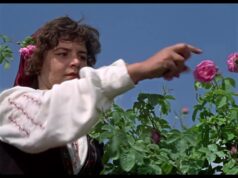
Harry chose, instead, that most cinematic of genres, the western. And in his movies – always shorts – good prevailed over evil, and justice was always served, courtesy of a final reel shoot-out. The innocent were saved, and the guilty were punished.
Harry’s all-time favourite film was the classic western Shane, even if his own films resembled more the low-budget early Spaghetti westerns of Sergio Leone. His movies were invariably populated by local non-actors, including willing members of the oppressed Roma community who grew their hair long to play Indians.
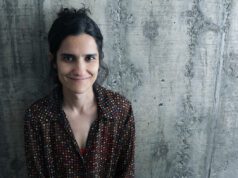
He was also a man whom former-Yugoslavian director Dragana Jurišić knew when she was a small girl, and whom she admired all her life. Harry taught her father photography, and it was after her family home was destroyed, along with it all of her father’s photographic prints and negatives, that Jurišić set her heart on being a visual artist and photographer.
“The day my father heard that Hari died was the first time I saw him cry,” she says, even if the reports of the filmmaker’s death were premature, a cruel lie put out by Serbian commander Arkan’s henchmen – Harry actually died of heart failure in 1999. “[But] I have been wanting to make this film since that day, when I was 16 years old, to try, through the microcosm of Hari’s story, to understand what happened to Hari, to my country, to us all.”
Jurišić’s film, some 30+ years in the making, proceeds to answer these questions, telling Harry’s story and that of Bijeljina, the town where the war in Bosnia began in 1992 (and where, we are told in The Balkan Cowboy, world-premiering in Sarajevo, more than 400 citizens, mainly Bosniak Muslims, were rounded up and murdered or exiled on its first day). Harry himself was an ethnic Bosniak.
Central to Jurišić’s documentary is her return to Bijeljina to create a western in Harry’s honour, again using a broad range of locally-sourced actors of all ethnicities. It would be a film informed both by the style and moral resolve of Shane (although in the new film, the titular hero is now called Harry).
En route, Jurišić is forced to encounter once more terrible memories of her past, and explains why she decided to up sticks and settle in Ireland. “My home country, like Atlantis, vanished into the realm of imaginary places and people,” she says early in the film. “Ireland looked safe and the people seemed kind,” although she is dismayed as she observes at first hand the anti-immigration demonstrations that have plagued the Emerald Isle over past years.
Back in Bijeljina, she auditions potential participants for her fictional western, one of whom likens Bosnians to the ‘Indians’ depicted in old westerns. “We are truly a lost people,” he says.
Two identical twin brothers audition successfully for the film, looking to play the antagonists who must face each other in the final shoot-out. “There’s no war until brother turns against brother,” observes Jurišić.
The director, furthermore, finds two elderly friends, Fatima and Zekija, who had been inseparable all their lives, sharing “one cigarette, one handbag, one skirt,” until the war ripped them apart. Fatima had to leave Bijeljina, settling first in Germany and then in the US where she raised a family. Yet the two women still talk three hours per day on the telephone, and Fatima returns every year to her dear friend, with whom she stays for three months.
Jurišić also tracks down lawyer Duško Tomic (who was initially wary of any contact) who recalls the execution of 22 Bosniaks, including seven children, beside the River Drina over 30 years ago. “I am ashamed that I belong to a people who did not condemn this crime,” he laments. “This is not Serbiahood. This is not humanism. This is not Christianity. This is not victory.”
“What is unimaginable is that many people still to this day do not accept the fact that all this happened,” Jurišić further laments to BDE. “I was just yesterday with a friend who was coming on the bus from a vacation, and she met a woman from that part of Bosnia. She said, ‘my friend just made a film about Bijeljina and what happened there, the genocide.’ The woman was Serb, and she said, ‘well, that’s all lies, that didn’t happen.’
“Lying and misrepresenting reality is so common now, but I really see its roots there, originally in Bosnia,” the director adds.
Yes, the task that Jurišić had set herself during this Bosnian odyssey was, at times, very distressing. “Many times during the process of making the film, I was asking myself the question, why am I doing this to myself?” she says. “I’m quite a cynical person in that I do not think that what I have to say is going to change anything. I feel sometimes, to do projects like this you really have to have an ego or a belief that what you’re doing is really important, and I didn’t even have that to sustain me… I felt like an absolute impostor.”
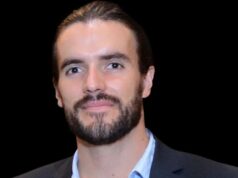
That said, she eventually discovered Darka, who together with his father owns the ranch on which she set out to film her western homage to Harry, together with her multi-ethnic cast and crew.
The shift in tone and style, which allows for both joy and laughter in a film whose backdrop is her country’s terrible and bloody history, proved to therapeutic for Jurišić, as it will undoubtedly be for audiences. It is difficult to watch the last quarter of The Balkan Cowboy without suppressing a lump in your throat or removing the veil of tears across your eyes.
“I can tell you something…I cannot watch a sad film. I have experienced so much trauma in my own life, I just feel like you need to give me some release valve at some point, because it feels kind of abusive to put me in a situation where there is constant tension, and sadness,” she stresses.
“When we were filming the western, everyone came together – Serbs, Roma, Muslims, Croats. It was such a joyful happy atmosphere, and there was absolutely no reason why these people shouldn’t be friends, except for these man-made identity structures that are imposed on them.”
“I think Bosnian people are extremely funny,” Jurišić further underlines of the light touch she was able to apply. “To not put that humour into the film would be misrepresenting the place. Because the humour is what helped them survive and process these horrible things that happened to so many people there for so long.”
The Balkan Cowboy is produced by Zlata Filipović and Anna Rodgers of Ireland’s Invisible Thread Film,s in coproduction with Oliver Sertić of Croatia’s Restart.