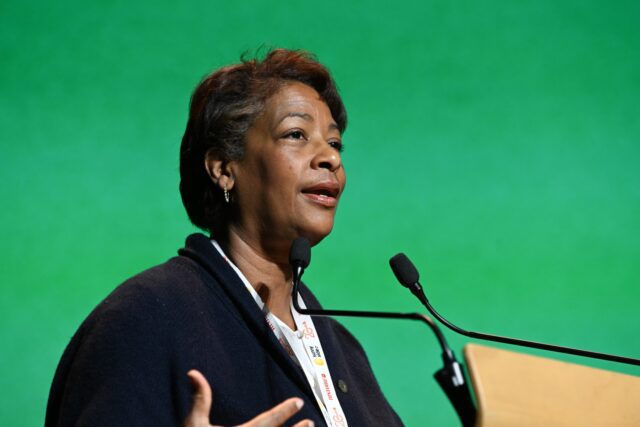
At the beginning of her Sunny Side keynote, US filmmaker Dawn Porter laid out her stall, stressing that a better understanding of our ‘present’ can be derived from the study of our documented past, but also that the very ‘present’ in which we live must equally be recorded diligently and accurately.
“We truly are facing an unprecedented attack on truth and historical accuracy in the United States,” she said. “This is an attack that I never imagined that I would see. And so I challenge you all, as difficult as it may be, to consume all the news – and it can feel overwhelming – and to continue to try and see the truth for what it is. I can assure you that the reports of the attack on truth and journalism and accuracy, and even documentary film, are not exaggerated today. We are not only tasked with telling history stories, but with making sure that the history that is told is not erased or distorted.”
“So it brings me back to archive and how important it is that we study the past and we present that evidence to audiences who may not have considered it before,” she underlined.
Porter then showed a series of clips from three of her (mainly) archive films which document a 1960s America in turmoil, but which also detail the radical and progressive changes in human and civil rights that followed the years of protest. These films were The Lady Bird Diaries (2023), Bobby Kennedy for President (2018) and John Lewis: Good Trouble (2020).
“So what is the point of juxtaposing these films? I think about these three very different people, Lady Bird Johnson (the wife of president Lyndon Baines Johnson), Bobby Kennedy and John Lewis, and how intimately each of them was involved with the major issues of the time. But I think about how the archive shows three very different but also valid opinions of the same events, and how understanding each of their perspectives brings a deeper richness,” said Porter.
In one sequence from The Lady Bird Diaries, a feature doc made for Hulu and ABC Television, we saw how, after the assassination of JFK, Lyndon Johnson proved to be just as strong an advocate for civil rights, and was able to push through the legislation JFK was unable to. Porter recalled how Lady Bird wonders “what it feels like to be Bobby Robert Kennedy, to watch someone who was actually his nemesis, sign the legislation that he felt his brother should have been signing at that point.”
“She also recognises its [momentous] time in history – it’s quite significant that the Civil Rights bill is signed on July 2nd, two days before July 4th, when we celebrate America’s birth,” Porter underlined.
“That resonates so deeply with me…thinking about how important it was that in July back then in the 1960s, we were…moving towards progress, we were moving towards equality. We were not moving away from it. And that’s why archive is so important, to remind people that once upon a time there was a government that was actually seeking to help all of its people.”
In Porter’s Netflix series Bobby Kennedy for President, we are left in doubt as to Kennedy’s antipathy towards his nemesis Johnson, in terms of his recorded word but especially after he is publicly entrusted, by LBJ, to safeguard the pens which were used to sign the Civil Rights bill that his brother should have been introducing. “Bobby Kennedy certainly was no fan of Lyndon Johnson’s,” said Porter during the keynote.
But for John Lewis, civil rights activist and subject of Porter’s John Lewis: Good Trouble, the relationship between Bobby Kennedy and LBJ was a side issue to the business of real change that was ultimately brought about. (Lewis led the first of the Selma marches on what became known as Bloody Sunday, during which he was hospitalised with a fractured skull.)
“When John Lewis [recalls] that LBJ said the words to the song of the movement [We Shall Overcome] – that is incredibly important,” said Porter. “That is something Lady Bird wouldn’t necessarily understand. Having John Lewis bring that to the forefront explains just what a significant moment that was.”
“The experience reminds us that there are always many sides to a story, and that even as we craft any film, any project…[if] we think about the stories that people are telling us today, we should respectfully, gently, but insistently pressure-test those stories and think about the perspectives that may not be in the room,” Porter added.
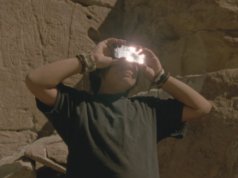
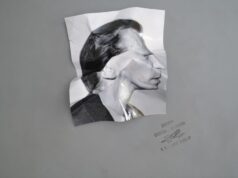
Towards the end of the keynote, Porter showed a clip from her upcoming documentary Winnie and Nelson. Co-produced by Time Studios and Partners In Kind, the doc will look at the powerful love story between a young Winnie and an older Nelson Mandela, arguing that while he has assumed heroic status, she remains a misunderstood figure in history.
The sequence comprised a devastating piece of archive interview in which Winnie Mandela explained how her long-term solitary confinement within a tiny cell in South Africa was what radicalised her, and made her pick up a gun in protest. The clip, Porter argued, runs contrary to the general shared view that Winnie was a distraction to the cause, and that her legacy is defined subsequently by more nefarious activities.
“Winnie was imprisoned and put into solitary confinement for almost a year and a half for 18 months – 491 days,” Porter said. “As she says, that’s a fact that many people don’t know when they think about Winnie [and] ultimately how her political beliefs evolved. They don’t consider the background that led her to this moment.”
In conclusion, Porter further defined what she believes should be the modus operandi of a documentary maker right now, whether working with archive or otherwise. “It’s our job to seek out those different perspectives and to present as best as we can, what seems to be accurate but also important,” she said. “So I hope that we can be truth tellers and think about the responsibility that we have when crafting documentaries. I hope that our future selves will be able to understand how did we get to this place where civil rights are under attack. It is our work today that will help the people of the future make choices – so that they can explain what this period was really about.”