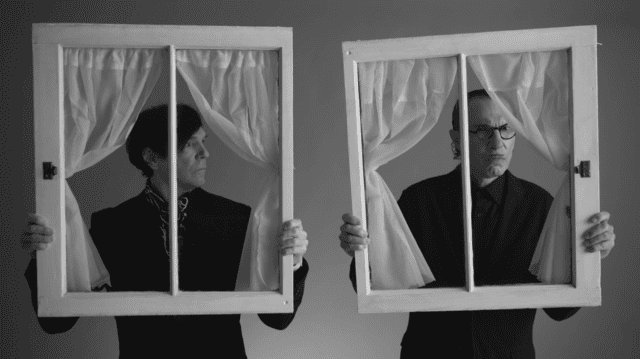
That Edgar Wright is a fan of the band Sparks is never in any doubt. He is up front and centre here as he sets about detailing the history of sibling frontmen Ron and Russell Mael whose constant – and unapologetic – desire to keep on developing and refining their musical output has seen them veer from rock stars to the forgotten men of pop and back again.
The fact that their career has spanned five decades and includes 25 albums and scores of world tours may well account for the film’s hefty 140-minute running time, but it is to Wright’s credit that he keeps things snappy and well-paced, revelling in the memorable music and delicious sense of humour that very much define the work of Sparks. As a band their line-up has changed many times, but this has simply reflected their passion for musical development as evidenced by an output that has included glam-rock, electro, prog-rock, techno and disco as well as forays into movie soundtracks.
The film paints them very much as the band other musician’s love to love, but it is far more than that. They are often outsiders who have often been ahead of the curve, always unwilling to bend artistically or rest on their musical laurels. No greatest hits tours for them…instead they relished in their oddball persona (as one interviewee puts it, “they look like people who have been let out of the day”) and insisted on doing things their way.
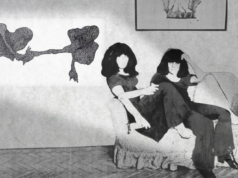
Wright’s film is exhaustive in its desire to seemingly give every bit of archival Sparks footage a chance, and favours a straightforward chronological telling of the story of the brothers Mael, interspersing things with a series of celebrity interviews (in black-and-white), animated links and delightful recollections from the brothers themselves, whose warmth and disarming wit give the film a real heart.
The brothers grew up in Los Angeles in the 1960s, with loving parents fostering their passion for music and cinema. The death of their father while they were young strengthened their sense of a family unit, and while younger brother Russell played American football at a good level, his older brother Ron happily learned piano. Their mother encouraged a love of music, even – as they say – taking them to see The Beatles twice… “cos we had a cool mom”.
While studying at UCLA an early band incarnation called Halfnelson came to the attention of producer Todd Rundgren in 1968 and led to an album which sold poorly. Renaming themselves Sparks (a play on the Marx Brothers, but they disliked the original idea of ‘The Sparks Brothers’, hence the joke behind Wright’s title), their follow-up album led to a tour of the UK. What followed was a cult following and subsequent breakthrough with their 1974 album Kimono My House and a Top of the Pops performance of This Town Ain’t Big Enough for the Both of Us.
Their early influences were the likes of The Who, The Rolling Stones and The Kinks, but Sparks were always intent on charting their own course. The film barely features a negative comment (even bandmates who were left behind are largely understanding of decisions made) and there is not a hint of booze, drugs or any other kind of expected rock’n’roll antics in their story. They are described as ‘gentlemen’ and while there is a brief mention of Go-Go’s singer Jane Wiedlin’s brief relationship with Russell, apart from that, there is not a mention of their romantic lives.
Their musical career veered up and down. They dipped into disco with producer Giorgio Moroder and influenced the likes of Duran Duran and Heaven 17. They tried indie rock and were an early adopter of techno, but then the early 1990s saw them virtually disappear, with Russell learning the art of music engineering and then dedicating six years to a movie musical project called Mai the Psychic Girl based on a Japanese manga and set to be directed by Tim Burton.
But musically they soon bounced back again – highlights included the hit song When Do I Get to Sing My Way, a collaboration with band Franz Ferdinand and an amazingly bold live presentation of 21 shows of 21 albums on consecutive days – and most recently their film ambitions came to fruition as they worked with French director Leos Carax on the Maels-written film musical Annette, starring Adam Driver and set to appear this year.
Five decades of artistic output certainly demands a documentary of scale, and while there are perhaps too many interviewees (and some of Wright’s visual joke links are not needed) The Sparks Brothers is never less than fascinating, enjoyable and amusing. Final scenes of the brothers and their regimented life are gently insightful and always lighthearted, and while both are now in their seventies they show no sign of slowing down their artistic output.
UK, 2020, 140mins
Dir: Edgar Wright
Production: Complete Fiction
Producers: Nira Park, George Hencken, Laura Richardson
Cinematography: Jake Polonsky
Editor: Paul Trewartha
Animators: Joseph Wallace, Greg McLeod
With: Ron Mael, Russell Mael, Edgar Wright, Todd Rundgren, Tony Visconti, Jane Wiedlin, Beck, Katie Puckrick, Bjork, Andy Bell, Mike Myers, Patton Oswalt, Giorgio Moroder