Back in early 2020, one corner of the international film business – the documentary fest sector – remained resolute and robust in the face of an increasingly devastating pandemic and the decimation of normal domestic and work practices.
In late March of that year CPH:DOX tore up the rule-book to successfully present its online edition. In April 2020 Visions du Réel was hot on the Danish festival’s heels to present a heady amalgam of top festival and market offerings, again within the virtual space.
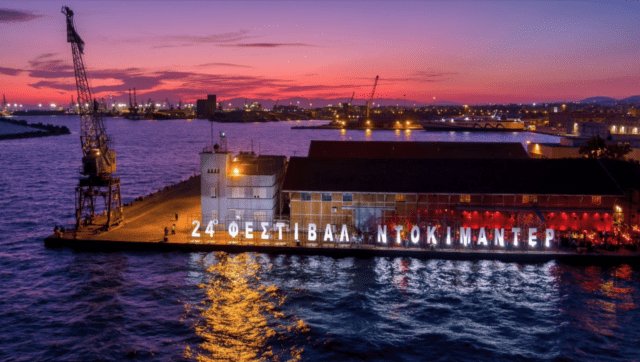
But the very first event that was forced to respond to Covid back in March 2020 was the Thessaloniki Documentary Film Festival. “That was a very crazy period for us,” remembers Agora chief Yianna Sarri. “On the 6th of March the official lockdown was announced and on 9th the festival was supposed to start. So we took the decision three days before and we organized everything online in three days. No experience. We didn’t really know what to do and how we were going to do it, and we’d never heard of Zoom back then!”
But it worked, Sarri stresses. “Everything went great. It was amazing. To tell you the truth, now that I think about it, it’s very hard to imagine how we did it, or how we decided to go on with it.”
Later that year in November the regular Thessaloniki Film Festival was presented online, before organisers decided to present the doc festival in hybrid form in the summer of 2021. “It was a first attempt to go back to normal, although we didn’t have that many guests, because people didn’t travel that much last summer,” says Sarri.
“But this year many guests will come to Thessaloniki. It is really amazing because everybody is so happy to travel again. For example, in the market, we will have more than 250 professional guests, which is a great number.”
The Agora head explains the unique aspects of Thessaloniki’s offer to professionals, specifically the emphasis placed on docs from the Balkans and Mediterranean regions, and how market focus is trained on new directors.
And of course the Greek films, projects and filmmakers. “The festival runs now for 24 years. When it started, the Greek documentary scene was very basic. We only had the documentaries made strictly for Greek public television. As the Thessaloniki Documentary Festival grew, also the documentary world in Greece realized that this new field [documentary] had many things to offer to the Greek directors. So throughout these years, we [developed] many film directors from Greece who are focusing only on documentaries. They don’t do fiction films, they prefer to do documentaries, which is a great thing in my opinion, because it shows that the documentary [sector] in Greece is very strong.”
Thessaloniki Doc Fest contributed to this by being there as a hub, a safe space and an indispensable resource for Greek docmakers. “We gave the opportunity to the locals to find more [experience] and to get educated, because it’s not very easy for a Greek documentary filmmaker to travel to IDFA to CPH:DOX. It’s very expensive and really hard for them to do that,” says Sarri. “So the festival [Thessaloniki] gives the opportunity to know more about this magical world of documentaries. And over the last five or six years, documentary production in Greece has grown every year more and more.”
Sarri cites production figures in excess 120+ documentary features per year. “Not made for TV, which is a very good thing,” she adds. “Not all of them, of course, are good documentaries because there are so many, but there are always very interesting stories that are made…they also travel to festivals abroad, which is amazing.”
“In years past, it was even hard for a fiction film from Greece to travel to a film festival abroad, but now many documentaries do that,” Sarri stresses.
This year’s festival sees 77 Greek docs screened across the three competition sections (International Competition, Newcomers and >>Film Forward), the Open Horizons section of the international program, as well as the Platform and From screen to Screen subsections of the Greek program.
The overall festival programme presents a number of Greek and international docs that were pitched or presented at previous editions of Agora Docs, such as the Greek-themed Α Marble Travelogue by Sean Wang (Docs in Progress 2020) and the world premiering Tilos Weddings by Panayiotis Evangelidis (Docs in Progress 2021), both of which are selected for International Competition.
In Newcomers Competition are Frugal Abundance by Frantzeska Romanou and Yorgos Savoglou, also a world premiere and which participated at Docs in Progress 2018.
Open Horizons presents three films previously presented as Agora projects; Broken Sound by Fivos Kontogiannis, Foss Productions, (world premiere, Agora Lab 2021), Dead Sea Guardians by Ido Glass and Yoav Kleinman (International Premiere, Thessaloniki Pitching Forum 2020) and the Greece/Norway/Serbia co-pro Into the Land of Ice and Fire by Dimitra Zirou (world premiere, Thessaloniki Goes to Cannes 2021).
In wider terms, there are three films in selection that place the current war in Ukraine in focus. These are Trenches, the directorial debut of the French war correspondent Loup Bureau, which takes us to the tortured city of Donbas, depicting the naked truth and the cruelty of the struggle for survival, and the Sundance 2022 winner A House Made of Splinters by Danish director Simon Lereng Wilmont, about the tremendous resilience of a small group of Ukrainian social workers who work all day long to keep children safe amidst a backdrop of horror and desperation. The festival has also selected F@ck This Job by Vera Krichevskaya which follows the 13-year journey of Dozhd TV owner Natasha Sindeeva who attempts to raise a voice of protest and independence within Putin’s suffocating regime.
“This year we don’t have any projects from Ukraine [in Agora],” she says. “And the three films in the main selection of the festival reflect the situation [in Ukraine and Russia] but in a very critical way. The festival always makes selections based on human rights, on social issues. So we didn’t have to wait for the war to start to select films that reflect the situation in Russia right now.”
With the selection decided on before the war in Ukraine, the festival didn’t programme any films made with Russian backing (nor had Agora selected any such projects), and therefore weren’t required to decide upon the withdrawal of any titles. Nevertheless, Sarri can understand the dilemma felt by fellow professionals over this divisive issue. “You don’t really know what’s wrong or right. Because you cannot stop supporting artists who are from Russia because it’s not fair, but on the other hand, how can you choose films that have money from the Russian government?”
On the subject of gender balance within the Agora market selections, Sarri stresses how, while bearing in mind the industry-wide protocol of 50/50 representation, she and fellow organisers nevertheless applied a “blindfold” rationale to the process of choosing the 2022 projects. “It was a great surprise for us because, in the end, [the result] was very impressive. Six out of the 10 works in progress are from women and the same goes for the pitching. We didn’t choose the projects depending on that. It just came naturally,” Sarri ends.
Agora Doc 2022 features:
- Agora Doc Market: With more than 350 completed documentaries in its digital video-library (in collaboration with Cinando) available online for the Agora Docs accredited guests.
- Agora Docs in Progress: Films just before the stage of completion are presented to the invited industry professionals.
- Thessaloniki Pitching Forum: A co-production and co-financing platform for creative, television and new media documentaries in the development stage.
- Agora Lab: A workshop in which renowned documentary specialists offer guidance to the Greek filmmakers whose films are on the post-production stage.
- Meet the Future: A section that presents up-and-coming documentary filmmakers from the wider geographical region. This year, promising filmmakers from Georgia take centre stage.
- Doc Counseling: One-on-one consultation meetings for filmmakers from Greece and abroad.
- Agora Talks & Masterclass: Each year, Agora Docs invites experts to share their best practices with the festival’s accredited guests.
- EWA Mentoring Program: The mentoring program of the European Women’s Audiovisual Network (EWA) that supports women working in the European film industry.
- Creative Europe Media Desks joint event: How to Foster Sustainable Film Production for Documentaries: Challenges and Incentives. March 15.