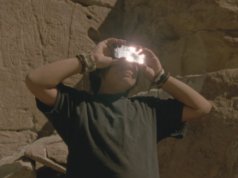
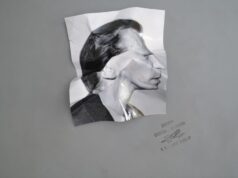
In La Pieta, produced by SUICAfilms (Spain), AXfilms (Iceland) and Studio Nominum (Lithuania) and selected for International Competition, a veil of snow covers the Icelandic glacier of Vatnajökull, the largest on the island, and old voices echo like prayers – a requiem for what once was, and what will be lost forever.
More than a century ago, Flosi Björnsson and his eight siblings isolated themselves at the foot of Vatnajökull, Iceland’s largest glacier. None of them ever married or had children; they devoted their lives to the glacier long before anyone spoke of its melting.
Like a whale skeleton on the shore, their farm remained sealed – until now. Photographer Ragnar Axelsson returns to the place where he spent his childhood summers. As he opens the farm’s doors, Flosi’s voice resounds once again, invisibly calling other pilgrims who come to the glacier. The sound of the ice cracking composes a requiem to the glacier. A vast white sheet drapes its skin, like a shroud over the body of a dead son.
“There is something fascinating, almost mystical, about standing in front of a glacier. It’s the closest feeling to when, as children, we believed in God,” the directors say.
“Twenty years ago we visited Iceland for the first time, where we have been working for years on different documentaries. There we understood that glaciers are not only landscapes. Glaciers are alive. They breathe. They speak – they even sing. They have beautiful voices… And today, those voices are fading into silence.
La Pietà is our attempt to capture those voices before it is too late – to share the sound of a world that is slipping away. The voices of people who once lived for the glacier, and the voice of the glacier itself.
This film is a requiem for a dying glacier. In La Pietà, the glacier is the main protagonist. All the human characters – some living, some dead – have been drawn, like pilgrims, to this still-living mass of ice. Each of them has done everything in their power, however small it may seem, to warn us of its death.
La Pieta is made with funding from Instituto de la Cinematografía y de las Artes Audiovisuales O.A., Ministerio de Cultura, Gobierno de España, and is Supported by Institut Valencià de Cultura, Icelandic Film Centre and the Lithuanian Film Centre.