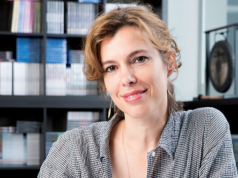
A painful and deeply intimate father-daughter story is the main subject of Ksenia Ciuvaseva’s debut feature, titled Landing, pitched at this year’s Thessaloniki Docs in Progress. Born and raised in Moldova, Ciuvaseva studied film and theatre between Germany and the Czech Republic. Her diploma film, a short documentary essay titled Tracing Tango Echo Tango, premiered at DOK.fest Munich last year.
Ciuvaseva’s first feature doc is produced by Natalia Imaz for Parabellum (Germany), Maxim Cirlan for Moldox (Moldova) and Mihajlo Jevtic for Film the World (Serbia).
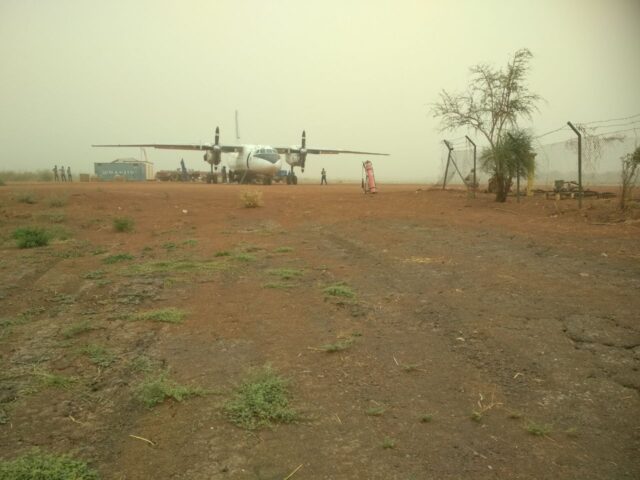
“My father was a Moldovan pilot. When I was 13, he left home to fly cargo planes on the other side of the world. He worked in Iraq, Afghanistan, South Sudan, Somalia and Uganda. When I turned 20, I left Moldova myself to pursue my dream of studying abroad. I wanted to become a film director,” said Ciuvaseva during her pitch.
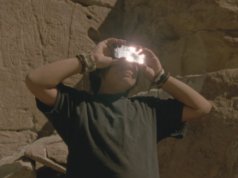
“During the years of our separation, my father and I grew apart,” she continued. “What was once a unique father-daughter friendship turned into anger and resentment. We became strangers. I had a strong need to reconnect with my father so I decided to give him a small camera and asked him to film his everyday reality for me. This resulted in my father filming for seven years. A beautiful archive we’re now using for the film. The insight into my father’s life did make me understand him better, but there was still something I was struggling with and couldn’t find my peace with.”
“My family paid a high price for my father’s absence. It resulted in broken family relationships, and eventually my parents divorced. It also resulted in an unfinished house my father was building for us, and the family dream of living all together on a plot of land which never came true,” Ciuvaseva added.
On the socio-political context tackled by the doc, producer Natalia Imaz explained: “Parental absence and family separation have been the main topics in Moldovan society for the last 30 years. Moldova, which used to be a Soviet republic, went into a deep economic and political crisis in the early 1990s in the aftermath of the Soviet collapse. Today, one third of the country’s population lives abroad, [with] many of them earning money to send back to their families.”
“So, while we’re telling a deeply personal story, we’re also painting a broader picture of Moldova’s social landscape since the country gained its independence. This is a story that will resonate with audiences in other regions as well.”
Addressing the current state of the project, Imaz revealed: “We’re in an early stage of post-production and have a signed deal memo with Taskovski Films. We’ve a first rough cut and we aim to finish the film by the end of this year. To do so, we’re still missing a significant part of our budget, so we’re looking for a potential additional co-producer to join us. We’re also looking for broadcasters and for funds, but we’d also love to start conversations with festivals at this stage.”
The overall budget on the project is €230,000. Listed partners include the Moldovan Film Center, the Maecenia Foundation, the Crossing Borders Grant and the Robert Bosch Foundation.