Cisco Kid by Emily Kaye Allen
This year, the Ji.hlava International Documentary Film Festival will present over three hundred film titles in both its competition and non-competition sections, of which 95 will be world premieres, 33 international premieres and 6 as European premieres.
“The programme also includes what is probably the first ever made feature-length documentary film, shot in the Philippines in 1913,” says festival director Marek Hovorka about this year’s “discovery,” which the festival will present in the section entitled Transparent Landscape: the Philippines section, which will include over 40 films, hence the largest ever retrospective of Philippine documentary cinema outside of Asia, the festival claims.
The Ji.hlava IDFF will offer even a series of retrospectives in addition to new documentary releases. “Films on contemporary issues will be complemented by a section devoted to war films and profiles of 1960s American independent filmmakers,” adds Hovorka on the other retrospectives at the fest. “Nowadays we have the feeling that we are living in very difficult times, which is undoubtedly true. But many of the films made over the past 100 years that you can see at the festival show that almost every era has faced great challenges, and that we tend to see the past as “golden times” only because we idealize our memories.”
The Inspiration Forum discussion platform will encompass five days of discussion during the festival, focusing on freedom, degrowth, digital technologies, the war in Ukraine, as well as a debate on Czech presidential candidates.
Opus Bonum International Competition
The Opus Bonum section, which “encompasses the diverse practices and tendencies of world documentary cinema,” will present sixteen films that will compete for the Best World Documentary Film prize, valued at USD 10,000. The Best Central or Eastern European film will receive €3,000 (presented in cooperation with Current Time TV).
The selection includes the Czech film The Investigator by director Viktor Portel, which will provide a look at war crimes committed in the former Yugoslavia. Slovak director Jaro Vojtek’s Shift is a social probe into the lives of three characters whose family relationships fall apart due to their work abroad.
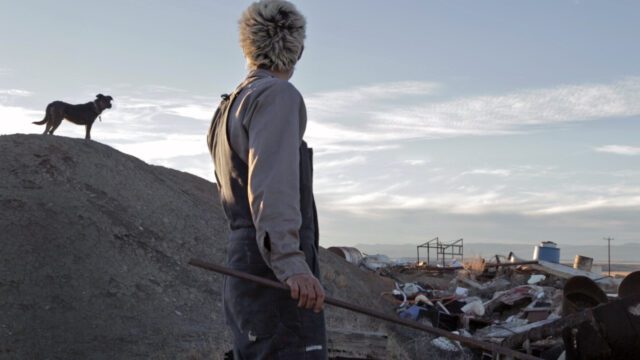
The festival also highlights Emily Allen’s Cisco Kid shows the opposite situation – a protagonist defying society’s ideas and standing outside the system. A young woman lives in the middle of a vast desert of the American West, in the ruins of a city where the last of the oddball inhabitants struggle to survive. “You’re not starting over. You just live and hope it gets better,” says the film’s protagonist.
Czech Joy Competition
Czech Joy focuses on the latest Czech docs, and presents twenty-one films and one VR installation this year, The Visitors by Veronika Lišková.
The competition will present seventeen films in world premiere, including Jana Počtová’s Happily Ever After. The film is a probe into the various forms of contemporary relationships and follows five people that decided to seek their happiness in different forms of partnerships than those generally accepted and lived by mainstream society.
At Home is “the first Czech bromance”, a film about male friendship. Thanks to their openness and the ubiquitous handheld camera, filmmaker and musician Jan Foukal and Albert Romanutti, frontman of the band Bert & Friends, recorded their living together against the backdrop of the Covid-19 pandemic.
Jana Ševčíková, who won the Contribution to World Cinema Award at last year’s Ji.hlava, will also present her new film at the festival. Those Who Dance in the Dark shows how six blind people cope with their life but never stop dreaming, longing and searching for ways to be as free in life as the sighted majority.
Czech Joy will offer up á-B-C-D-é-F-G-H-CH-í-JONESTOWN by Jan Bušta, about the Jonestown massacre of 1978 when religious fanatic Jim Jones forced over nine hundred members of his Temple of the People sect to drink a deadly poison.
The documentary Invisible Landscapes by director Ivo Bystřičan, based on the field-recording method, will show that sound can capture some processes better than image. All Ends Well, a poetic essay by documentary filmmaker Miroslav Janek, invites the viewers to the fascinating world of bees. Serbian director Mira Erdevicki’s multi-layered film Leaving to Remain portrays the everyday trouble and small victories of three Roma in an England affected by Brexit and the Covid-19 pandemic. Seven days in the streets of Ústí nad Labem through the eyes of a homeless person will be shown in Tereza Vejvodová’s film From the Bottom.
Humans, a personal autobiographical portrait that is also a probe into the lives and problems of non-binary and trans people will be premiered by director Kateř Tureček. Anna Petruželová’s playful documentary titled how much is it uncomfortable for dogs to step out on a highway? presents a collage of micro-stories that share a common motif, which is travel in all senses of the word.
The programme will also include an unflattering portrait of the Czech Republic as a country that will only offer a helping hand when it can get something in return. Robin Kvapil’s More Miko will tell the story of a Roma, a man who wanted to help those in need. Together with the ‘Czechia Is Helping’ initiative, he made arrangements for child refugees from Syria, but government officials gave priority to political interests.
Testimony: A film about work and Koudelka
The Testimonies section, which focuses on current world issues, will offer up fifteen films, and this year it will also have a “noticeable Czech footprint.” Director Tomáš Bojar will present Good Old Czechs, an edited documentary about two Czechoslovak pilots who took part in all the major battlefields during World War II. The documentary combines authentic testimonies of direct witnesses of the events and little-known archival footage.
The pilgrimage of Czech photographer Josef Koudelka across the Mediterranean is captured in a film by Turkish documentary filmmaker Coskun Asar entitled Koudelka Crossing the Same River.
The audience will peek behind the glossy corporate facades in the film The Happy Worker – Or How Work Was Sabotaged by John Webster. Exposing the systemic problems in companies, the film is laced with humour and irony, but without losing sight of the consequences a toxic workplace has on the health and happiness of the people who work there.
Remarkable is also the work by Turkish director Zaynê Akyol’s called Rojek (her debut Gulîstan, Land of Roses, about Kurdish women partisans, was screened by Ji.hlava in 2016). The author seeks to understand the roots of fanatical terror: she interviewed thirty jihadists and twenty wives of jihadists who were arrested when the Islamic State collapsed.
An unexpected experience is also promised in the film by the director duo Louie Psihoyos and Peggy Callahan, titled Mission: Joy – Finding Happiness in Troubled Times. The film captures the incredible friendship between two figures that transcends religion: the Tibetan spiritual leader Dalai Lama and South African Archbishop and human rights activist Desmond Tutu.
Voice for Ukraine
This year’s edition of Ji.hlava will also focus on the topic of Russian aggression against Ukraine. In addition to the new films by Ukrainian director Sergei Loznitsa: The Kiev Trial (about the 1946 trial of the Nazis) and The Natural History of Destruction (about the use of means of mass destruction to achieve a higher goal), and the film Czech Peace (2010) by Filip Remunda and Vít Klusák, are included in the Notes on War section. The programme will also bring the most up-to-date doc coverage on contemporary Ukraine. The film Freedom on Fire: Ukraine’s Fight for Freedom, directed by Evgeny Afineevsky, which consists of personal stories of civilians, soldiers, journalists, doctors and foreign volunteers, paints a picture of humanitarian catastrophe and extraordinary human resilience. The disturbing footage of destroyed cities is accompanied by commentary from British Oscar-winning actress Helen Mirren.
The Inspiration Forum will also focus on Ukraine in its discussions. Among its guest speakers will be Ukrainian writer and civil activist Oksana Stomina, who survived the Russian shelling and the subsequent humanitarian crisis in Mariupol, and Ukrainian documentary filmmaker Alisa Kovalenko, who will talk about what it is like to be a woman in the Ukrainian army.
Herbicides and plastic
Another theme that resonates in this year’s programme is the climate crisis and the environment. For example, Into the Weeds by Canadian documentary filmmaker Jennifer Baichwal, famous for her previous films Anthropocene: The Human Epoch and Manufactured Landscapes, will be screened, which tells the compelling story of an individual’s struggle against a multinational agrochemical corporation.
Climate crisis will also be one of the topics discussed at the Inspiration Forum. Environmental sustainability and especially “degrowth” will be the discussion focus on October 28. “We will ask what happens when we put try to stop our economic growth. We will explore degrowth through the lens of ecology, economics and politics, but also in cultural practice or personal life,” says organiser Tereza Swadoschová on the topic.
Short Joy: Short docs for free at dafilms.com. DAFilms Audience Award
Viewers eagerly waiting for the festival to kick off can enjoy films from the Ji.hlava IDFF before its official opening. From October 10 to 30, 2022, all of the nominated short documentaries from the Short Joy section which have had a world or international premiere will be available for free on dafilms.cz. In addition, until 23 October viewers can vote for the winner of the DAFilms Audience Award that will be announced at the opening ceremony at Ji.hlava.
Progress in experimental filmmaking
The non-competitive retrospective section Fascinations, which presents films focusing on a single theme (over the entire history of cinema), will take place for the ninth time this year focusing on Progress. “The abstractly defined category of content is represented through various literal and metaphorical concepts in the individual films,” says Andrea Slováková, the section’s curator. Films up for grabs include Berlin, Symphony of a Metropolis (1927) by German filmmaker Walter Ruttmann, Nothing but Time (1926) by Brazilian director Alberto Cavalcanti and the famous Man with a Movie Camera (1929) by Dziga Vertov. Among the section’s titles is also Czechoslovak film Light Penetrates the Darkness (1930) by Otakar Vávra.
VR Award
The documentary Ji.hlava will also present the seventh VR showcase and this year, for the first time, it will present an award for the best VR work. “We are interested in those spatial and interactive audiovisual works that are documentary in nature: whether the relationship to reality is in the story, in the outline of the characters, or it is even directly observing the living world,” says Slováková, adding that “the field of works in various realities (whether virtual, augmented, or mixed) is developing rapidly, and the number of works created in these environments is also growing at a tremendous rate worldwide”.
Institute of Documentary Film at Ji.hlava
Institute of Documentary Film (IDF) in Jihlava organizes the traditional East Silver Market with films from Eastern and Central Europe, which focuses mainly on festival and VoD distribution. The best films from the East Silver selection have a chance to win the Silver Eye Award in the short and feature film categories. The winners will be selected by two international juries. The East Silver video library will be open throughout the festival in the Vysočina Regional Gallery.
IDF has also prepared a discussion panel dedicated to short documentary films and their future from the perspective of festival programmers, sales agents and other experts. The Ex Oriente Film Workshop for film professionals will also offer a selected programme for the public free of charge: among others, a masterclass by Czech director Lucie Králová, who will present her new film The Kapr Code, and experienced American film PR and dramaturge Kathleen McInnis. The workshop programme will take place at EA Business Hotel Jihlava from October 24 to 29.
Ji.hlava on the boundary between documentary and fiction films
The festival will present a retrospective of films by Lionel Rogosin, a key figure of American documentary and independent cinema, whose socially engaged work was the antithesis of the Hollywood conformism of the 1960s and 1970s.
Another of this year’s retrospectives will focus on the work of American director Shirley Clarke, whose films are almost unknown in the Czech republic, the festival stresses. Clarke captured with humour the dark side America in the 1950s to the 1980s. In 1964 she won the Academy Award for her documentary Robert Frost: A Lover’s Quarrel with the World.
“More and more docs are nowadays made to resemble fiction films. Their protagonists move confidently and authentically in front of the camera, and the viewers become an integral part of their lives even at their most lonesome and vulnerable moments. They are also very believable in the way they are shot, with a distinct visual style and a finely tuned rhythm,” says Marek Hovorka.
Italian director Alessandro Comodino’s documentary comedy The Adventures of Gigi the Law captures daily trips to a town where nothing ever happens, investigating a crime that may not even exist. The film will be presented by the Constellations section, which showcases the most interesting films from film festivals around the world.
Conference: ethics and power relations on docmaking
Another prominent theme of this year’s edition will be ethics in documentary filmmaking. “A novelty of this year’s Ji.hlava will be the first annual conference on ethics, which will focus on power relations in documentary filmmaking.Documentary filmmakers find themselves in many ethically challenging or even controversial situations during filming. It is no coincidence that in the aftermath of a pandemic that has managed to turn social discourse away from the glorification of performance and towards wellbeing, ethical issues in film are receiving more attention. At the beginning there was the MeToo campaign, but today it is clear that this was only the beginning of a discussion that can be summed up as ‘power relations,’” stresses Hovorka.
“In addition to the ethical conference that deals with the filming process, we will also focus on the ethical dimension of curatorial work. The call made by Ukrainian women filmmakers for film festivals not to show works by Russian filmmakers sparked an intense debate and showed the power that film festivals and curators have in terms of setting the themes and social discourse. At this point, more than sixty festival representatives have confirmed their participation and will take part in a closed panel on the topic. A public discussion with some of them will then take place as part of the industry programme,” adds Hovorka.
The 26th Ji.hlava IDFF will take place on October 25–30, 2022.