In They Call Me Babu, set against a backdrop of WW2 and the Indonesian War of Independence, Sandra Beerends makes visible the invisible, giving voice to a generation of indigenous nannies who, while caring for the children of Dutch colonists, had their gaze fixed on freedom, suffrage and emancipation from patriarchy.
The film has been submitted for consideration in the Best Documentary Feature category of the 93rd Academy Awards.
For Dutch colonists living in Indonesia the babus (a portmanteau word combining ‘miss’ and ‘mother’ and nowadays considered offensive) were cheap and reliable, and expendable. But for the children of the colonists, they meant everything, and their subsequent memories of childhood were filled with reminiscences of the love they received and the devotion lavished on them.
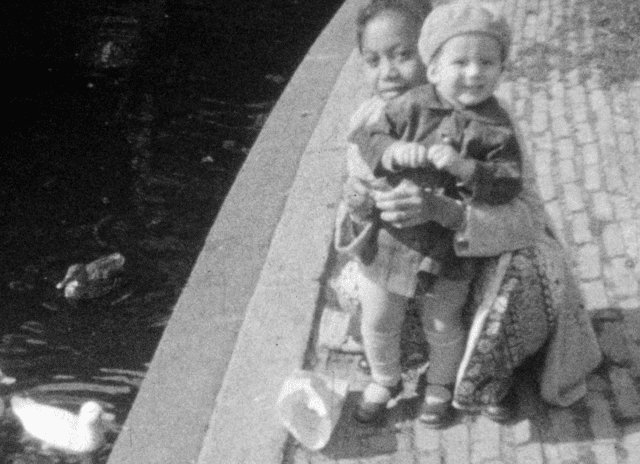
Sandra Beerends’ exquisitely constructed and diligently researched archive film recreates the life of such a nanny. In the film, the young Alima is dedicated to her Dutch family and her infant charges, traveling extensively with them during the late 1930s through the warm and exotic climes of Africa and to the pyramids of Cairo, finally to arrive in a cold and windy, albeit hospitable, Holland (where she is even given a day off every week, a luxury not granted to her back in Indonesia).
Alima loves the youngest child Jantje, and he loves her as much in return, and whenever we see them together she is protecting him, feeding him or playing lovingly with him. The pair are inseparable, as they discover snow, go ice skating together or simply indulge in each other’s company.
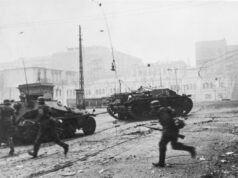
But war is looming and a Nazi regime bent on European and global domination is eyeing up its Dutch neighbour. After the the family decides to return to their ample domicile back in Indonesia, German tanks cross into The Netherlands. But on the other side of the world, Japan has its gaze set on Indonesia, and when its army inevitably invades the colony the Dutch are impounded for the duration of the war.
This is devastating for Alima, and her thoughts never stray far from her beloved Jantje. But she also has a beating heart that is filled by her lover Ribut, a freedom fighter, and a clever mind that is ready to guide girls and young women towards academic fruition when the moment of Independence comes. Which it does, at the film’s end.
Beerends compares the tumultuous period in which the film is set to contemporary times. She likens the mid-20thCentury wars to the current global pandemic, “and there are these dictatorial despots, and this tsumani of opinions,” as well as a mass of innocent people who suffer the terrible consequences, she underlines.
Made over five years between 2014 and 2019 (when the film eventually world-premiered at IDFA) Beerends sought testimony from hundreds of witnesses in order to build her story, whether they be nannies, their offspring, or the children they looked after. “From every one person I used a line or a word or a thought or an emotion, “ she says. “We follow Alima because she was the choice I made to connect the people to their story…It is based on real stories and real people who were always in the shadow, which is why I wanted to give them a space. They have their stories. They have their importance.”
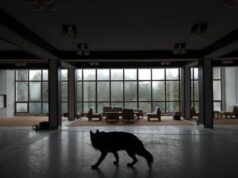
Throughout the film, which is narrated in lyrical Indonesian, we bathe in images of exquisite natural beauty or elegiac family bliss. We also encounter the bleakness of war, death and loss, and metaphor is deployed creatively as active volcanoes describe the volatile events unfolding within the colony. There are delicious and complementary sequences in The Hague and Indonesia as Alima experiences snow for the first time, telling how she was “enchanted by the magical white sand.” Later in the film, a small gang of Indonesian labourers play in an equally magical blizzard of kapok blossom, used to fill pillowcases and mattresses.
Talk of these sequences reminds Beerends of the moment she knew that she had to make her film. Her Jewish father-in-law, who himself enjoyed the care of a nanny in Indonesia but who also spent much of the war in a Japanese camp, had just died. As she was watching the sun set after his funeral, a solitary white feather floated from the sky and rested on her shoulder. The incident had a profound effect on her, and represented a call to action. “I thought, he is dead and I can no longer ask him, and many people who were alive during that period will be dead in five or ten years. So now I have to do it.”
Equally the final film had a cathartic effect on the director’s mother, herself Indonesian, after she attended the world premiere in Amsterdam. “My mum for a long time had nightmares about the Japanese prisons and the soldiers. I was afraid of having her at the premiere, that maybe she would be afraid.
“But she said to me, ‘you know what happened, I was trying to read the English subtitles but after a few minutes I just listened to Alima’s voice, and suddenly I was there again and the soldiers were there, and for the first time I could just look at them, and I saw that they were just young boys, not monsters. At that moment I knew I would never have these nightmares again.’
“When my mum said that, I thought that was the biggest present I could ever have, and I hope the film works like that for more people. That is the biggest award I can ask for.”
In her Business Doc Europe review, Nicole Santé described perfectly the essence of Beerends’ documentary, which is in equal parts educative, audacious, visually thrilling and profoundly moving. “It is an astounding piece of cinema combining personal stories and history,” she wrote, “teaching us new perspectives and universal truths and engaging all our senses, including the heart.”