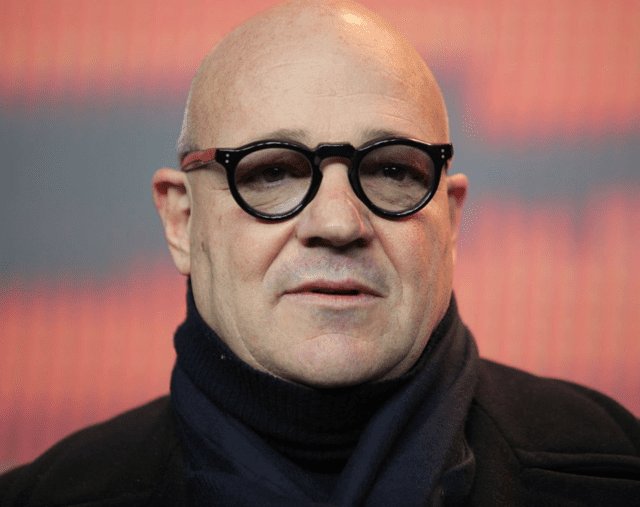
Gianfranco Rosi (pic: Paul Katzenberger)
As she talks about her collaboration with filmmaker Gianfranco Rosi, Italian producer Donatella Palermo beams with enthusiasm. Her admiration for Rosi is self-evident. Working together, they’ve already received one Oscar nomination, for Fire At Sea (2016), and are back in the running for more awards this year with their feature doc Notturno (sold by German outfit Match Factory).
Palermo is very experienced as a producer. She has spent over 30 years in the industry and has worked with many other illustrious filmmakers, the Taviani Brothers, Vittorio De Seta and Tonino De Bernardi among them, but she sees Rosi as a unique talent.
“I had watched all his movies before working with him and I was really impressed by his ability to create an emotional narrative in everything he does,” she says (speaking through an interpreter).
At their first meeting, Rosi had startled her, talking passionately about the “ethics” of how and where the camera is placed in a documentary. She prides herself on her ability to recognise talent and immediately saw it in him.
Rosi is an arch individualist, known for making his films on his own, like a one man orchestra.
“He is not the kind of artist who needs a crew and a lot of people to direct in his movies. What he needs for his art is just what he is seeing in front of him. Whatever character he meets and shows to us [in his documentaries] stays in our hearts.”
No, Palermo wasn’t with Rosi when he was travelling around the war-torn Middle East shooting Notturno but she was a crucial part of the process nonetheless.
There were some hair-raising moments along the way as Palermo organised every aspect of the production from Rome while Rosi was out on location.
“The hardest thing doing this movie was the feeling of danger,” the producer remembers. “The organisation needed to be perfect…it was hard for me to sleep at night because I was always worried about what was happening over there.”
At one stage Rosi arrived at a prison where, a few hours before, Isis had killed two of the guards. On another occasion in Syria, he was in front of a wall, filming, and his driver called Donatella in Rome to tell her, “we are here and there is someone with a gun but Gianfranco doesn’t want to stop shooting, so please call him.”
Palermo talks of the director’s ability to find lyricism and humanity in the most unlikely places. For example, early on during the shooting of Notturno he was in Tripoli in front of a destroyed building. He heard a strange whirring noise and followed it. Eventually, it took him to a room without walls in which a tailor was making a dress. The scene didn’t make it into the movie but she felt a surge of emotion when watching it. “This man was celebrating his right to live,” she says.
The Italian director has won Venice’s Golden Lion (with Sacro GRA) and Berlin’s Golden Bear (with Fire At Sea), an extraordinary achievement for a documentary maker at festivals where fiction still rules the roost.
“If you work with a director like Gianfranco, it is not hard to find financial help,” Palermo says of the many funders now keen to back his work. Her challenge as a producer is “to figure out who is right” to be involved in one of his films. The priority is always to “protect” his vision.
Fire At Sea was sold in 64 countries. “We didn’t get rich,” the producer laughs at the idea that such success brings personal wealth in its wake. The reward for her was watching the “emotional reaction” of audiences. Rosi was dealing with the plight of refugees and migrants from North Africa. “Everyone was thinking that what happened to these men cannot [be allowed to] happen again in our world. We have to stop this.”
News of these migrants was in the papers and on TV every day but it rarely, if ever, elicited the same heartfelt response as Rosi’s documentary.
“That reaction happens because Gianfranco is an artist. That kind of art creates that kind of reaction. Actually, art can save the world!”
Notturno has prompted equally strong responses although its roll-out (inevitably) has been affected by the Covid pandemic. The film, like Fire At Sea before it, is the Italian candidate for the International Oscar. That’s a rare honour for a documentary but, as his producer points out, “Gianfranco has found the way to show there is no difference between a fiction film and a documentary when it comes to cinema.”
Yes, Rosi is “thinking about” a new film which she will again produce. It’s too early to reveal details. In the meantime, Palermo’s approach to producing will remain the same as it has always been. “My way to work is to fall in love with a project and a director – and then to give 100% of myself to that project.”
Ask if she has ever considered directing a film herself and the producer guffaws at the absurdity of such a suggestion. “What I am good at is recognising if there is actually talent in somebody in front of me…I am not an artist!”