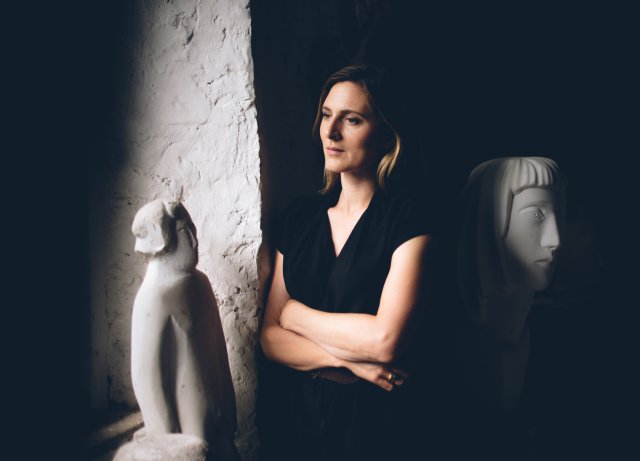
Pic by Lelia Scarfiotti
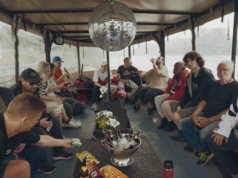
Feathers have been ruffled in Italy by Cosima Spender’s documentary series SanPa: Sins of the Saviour since it launched on Netflix at the end of last year. It tells the story of one of the biggest drug rehab communes in Europe, run by the charismatic but controversial Vincenzo Muccioli. He may have helped young Italians shake off their heroin dependence, but his methods were often brutal in the extreme.
During the 1970s, with the Mafia distributing drugs, huge numbers of young Italians became addicts. This was the era of student protests, the Red Brigade and the kidnapping and murder of former prime minister Aldo Moro.
“We can’t really say the State allowed it, but the State was extremely unprepared,” the UK-Italian director says of the period in which Muccioli set up the rehab community. Even today, opinion about him remains sharply divided. The left (the director notes) regard him as “a devil” while the right still see him as a saint.
Spender burrows down deep into her story, exploring “all the nooks and crannies, all the grey areas.”
“You’re shifting constantly from one side to the other,” she describes of the oscillating point of view she felt as a filmmaker and that she hopes the audience will share. On the one hand, they will feel sympathy for the desperate parents looking to a strong man and praying he can help their children. On the other, they may well be horrified by the way in which Muccioli ignored his patients’ rights and freedoms. “He was extremely patriarchal and his methods were coercive,” the director notes sharply.
Being locked up in a room with no windows might help you to kick heroin – but it was unlikely to boost your mental well-being.
Muccioli founded San Patrignano in 1978. He died in 1995. The commune is still in existence today, welcoming those “suffering from drug addiction and marginalisation” and (as its website proclaims) helping them “once again find their way thanks to a rehabilitation programme that is above all, a programme based on love.”
After SanPa: Sins of the Saviour (the first Netflix Italian original doc-series) was launched, the community responded angrily. A statement was issued accusing the filmmakers of being biased and of relying on the testimony of “detractors” rather than presenting an “objective” portrait of its activities.
Spender dismisses the criticism. She tried hard to interview Letizia Moratti, the former President of RAI, who has been involved in the SanPa project since the beginning.
“I really wanted to interview her. Finally, she said yes after I asked her about seven times – and then she said she just didn’t have the time. I really wish she had put forward her point of view,” the director notes. “We have tried to give a three dimensional portrait of the commune.”
The documentary makers were meticulous in their approach to archive and fact checking. They used primary documentation wherever possible. When they did rely on hearsay, they always acknowledged they were doing so.
Generally, Spender (whose earlier documentaries include Palio, Without Gorky and Dolce Vita Africana) originates her own projects, conceiving, writing and directing them. In this case, the production company 42 had secured the commission provided they were able to attach a director Netflix trusted. “This was the first doc series in Italy. Because there isn’t a tradition of documentary in Italy, it is quite hard to find someone who can do this kind of project.” The series premiered globally on December 30.
At first, Spender was reticent. The writers Gianluca Neri, Carlo Gabardini and Paolo Bernardelli, who had already done the research, called her in ten days before the shoot began.
“When you work with other people who have initiated the idea, it does take a little time to make it your own. It became really my own in the edit, when I came back from the shoot,” she says.
Spender and her team shot 200 hours of material. They had around 400 hours of archive. Understandably, the post production was extremely challenging. She was working together with her husband and partner, Valerio Bonelli, whom she has known since their time at the National Film School together. He helped her supervise a team of editors.
The project was commissioned by former Storyville exec Kate Townsend, now Netflix’s director of original documentaries.
“I think actually the Netflix doc series are very much school of Storyville,” Spender suggests. “There is a concerted effort to promote democracy and truth. Journalistically, you have to be on very solid ground but also bring a humanity which will make you look at a familiar story in a new way.”
Spender grew up in Italy…in a farmhouse without TV. Her parents were artists. Her father was a sculptor and writer. Her mother was a painter. (Her grandfather was the renowned English poet, Stephen Spender).
“They were bohemian hippies. It was all about art. I went to a lot of museums,” Spender remembers of her television free childhood. She went on to study anthropology and art history at the School of Oriental and African Studies. That was where she discovered film. “Through that I got ethnography. I loved travelling and backpacking and I always had a camera. From that, I went to the National Film School with a little film I had shot in Mali in 1996.”
When Spender left film school the late 1990s, the doc making landscape was “bleak.” Outside the main UK broadcasters, there were very few sources of finance. Budgets were small. You would work on a film for years and then it would be shown three times on TV before being forgotten. Docs then came close to being killed off by reality TV. Now, though, she believes, the form is flourishing as never before.