

Lagoons: A Battle for Paradise
The East Doc Platform (EDP) goes into pitch overdrive Monday through Wednesday as 48 new projects from Eastern Europe (and beyond) are presented online to leading decision-makers within the international doc scene. Event director Zdenek Blaha explains the packed networking event to Business Doc Europe.
Organised by the Institute of Documentary Film, which celebrates its 20th birthday this year, EDP is designed to connect Central and East European filmmakers and their new projects (each of which is defined by “a strong artistic vision”) with the money, which comes in the form of international broadcasters, distributors, funders, sales agents and potential co-production partners.
It is the largest such professional event in the region, and extends its eastern reach beyond Europe far into the former Soviet Union.
“The idea is to help to bridge the gap, to help these projects reach the decision makers from the West,” event director Zdenek Blaha tells Business Doc Europe, noting how it is potential co-producers who are very much in event sights. “Co-production is a key point for the European Union and for co-operation between our countries.”
The 10th East Doc Forum offers 22 documentary projects in development and production. More than a half of the projects presented at the Forum were developed during the year-long training programme Ex Oriente Film Workshop.
The 12th East Doc Market is a two-day event for the presentation of 11 documentary projects at all stages of production, and entails pre-scheduled 15-minute individual meetings with all the attending East Doc Platform decision makers. The session also includes one-on-one meetings with the representatives of the five projects selected for the Czech Docs…Coming Soon section.
East Doc Series is a new activity “responding to the emerging trends and new genre in high demand: the documentary series,” and offers up five major doc series projects at advanced stage in need for partners. Meanwhile East Doc interactive will present five more projects in advanced stage to the doc community. Between 6-12 March the Platform ran an intensive online workshop focussing on interactive and immersive XR projects in development.
Blaha points out that while the Platform remit is to serve a very specific and contained Eastern European constituency of filmmakers, the area in question “is very fragmented and different, every country is different, the cultural backgrounds are very different.” He points out how approaches and “schools of thought” differ across the region. “For example in Poland you could say they make very humanistic documentary films.”
But what unifies the East European filmmakers, Blaha adds, is a sense of “Eastern logic.”
“We actually used this two years ago as our motto for the East Doc Platform,” he underlines of the sense of the inherent sense of irony that he believes underpins the documentary approach. “It is all you can imagine in absurd and bizarre stories, but also [represents] very unique perspectives and original approaches, because ‘Eastern Logic’ is the way that we think about our stories.”
What’s more, this ‘Eastern Logic’ is an inherently attractive component for documentary co-production partners, Blaha suggests, especially when combined with “with a strong artistic vision and a strong point of view.”
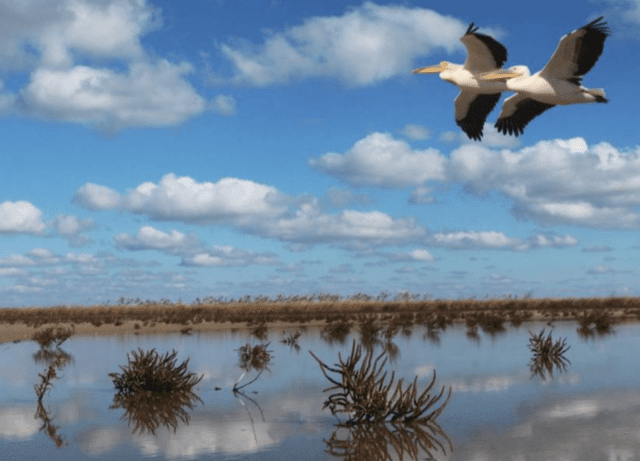
When pushed, Blaha reluctantly mentions a number of projects which illustrate this (although all projects have equal claim for mention, he argues) such as the Ukrainian Lagoons: A Battle for Paradise (produced by Albatros Communicos, The Earth Is Blue As An Orange) which contrasts the world of sumptuous nature and that of night pursuits of poachers, courts dealing with illegal developers and the abduction and intimidation of activists, and Expedition 49, which elevates five teenage residents out of the mining town of Donbass to the peaks of the Himalayas.
Blaha points to two series projects, Prophet of Doom (Poland/Russia/Spain/Ireland), an investigation into the unsolved mystery of a brilliant Soviet climatologist who vanished in Madrid at the height of the Cold War, and the Hungarian/German Queen of Chess, which tells of the relationship between, and the mindsets of, Judit Polgar, the greatest female chess player, and the legendary Garry Kasparov.
In East Doc Interactive, he stresses two VRs that address the human condition, the animated Darkening about depression and coping mechanisms, and Scaena, described by its makers as “our struggle against internal aggression and the way we run through it.”
When asked to assess what, for him, will be an ideal takeaway at the close of the event, Blaha of course acknowledges the quality of projects (chosen from approximately 250 submissions), the participants representing them (120 makers) and the fact that online means that more guests can attend, many first-timers.
“But for us, the success is also about the connections made here in Prague, this is what we like to focus on and follow up on later with surveys and updates from both sides, both from decision makers and participants,” he says. “Of course there are things missing, like the ‘informal’ networking, let’s say, the moments of pure chance when you do not know who you are going to meet, but we hope that these days will work for the participants and that the new digital format this year will prove to be just as useful.”





