

Alisa Kovalenko’s Expedition 49 may start by the coal mines of eastern Ukraine on the Russian border and end in the Himalayan peaks of Nepal, but this is a film neither about war nor mountaineering, points out producer Stephane Siohan. It’s a film about the power of dreams.
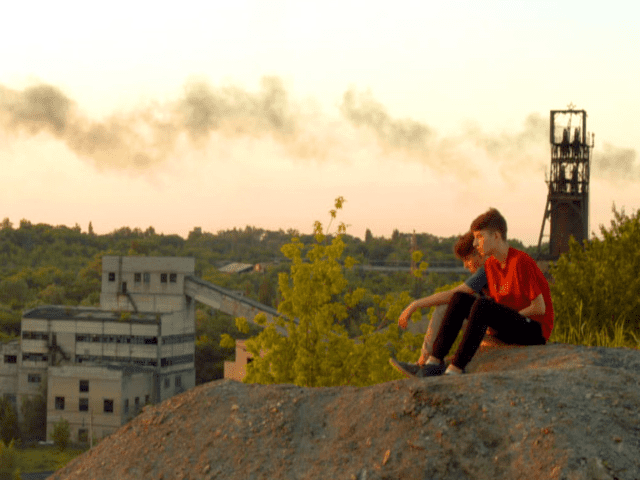
In the Ukraine/France/Poland co-production project Expedition 49, five kids are in need of the oxygen of life. They live in Zolote-4, Donbas, described as “a shit-hole place shaken by the rumble of a lingering war with Russia and the haunting collapse of the coal mines” and they “struggle against the ambient dullness and boredom.”
As producer Stephane Siohan puts it, they are a generation of kids who have been locked in a war for seven years, which just about constitutes half their lives.
But then the promise (or at least the hope) of salvation comes in the form of Valentyn, an old explorer from Kyiv who determines to deliver kids from the war zone of Ukraine to the snow-topped peaks of the Himalayas: a psychological therapy to help war kids overcome their traumas and to “break the walls around them”. For Valentyn this will be his 49th – and final – expedition.
“I want to insist on this, but the expedition is really not at the core of the narrative of the film,” underlines Siohan. “It’s an important element, but even without it the film would be there…One of the consequences of war for children is the trauma. Of course because they have seen violence, and there is still some fighting, but there is also this psychological state of isolation that they totally suffer… there is this generation of kids who lost any hope to change something in their life.”
Director Alisa Kovalenko herself grew up close to where the film is set, and for her therefore the story has a deep resonance. “Abyssal economic crisis, mass unemployment, poverty, shortages of food, armed gangsters outside… When I was a teenager, I dreamt of getting out of there. Life was impossibly hard for our parents. But we, children, invented all sorts of of entertainments, looked for treasures, built towers with Soviet coins, made dollhouses out of old refrigerators. It was a time of incredible fantasy, a time of adventure! Filming Expedition 49, I’m making a trip back in time. I remember how much I was dreaming, being fanciful, all the worlds I was inventing, which created a shield against depression and dullness around me.”
The five kids in the film are all unique but Siohan points to the character of Andre. “We have incredible scenes with [him]. He is 14 and dreams to become an engineer. He has created a mechanics workshop in the house of his parents 500 metres away from the front line and he dreams of becoming Elon Musk – he is totally infatuated with Elon Musk. He has portraits of Elon Musk everywhere in his house. He talks about him all the time.
“Andre is going to be the driving character. But each of them has an inner conflict, which is going to be the flesh of the film.”
The producer is well over half way towards securing his overall budget project of €388,587, especially having just agreed minority production funding from the Polish Film Institute. When at development stage, the project received awards at the Thessaloniki Pitching Forum and the Odesa IFF pitch 2020.
After East Doc Platform, the project will go to CPH:FORUM in late April. By the time it arrives in Copenhagen (if only virtually) Siohan is hopeful that director Kovalenko will have completed her Himalayan shoot, cancelled in November 2020 and now rescheduled for early April.
Yes, he concedes, that part of the production could make for a magnificent climax, but the producer underlines once more that reaching the Himalayas is not the point of the film.
“What is very original in this film is that Donbass, in Eastern Ukraine at the Russian border, is the largest coalmining region in Europe. During Soviet times Lenin said that without Donbass there would never have been a Soviet Union,” says Siohan. “But now this civilization is on the edge of collapse… and actually, the climax of the film will probably be connected to this.”
He explains: “In the current situation in Eastern Ukraine, adults say to kids, ‘you have two choices in life, either you become a coalminer or you become a cop.’ This is the only choice that you have in such a desperate place. Our protagonists are suffering with this very tough social heritage.”
“So do I want to be a coal miner like my dad?” Siohan asks rhetorically, “with all the consequences that it can have on your life, or do I want to follow my dreams? All of our characters are confronted with this very crucial moment when either they have to accept the social heritage of their parents – or to make their own way in life.”





